I’ve always blogged with an awareness that the people I work with (and for) might be reading what I write. In fact, I know that some of them do pop in from time to time. Hi, guys.
While I post with some frequency on radio, media, blogging, journalism, podcasting and such… I rarely write about our company specifically. For lots of reasons. Today we’ll get close to the line and try not to step over.
Our company has gotten big. Not General Motors big or Microsoft big, but a lot bigger than when we started, 30 years ago. Back then, it was Clyde and Derry (and a few others) making it up as they went along, breaking all the rules, trying and doing all kinds of things that Big Companies said you couldn’t or shouldn’t do.
And, as the name suggests, the company has always beeen about communications. First as a wired (telco lines) network delivering farm news and markets to a handful of radio stations. Very few people were doing that back then because it was damned expensive and nobody really saw the need or the opportunity. Clyde and Derry did.
In the early 80’s, Clyde figured out having his own satellite uplink would allow him to reduce costs and control a powerful distribution channel. We could ‘communicate’ programming (content) to listeners (via the radio stations) in a way that others could not. More on the satellite/distribution thing in a minute.
So we have our own satellite uplink and channels and things start to take off. We build/acquire lots of radio networks. We’re scaling nicely and the company is growing. And it continues to grow. We still feel like and –in many ways– operate like a much smaller company. Handful of smart guys running the company from the top of a very flat org chart. But we’ve gotten big. And we have some big cash cows that we love very much.
You see where I’m headed with this, right? How do you get big (which has lots of advantages) without losing the Small Company “bag of rice and an AK47” flexibility and attitude? Because if the next Clyde and Derry are out there in the bushes (and you know they are), they have The Mother of All Networks at their fingertips and it doesn’t cost them the millions our Clyde paid for his first uplink. It’s virtually (get it?) free. And far more poweful because it’s global and two-way and blah, blah, blah, blah. You’ve heard it all.
Big is good. The Queen Mary is a very comfortable ride. And as long as we don’t have to make any sudden turns, we’ll be fine.

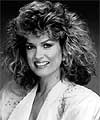 Long-time farm broadcaster Jerry Passer was working at WMT-TV in Cedar Rapids, Iowa, in the mid-70’s, when a young Mary Hart came over from South Dakota to do feature segments for the midday news-farm show. Jerry recalls those million dollar gams looked great in the mini-skirts that were popular at the time.
 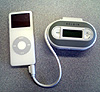 Popped into Staples today and picked up a Belkin TuneCast II Mobile FM Transmitter for the nano. The plan is to load up with tunes and podcasts for the long drive to Destin. I must say this model seems to work much better than the first one I tried and allows me to select any open frequency (instead of just 4 down at the bottom of the dial).
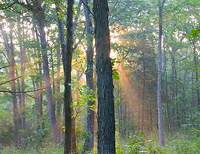 Photographer and digital artist Henry Domke has added 88 new images (taken on his Prairie Garden Trust property) to his website. You can buy some of Henry’s prints as large as 4 x 9 feet and prices start around $275. Caution: After viewing these, you’ll want to sell your camera.