Mastodon

I’ve been hanging out in a new social media neighborhood for the last week or so. It’s called Mastodon and it’s sort of like Twitter that you made in your garage with a glue gun and some Gorilla tape. This article will explain it better than I can.

I created my Twitter account on February 21, 2007 (account #786,471). When I stopped using Twitter last November I was following 176 people and 118 were following me (but I never saw any evidence of that). In those ten years I tweeted 11,565 times. Twitter was where I got most of my news.

But in 2016, nearly every single tweet, from every single user I followed, was politics. A solid fucking year of politics. And while I haven’t been back to my account, I assume that has not changed and will not for the foreseeable future. So I moved on. No idea if I’ll ever go back.

This Mastodon thing is fun and interesting but I’m not sure I can explain why. Where there’s one Twitter, owned and operated by a big corporation… there a thousand (?) Mastodon ‘instances.’ Maybe like 1,000 Twitters that can talk to each other?

I liked Twitter’s 140 character limit but Mastodon’s 500 character posts are growing on me. I’ve always leaned more toward writing something than throwing up one of the annoying goddamned animated GIFs (you an do that on Mastodon, too). There’s a bit of a Wild West feel for now but I suppose that will change.

I’m meeting new people and that’s a breath of fresh air. I’m reading the businesses don’t like it and that is a BIG plus for me. I do not like being “monetized.”

Mastodon is just confusing enough to keep your grandmother from showing up, another plus.
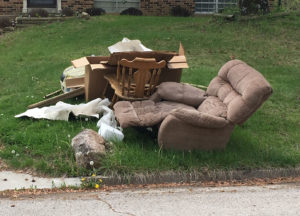
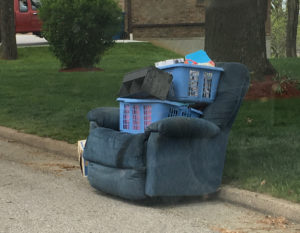
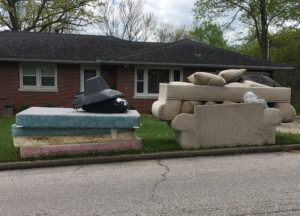
We are our junk

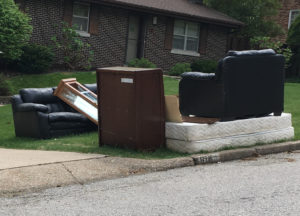
Is there anything more revealing of who we really are than the shit we leave by the curb for the spring trash pick-up?

Miss Martha Turner

In 2009 Joe Bankhead retired — at the age of 92 — from a 60 year career in and around radio. One of the first things he did was bang out a 20 page history of his time at KBOA in Kennett, Missouri. It’s a long read. A twenty-page core dump of Joe’s recollections. He apologizes a couple of times for his rambling, haphazard style but Joe wrote exactly the way he talked. (Lots of exclamation marks!)

I don’t think Joe really expected anyone to read 20 pages of memories (nor do I) but there’s some good stuff, especially for anyone interested in the early days of radio. So I’m going to share some of those stories here from time to time.

“I’ve got to tell you about Miss Martha Turner. Martha was a clean cut black lady from Hayti who purchased a 15-minute segment to be aired each Saturday morning. On her program she would sing an a cappella song and read all the cards and letters she would receive during the week. She’d arrive at the station three or four hours before her airtime and type out her dialogue (word for word) that she’d recite while on the air I kept a copy of Martha’s script on hand for years and I’m sorry I can’t provide it for you now. That it was unique and entertaining is a huge understatement. Miss Martha Turner deserves her spot in the history of KBOA. I don’t recall her ever trying to sell anything, or ask for donations from listeners. It appears she just wanted to be on the air and accommodate her fans by reading their letters.”

Joe died in 2011 and took with him a lifetime of great memories. I’m still amazed at his ability to recall so much detail at the age of 92. Joe’s son, Jim Bankhead, was kind enough to let me include Joe’s history on KBOA383.com (as a PDF). I transcribed the original and added a few links. It’s also searchable.

News is bad for you

“News is bad for you – and giving up reading it will make you happier.” That’s the main idea in an essay by Rolf Dobelli (The Art of Thinking Clearly: Better Thinking, Better Decisions). I’ve had that feeling (in my gut) for a while now and stopped watching TV and cable news a fews months ago. Stopped listening to radio news as well. Gave up Twitter. All I can tell you is, I feel better.

Mr. Dobelli makes some interesting points. A few of my favorites:

News is easy to digest. The media feeds us small bites of trivial matter, tidbits that don’t really concern our lives and don’t require thinking.

Unlike reading books and long magazine articles (which require thinking), we can swallow limitless quantities of news flashes, which are bright-coloured candies for the mind.

Out of the approximately 10,000 news stories you have read in the last 12 months, name one that – because you consumed it – allowed you to make a better decision about a serious matter affecting your life, your career or your business.

The relevant versus the new is the fundamental battle of the current age.

The more “news factoids” you digest, the less of the big picture you will understand.

Thinking requires concentration. Concentration requires uninterrupted time. News pieces are specifically engineered to interrupt you. They are like viruses that steal attention for their own purposes. News makes us shallow thinkers.

Not sure what to make of the fact I found this on The Guardian website. A news organization.

When newsletters were printed and mailed

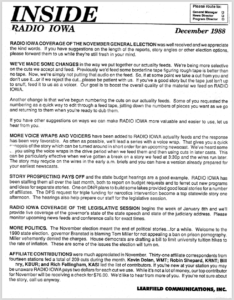
In 1988 if I wanted to communicate with the 60 radio stations affiliated with our news networks, I printed it and put it in an envelope and mailed it (USPS). Took as long as four days to reach some stations. No fax machines yet and email still years away.

This has such a Pony Express feel to me, here in 2017. The idea of a monthly, printed newsletter seems… quaint. But I recall almost every company and association doing a monthly (sometimes quarterly) newsletter. Somebody spent hours writing these things, often with multiple managers “signing off” before they went out.
When desktop publishing (and laser printers) came along, newsletters got ugly, fast. That was my opinion and I my philosophy was text-only; short paragraphs; one page, front and back. I read somewhere, “No more than an hour to write and a minute to read.” I think I knew, in my secret heart, that nobody read these things anyway. But I did them, every month for years. I kept most of them and they provide tiny snapshots of what was going one with our networks at the time.

Today we have Facebook pages and Twitter feeds and maybe even a blog or two. But I’m seeing some Big Names moving back to newsletters. Easier to monetize? More likely to be read?

Clyde’s first business plan

It’s pretty easy to come up with an idea for a new business. It’s really hard to write good business plan for a new business. In 1972, 28-year-old Clyde Lear put together a proposal for regional radio network. He showed it to a half dozen local businessmen who invested in him and his idea. Last year Clyde’s company was valued at more than one billion dollars. It’s not really his company anymore, he sold it a few years ago.

Clyde kept that first business plan and it’s interesting reading. I worked for Clyde for 30 years and have known him for 40 so it might be more interesting to me than you. He’s graciously allowed me to share some of it here. It begins with the concept, his “big idea.” An excerpt:

Regional news and farm networks have been especially lucrative. The growing farm economy required quick dissemination of farm information. Much of this information is a necessity to the agribusinessman. Further, the advertiser wanting to market his good — machinery, seeds, services, fertilizer, feed, chemicals — looks for the way he can get the greatest number of farmers and ranchers to hear his message at the lowest possible cost. The regional farm network is the answer.

Advertising rates, proposed programs, projected expenses, descriptions of other networks. In 1972 there were 113 radio networks in the U. S. and Clyde researched eleven of them. Clyde’s First Business Plan – Other Networks (PDF)

Ohio Farm Network: This is a full-time farm network, but distribution is by tape, and five days late. Programming is entirely morning about 20 minutes in length. It is entirely a pre-sold program, based on a percentage of the rate card of each station. One man handles all the programming and all the selling. The overhead is low, and sales, by comparison to the others, are moderate at best, seldom reaching $10,000 per month.

If you’ve ever thought about starting your own business, or if you started your own business, you might find this bit of history interesting. The company that Clyde and others built from his original idea doesn’t look much like his original dream but that was never a static thing. Clyde’s First Business Plan – Background (PDF)

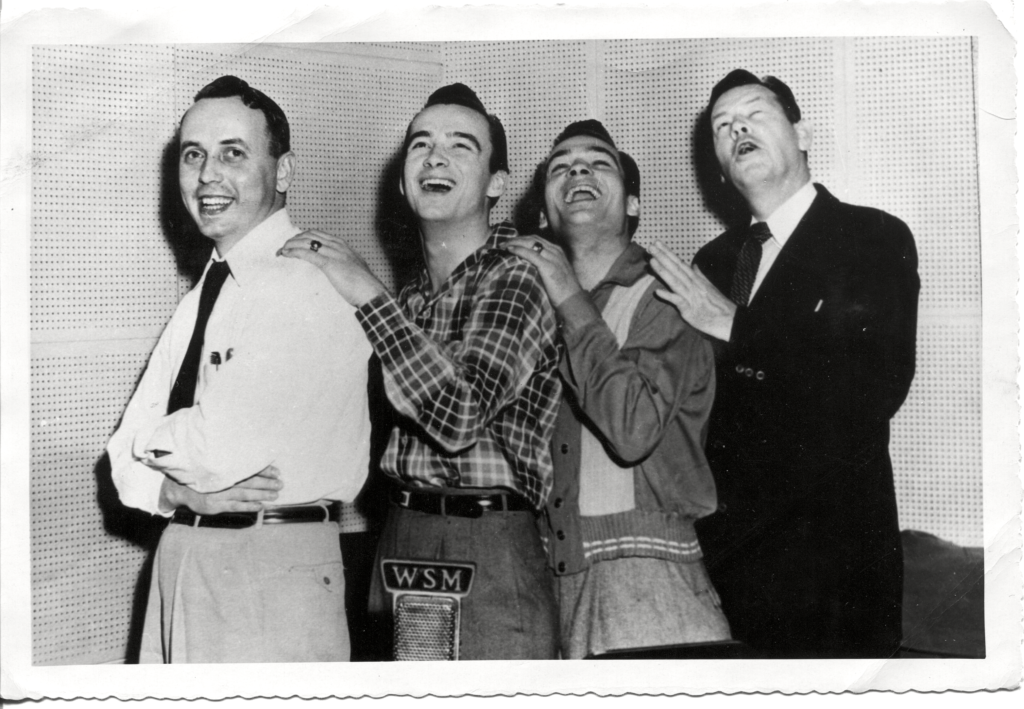
Jimmy Haggett at WSM

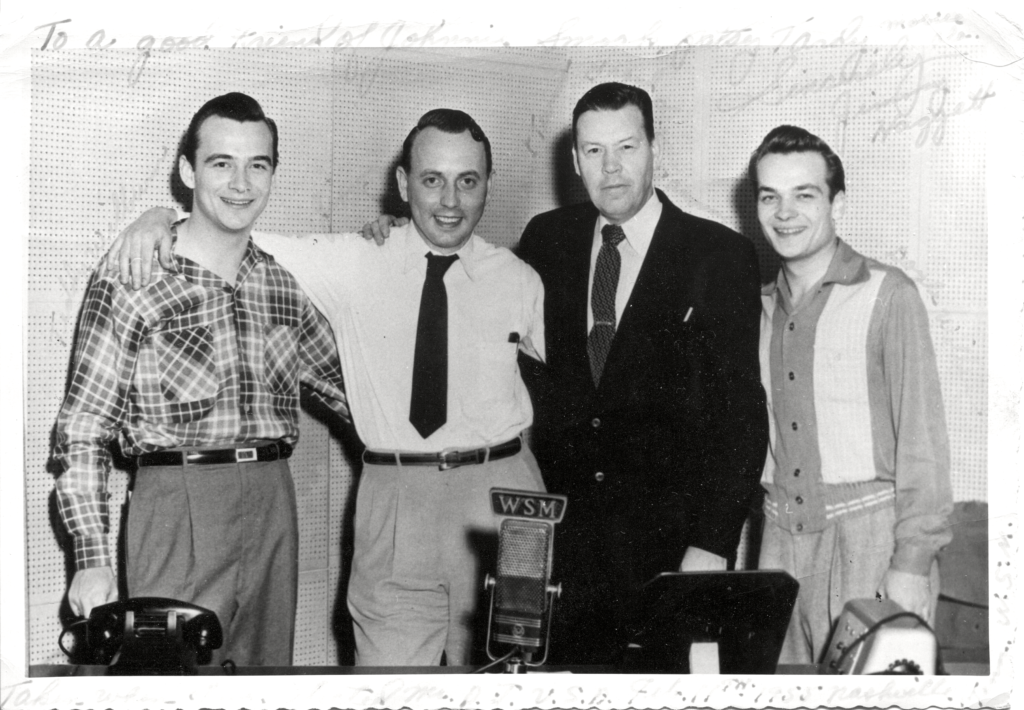
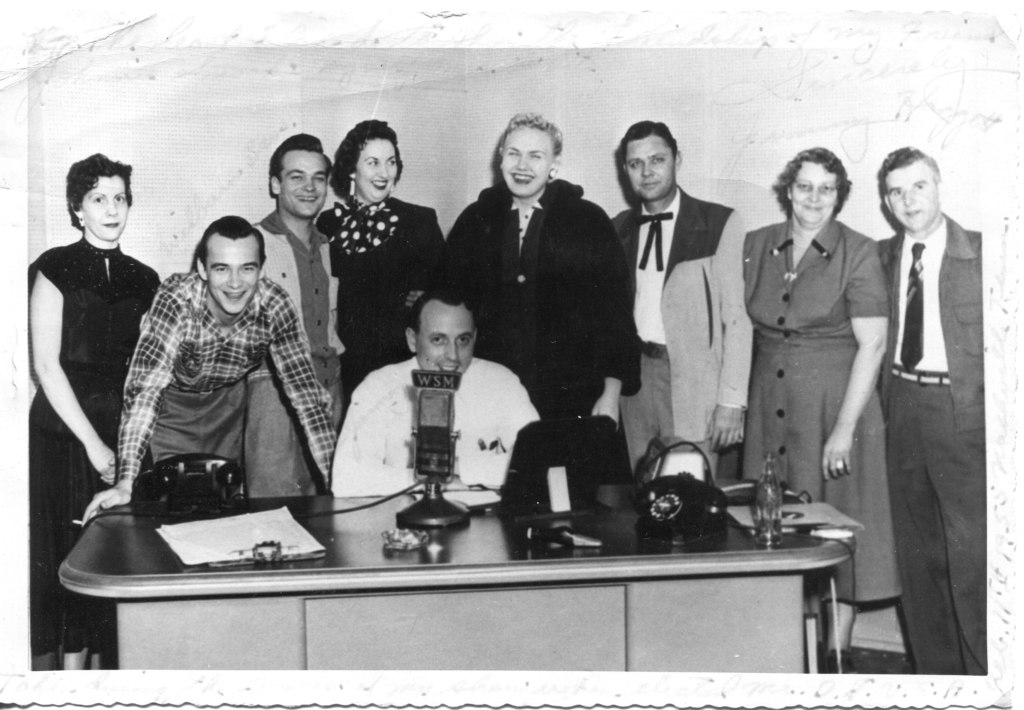
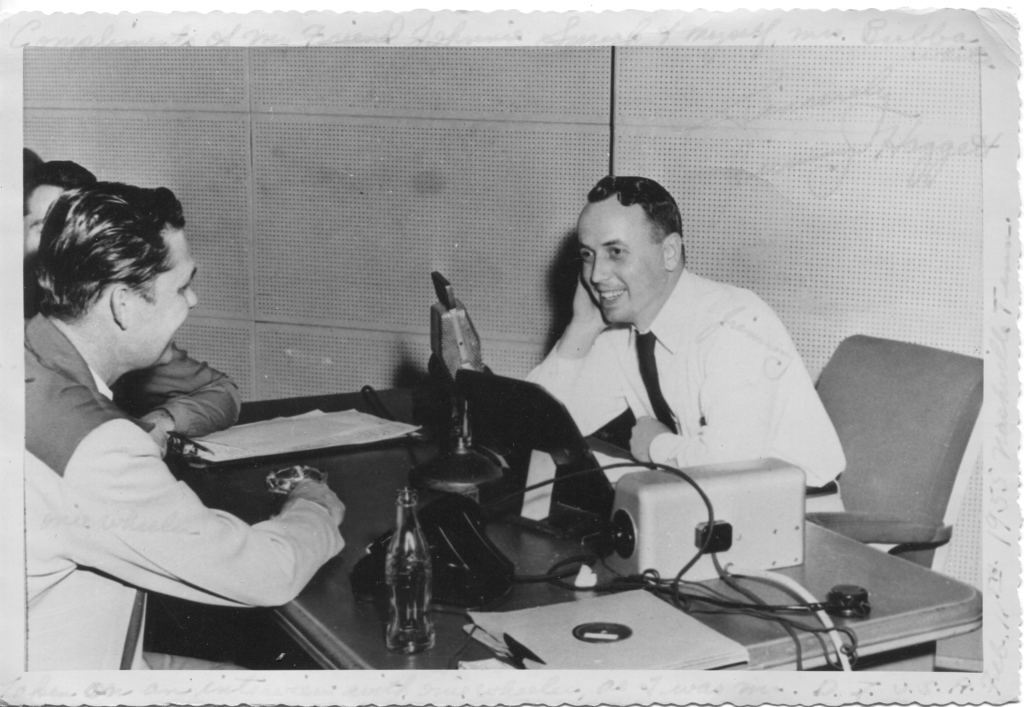
I have a fondness for old photos. Especially photos from the early days of radio. My friend Charles Isbell sent me some good ones this week. They were found in an old house being torn down in Caruth, Missouri. They feature Jimmy Haggett, a musician and DJ who worked northeast Arkansas and southeast Missouri in the 50s. He and my father worked at KBOA at one point. You can find a bio at the link above.

UPDATE from John Carpenter: “(These) Jimmy Haggett PR photos are all from Friday, February 11, 1955 at WSM Radio in Nashville. He’d been chosen “Mr. Disc Jockey, U.S.A.” for that month by the Country Music Disc Jockey Association. The award was noted in the March 1956 issue of “Cowboy Songs” magazine, in their “Disc Jockey Roundup” column: “A member of the CMDJA, Jimmy appeared over WSM, Nashville as ‘Mr. D.J., U.S.A.’ in February 1955, and appeared on Grand Ole Opry the following night.”


L-R: Unknown, Teddy Wilburn,Doyle Wilburn,unknown, Betty Jean and One Wheeler, unknown, unknown

As for the other people in the photos, two of the young men are The Wilburn Brothers (Teddy and Doyle). Looks like the photos were taken at WSM in Nashville, so perhaps some of the others are performers. If you recognize anybody, please leave a comment.

Interviewing Onie Wheeler. “Compliments of my friend Johnnie Smogh & myself, Mrs. Bubba White. Sincerely, Jimmy Haggett.”

Jimmy with Teddy and Doyle in the photos above/below. Would like to know who the other gentleman is. Will work on it.