
His final column is a good one. More here. And here…
Category Archives: Journalism
“Perhaps he’ll run as a Republican…”
During my 30 years working in broadcasting (a term that seems quaint these days) I worked with some really good journalists. Bob Priddy, Kay Henderson, and Clyde Lear…just to name a few.
For most of that time the Iowa Caucuses kicked off the presidential election cycle and Kay Henderson was at ground zero, including covering the Iowa delegations at the national conventions. In 2000 she filed these audio reports. (As emails to friend and fellow journalist, if I remember correctly.) I found an interesting nugget from her July 29th report:
“Donald Trump is sending a bus to the hotel on Tuesday at 11 a.m. to take the Iowans to the boardwalk in Atlantic City. Does he know these people are Republicans — and they can get their fix in our own casinos? Perhaps he’ll run as a Republican in 2004 and is laying the groundwork.”
“A presidential candidate’s job is to win”
The Beltway press is angry that Vice President Kamala Harris hasn’t sat down with them to talk about things like policy. In their warped, archaic minds, they are important to the political process as a way to inform readers about the candidates. That was a thing before social media and the internet, for sure. But today? The Beltway media is broken beyond repair, and we’re all doing fine learning about Harris on our own, thank you very much.
A presidential candidate’s job is to win. That’s it! So pray tell, how does talking to The New York Times or any other national media outlet help that cause? Either journalists will ask ridiculous, shallow questions and waste everyone’s time, or they’ll fish for a gotcha quote they can use to generate “controversy” and clicks.
Look at the press’ behavior. When given a chance to ask questions, they sound like they’re in a lockerroom, seeking quotes, not policy. This does nothing to inform the electorate. I know the argument about testing a candidate. But the press as currently configured aims for game & gotcha.
The press needs Kamala Harris. Kamala Harris doesn’t need the press. Their motive in whining for what they take as their birthright (hello, A.G.) is to salve their editorial egos and earn them attention (and money). They have not earned this role; they have forfeited the privilege by their behavior.
Time For A Break: Democrats Don’t Need The Media (Bypass the Gatekeepers to Speak To The People). By Oliver Willis
The press collectively believes at all times that it must constantly be fed. Like an infant or toddler who doesn’t get their food at precisely the moment their bellies start rumbling, the press throws up these occasional tantrums. On the other side of the aisle, they are willing to put up with the abuse of the infantile Donald Trump because he gives them precisely the empty calories they want: Nonsensical outrage that attracts clicks and eyeballs and attention and leads to ad revenue and book deals and the like.
Harris and her campaign have been able to masterfully frame the election as a battle between normal progressive ideas and the weird conservativism of the right, not via sit-downs with stuffy news anchors and reporters working on their next book deals, but by constantly pumping out content via their existing press infrastructure and social media.
A Harris social media post can reach every single one of the people who are going to cast a ballot […] If she speaks directly to camera and hits “post,” she no longer has to worry about whether the editors hiding behind their monitors have deemed it “newsworthy.” That is now for the potential audience to decide, not them.
Fox News
“The commercial arm of a right wing political movement, specializing in strategic resentment and aggregated grievance in the attention economy, while behind the scenes it tries to be a kingmaker and party boss, riding the tiger of manipulated rage.”
— Jay Rosen
Iowa PBS announces new Iowa Press moderator
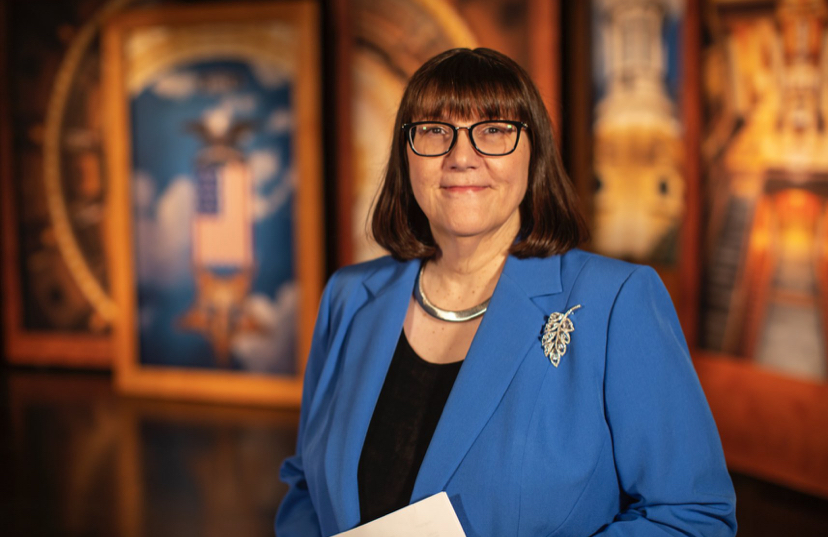
(Press release) Kay Henderson, the dean of the Iowa Capitol press corps and long-time guest panelist on Iowa Press, will be the next host and moderator of the Iowa PBS public affairs program. Henderson replaces David Yepsen, who retires from the Iowa Press desk on September 10, 2021. Her first formal broadcast as host will be Friday, September 17.
“Kay is already a member of the Iowa PBS family,” said Molly Phillips, executive director and general manager of the statewide public television network. “She has capably subbed as host and has been a regular second chair at the Iowa Press desk. She’s participated in countless campaign debates over the last three decades. We couldn’t ask for a stronger, more esteemed and experienced journalist to continue the Iowa Press legacy.”
Henderson first appeared on Iowa Press in October of 1987. For the past 20 years, she has been the national political director for Learfield news networks in Iowa, Missouri, Minnesota and Wisconsin. She has served two terms as president of the National Association of State Radio Networks’ news directors group. Henderson was hired by Learfield in 1987 as a statehouse reporter for Radio Iowa, a statewide news and sports network serving more than 70 commercial radio stations. She’s been that network’s news director since 1994 and will remain in that role alongside her new weekly assignment at Iowa PBS.
“It’s an honor to be invited to take on this new role,” Henderson said. “Watching Iowa Press hosts Dean Borg and David Yepsen guide the program over the past 34 years has given me a glimpse of the responsibilities ahead. I’m humbled by the opportunity and excited about the task of helping Iowa Press move into its fifth decade of service to our viewers.”
Henderson received the Iowa Broadcast News Association’s 2002 Jack Shelley Award, an annual recognition of “outstanding contribution to the cause of professional journalism.” The list of Shelley Award recipients includes the late Dean Borg, who retired as Iowa Press host in 2016, and the late Dan Miller, the long-time Iowa PBS general manager who was an Iowa Press producer early in his 37-year career with the network.
“After three decades of Iowa public affairs coverage on radio and on Iowa Press, Kay Henderson is the backbone of political journalism in this state,” said Andrew Batt, Iowa Press senior producer. “Our viewers have found Kay to be a trusted source for news and information throughout annual legislative sessions and nearly 20 election cycles.”
Henderson’s first salaried job in journalism was a three-month summertime stint as managing editor of the Lenox Time Table, the weekly newspaper in her southwest Iowa hometown. In addition to her work in Iowa broadcasting, Henderson has appeared on the PBS NewsHour, NBC’s “Meet the Press” and ABC’s “This Week” as well CNN, Fox News and MSNBC.