
Tag Archives: KBOA
Sad T-Shirts
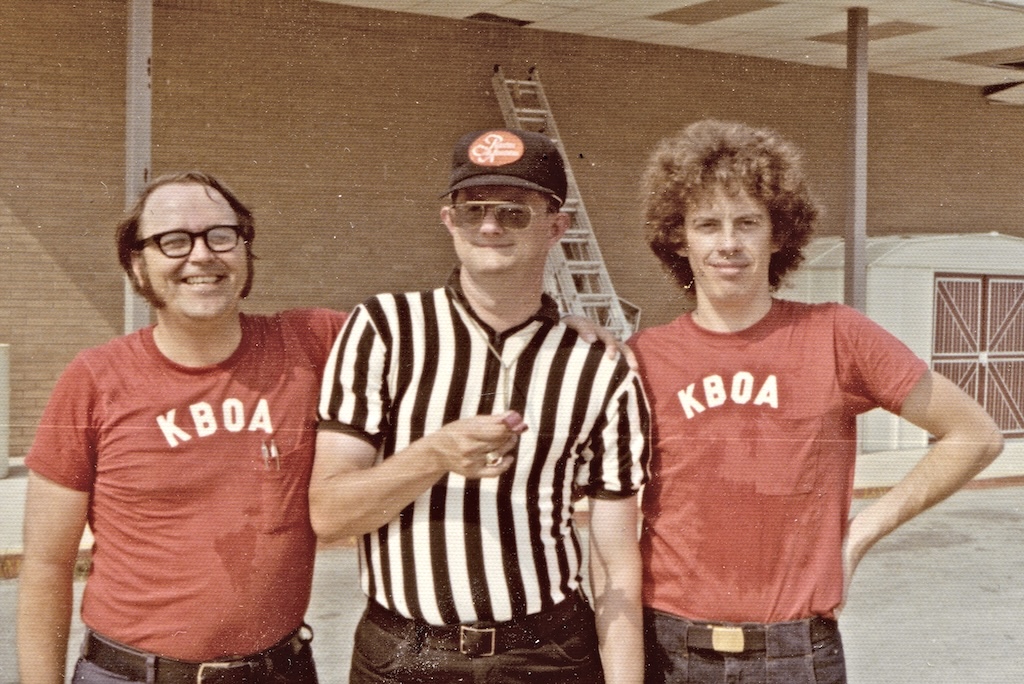
Came across this photo while cleaning out my office closet. First thought was, “Those are the saddest promotional T-shirts I’ve ever seen.” (I had almost no budget). My second thought was, “Looks like a scene from a remake of Napoleon Dynamite.”
Charlie Earls 1938-2022
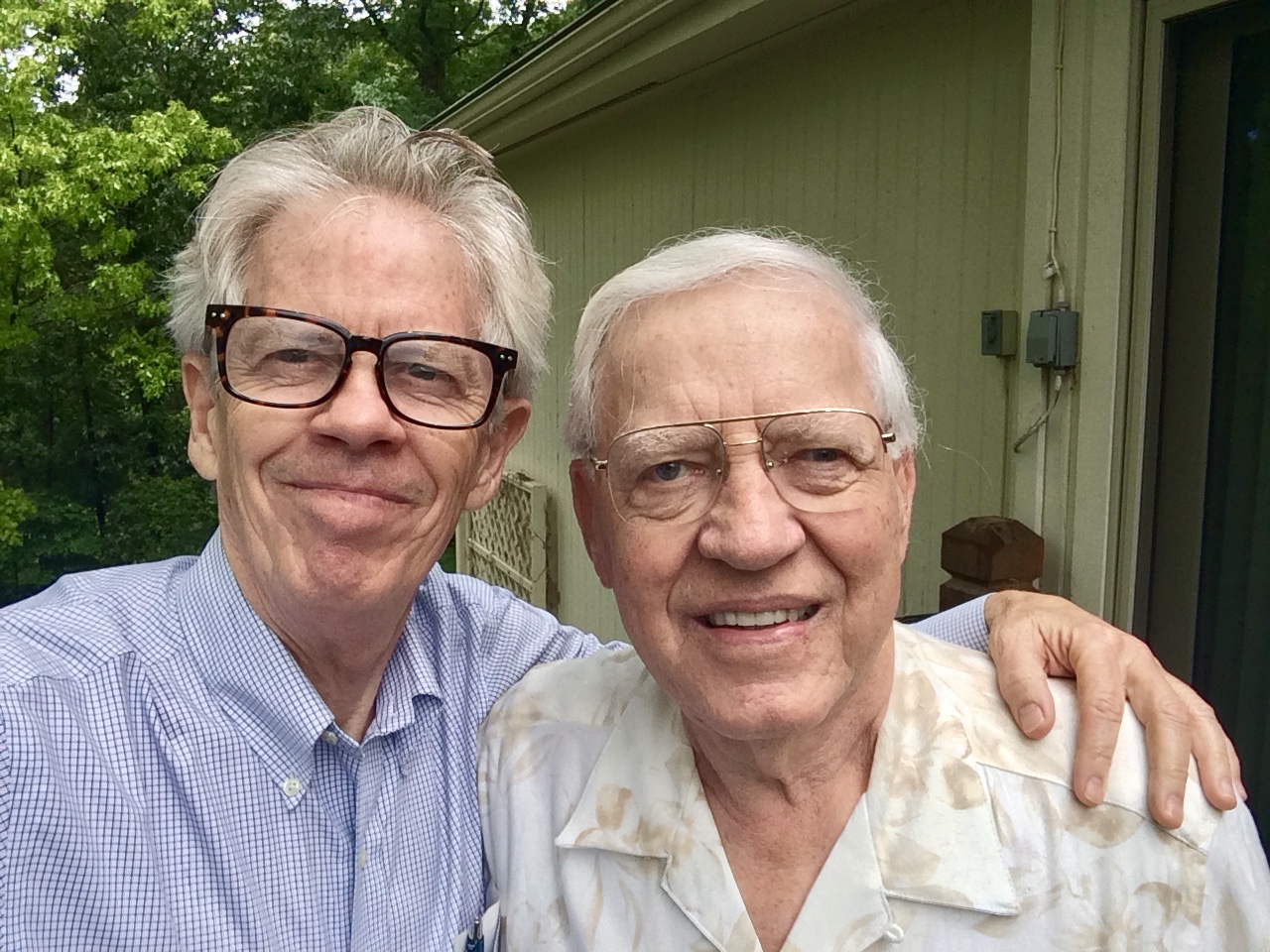 Charlie Earls didn’t give me my first job but he gave me the first job I really loved and, looking back 50 years, the best job I ever had. And he was a good man to work for.
My father worked at KBOA or many years (so I was pretty much a legacy hire) and when my mom’s health went bad, Charlie let my dad have time off for trips to he hospital in Memphis and made his life easier in other ways.
As program director I would occasionally go to Charlie (owner/manager) for advice. He’d listen to my problem and then say something along the lines of: “Okay. I can tell you what you should do, but if I do… you have to take my advice. Do you still want it?” He understood it was better for me to make the call, even if I made the wrong one.
I was fortunate to know Charlie and to have worked for him.
(From Missouri Broadcasters Association Hall of Fame) “Charles Earls was born in Wyatt, Missouri, the youngest of 7 children. He attended elementary school in St. Louis, and graduated in Steele, Missouri in 1956. He was an Air Force control tower operator in Chitose, Japan, where he developed his love for radio. He was also a local disc jockey on the Air Force radio station.”
“His first paid job in radio was for Harold Sudbury, Sr. at KLCN in Blytheville, Arkansas in 1960. That’s where he met and married Scottie Jolliff. A son, Charles Scott was born in 1961. With a new family, Charles decided to make radio his career and answered an ad in Broadcasting Magazine for a job in Waco, Texas. KAWA was a 10,000 watt daytime AM station where Charles was hired as a salesman and weekend newsman. Within six months he was the manager. An Illinois newspaper company owned the station and Earls moved his family to La Salle/Peru, Illinois, to put a new FM station on the air for them. He worked on the newspaper side as a salesperson for a while until he was able to fulfill his dream of owning his own radio station by purchasing KTHS in Berryville, Arkansas.”
“The Earls moved to Berryville in 1966 and Charles started attending the Arkansas Broadcasters Association meetings. Later that year, KBOA & KTMO in Kennett, Missouri became available, and in October, the Earls’ bought those stations and moved to Kennett, while still managing KTHS.”
“In the coming years, they added Missouri stations in Farmington, Branson and West Plains, a station in Creston, Iowa, as well as Arkansas stations in Mountain Home and Yellville.”
Did Buddy Emmons perform at KBOA?
According to Wikipedia, Buddy Gene Emmons (January 27, 1937 – July 21, 2015) “was an American musician who is widely regarded as the world’s foremost pedal steel guitarist of his day. He was inducted into the Steel Guitar Hall of Fame in 1981. Affectionately known by the nickname “Big E”, Emmons’ primary genre was American country music, but he also performed jazz and Western swing. He recorded with Linda Ronstadt, Gram Parsons, The Everly Brothers, The Carpenters, Roger Miller, Ernest Tubb, John Hartford, Little Jimmy Dickens, Ray Price, Judy Collins, George Strait, John Sebastian, and Ray Charles and was a widely sought session musician in Nashville and Los Angeles.”
According to a newspaper clipping (Calumet, Illinois) sent to me recently by Brandon Rowe, Emmons performed with one (or more?) bands that made regular “appearances” on KBOA during the early 1950’s.
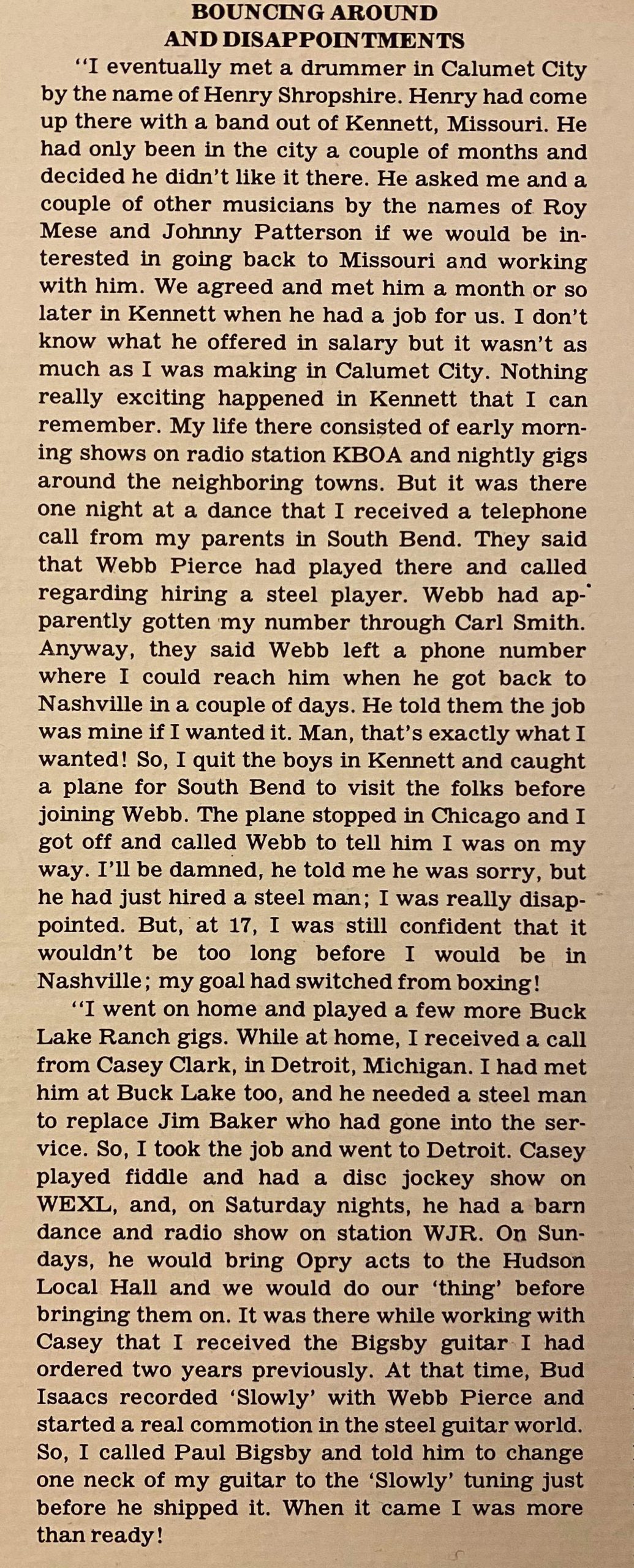
PS: My favorite line from the article: “Nothing really exciting happened in Kennett that I can remember.”
Reel-to-reel
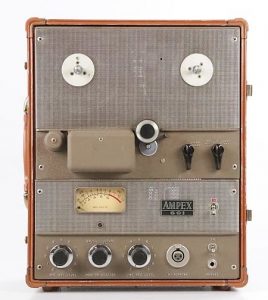
Got a nice jolt of nostalgia from this flickr photo of a reel-to-reel tape. Particularly the reference to speed (7.5 ips = inches per second). The on-air studio at KBOA had a portable Ampex reel-to-reel tape recorder wired into the board and one of the requisite skills was “cueing up” a tape while reading the weather or news or whatever.
 “Originally, this format (reel-to-reel) had no name, since all forms of magnetic tape recorders used it. The name arose only with the need to distinguish it from the several kinds of tape cartridges or cassettes such as the endless loop cartridge developed for radio station commercials and spot announcements in 1954, the full size cassette, developed by RCA in 1958 for home use, as well as the compact cassette developed by Philips in 1962, originally for dictation.” – Wikipedia