Unwanted keepsakes

Barb grew up with five brothers and sisters all sitting around a big dinning room table that was soaked in memories. After her parent died it sat in our basement for years. She was sure a niece or nephew (we are child-free) would want this — and other — treasures. They didn’t, for all of the reasons mentioned in this interesting story.

As baby boomers grow older, the volume of unwanted keepsakes and family heirlooms is poised to grow — along with the number of delicate conversations about what to do with them. According to a 2014 United States census report, more than 20 percent of America’s population will be 65 or older by 2030. As these waves of older adults start moving to smaller dwellings, assisted living facilities or retirement homes, they and their kin will have to part with household possessions that the heirs simply don’t want.

My parents grew up during the Depression (mom on a farm, pop in town) so when they could afford to buy some stuff, they did. And it was important to them.

The competitive accumulation of material goods, a cornerstone of the American dream, dates to the post-World War II economy, when returning veterans fled the cities to establish homes and status in the suburbs. Couples married when they were young, and wedding gifts were meant to be used — and treasured — for life.

I’ve been looking around me as I write this, looking for things I’ll someday want to find a home for. Things with sentimental value. There’s an old microphone used at the station my father and worked at but any collector of radio memorabilia will be thrilled to have it.

As I’ve come to understand that my memories aren’t as real as I once thought them to be, the material items associated with those memories seem less valuable.

Things I’m Older Than

I don’t recall when I first had the experience of looking around and realizing I was the oldest person in the room. It’s been long enough that I no longer notice but I had a bit of a flashback while hanging out on Mastodon.Technology. Am I — I wonder — the older person posting there? I then began ruminating on just how much technology is younger than I (3/8/48). A few examples:

  • Commercial Jets – “The British Overseas Aircraft Corporation (BOAC), the national British carrier, first introduced a commercial jet airliner into service. The 36-seat Comet 1, built by De Havilland, flew for the first time on July 27, 1949. BOAC inaugurated the world’s first commercial jet service on May 2, 1952.”
  • Color TV – “Color television had its beginnings in the late 1940s alongside black and white television. It was not a commercially viable until the early 1950s. At that time, two competing color mechanisms were being championed separately by CBS and RCA (which at the time was affiliated with NBC).”
  • The Honda motorcycle – “The first complete motorcycle, with both the frame and engine made by Honda, was the 1949 D-Type, the first Honda to go by the name Dream.”
  • TV Remote – “The first remote intended to control a television was developed by Zenith Radio Corporation in 1950. The remote, called “Lazy Bones”, was connected to the television by a wire. A wireless remote control, the “Flashmatic”, was developed in 1955 by Eugene Polley.” Before remotes, one walked up to the TV and turned a knob to change channels. As more and more became available, this knob was used more and more (a child was ordered to get up and change to channel x). These plastic knobs quickly stripped from constant turning and a pair of wire pliers had to be used. It was common to see pliers sitting on top of the living room TV in the ’50s.
  • Power Steering – “Chrysler Corporation introduced the first commercially available passenger car power steering system on the 1951 Chrysler Imperial under the name “Hydraguide”.”
  • Cable TV – “Cable television originated in the United States almost simultaneously in Arkansas, Oregon and Pennsylvania in 1948”
  • ATM – “It is widely accepted that the first cash machine was put into use by Barclays Bank in its Enfield Town branch in North London, United Kingdom, on 27 June 1967.” (Wikipedia)

Photo descriptions

I’m still thinking about photos. Specifically, the story behind photos. The ease of taking, sharing and storing photos has created a tsunami of digital photos. The moment (and the photo that captures it) passes through our hands so quickly, there’s no time to consider the story behind the photo (if there is one). Besides, I know who’s in the photo and where it was taken and I’ll be around forever so why bother with descriptions and such. And there’s something to that. I have dozens of photos of the beach near our place in Destin, FL. There might be a story but there might not. Sometimes the photo IS the story.

Our relationship with photos was very different when cameras used film. Days (weeks?) might pass between the time you took the photo and and when you held the print in your hands. It took some commitment to sit down with a stack of photos and make notes on the back about the people, the place, the event. Perhaps it comes down to who the photo is for. If it’s just for me, well, I know all that and when I’m gone, who cares. If you think of the photo as having a life longer than yours, the back story is priceless.

The photo of my mother and father kissing on a park bench (on their honeymoon) is a good example. What if my mom had written a few lines (on the back) describing where they were and what they had been doing?

I’m not going to write descriptions for the 1,900 photos in my collection. At least not all of them. But I have hit on a way to connect to the story behind the photos. My blog. I’ve been blogging for fifteen years and and have written (and tagged) 30 posts about Destin. I’ve added a link to those posts to the descriptions of the photos in my collection. I have a couple of hundred photos of KBOA and I’ll add http://www.kboa830.com to the description field of those photos. And so on. (If you’re a half-empty type, you’re thinking, “Yeah, but your blog will be gone when you die.” I’m working on that.)

This is all well and good if you’re retired with lots of time to manage your photos. True. But I think the case can be made that a photo that’s not worthy of a brief description might not be worth keeping. And a lot of them aren’t, in my opinion. Folks are fire-hosing photos to the cloud with little or no thought. Google Photos is an attempt to address this.

“Meditation is awareness”

I have some bad habits and a couple of good ones. Perhaps my best habit is daily mindfulness meditation. I sit on a cushion for 30 minutes (sometimes as long as an hour) and concentrate on my breathing. That’s it. That’s my meditation practice. It’s the best half hour of my day.

And I haven’t missed a day for the last 271 days, tying previous record. My longest streak is 371 days. I’ve been practicing meditation for years but didn’t start keeping track of my sessions until November, 2014, when I started using an app called Equanimity. It times my session and keeps a simple log.

That first streak (371 days) was broken due to a bout with pneumonia. I started over and made it 271 days before I missed while out of town at my 50th high school reunion. So now I’ve set my sights on 371. If I can make it to September without missing a day, I’ve not a new streak. And I will have only missed two days in the last 1,000.

I can’t control the quality of my meditation sessions but I do have control over whether or not I sit every day. Which is important to me.

Title quote from Meditation Now or Never by Steve Hagen

Try to play the hits

I came of age in the era of push-button radios (in cars). If a station played a song I didn’t care for… (chunk!) I hit the button for another station. Commercials or news? (chunk!) If going through my presets didn’t get me a song, I’d keep punching. When I got a job as a DJ an awareness of that ever-so-brief window was hard-wired. You only had a listener until you aired something they didn’t like. Which was inevitable, of course, especially in a small market like ours. But you tried to play the good stuff and keep the tune-outs to a minimum.

I’ve always (instinctively?) approached online with this in mind. Blogging in the early days and social media later. Will my share ‘hold’ the reader… or tune them out? After all, few of my ‘followers’ know who I am (or care). They’re waiting for the next nugget and if it doesn’t come (often enough) why would they hang around.

I have a theory that most on social media imagine a relationship that doesn’t exist. “They follow me because they care about what’s happening in my life, even the most trivial thought or event.” Maybe. I’m gonna keep playing the hits (or try to).

Kennett’s Flying Bank Robber

In January of 1976 I was on the air (noon hour?) at KBOA in Kennett, MO, when the police scanner in the studio went nuts. Someone (dispatcher? patrolman?) was yelling that someone had robbed the bank and “took off in an airplane!”

I grabbed a cassette recorder and dashed out of the station, yelling for someone to go up and take over the live studio. I got to the small motor bank before the police and got a few minutes of audio with the teller who had been robbed.

Police showed almost immediately and made me get out. I was pumped because I had some good stuff. When I pulled the cassette from the recorder it was hopelessly wound around the roller and gears and shit. No way to salvage. I nearly wept. Instead, I hung around long enough to get a little more information and then headed back to the station where I did a quick ad lib report live and then started writing up the story.

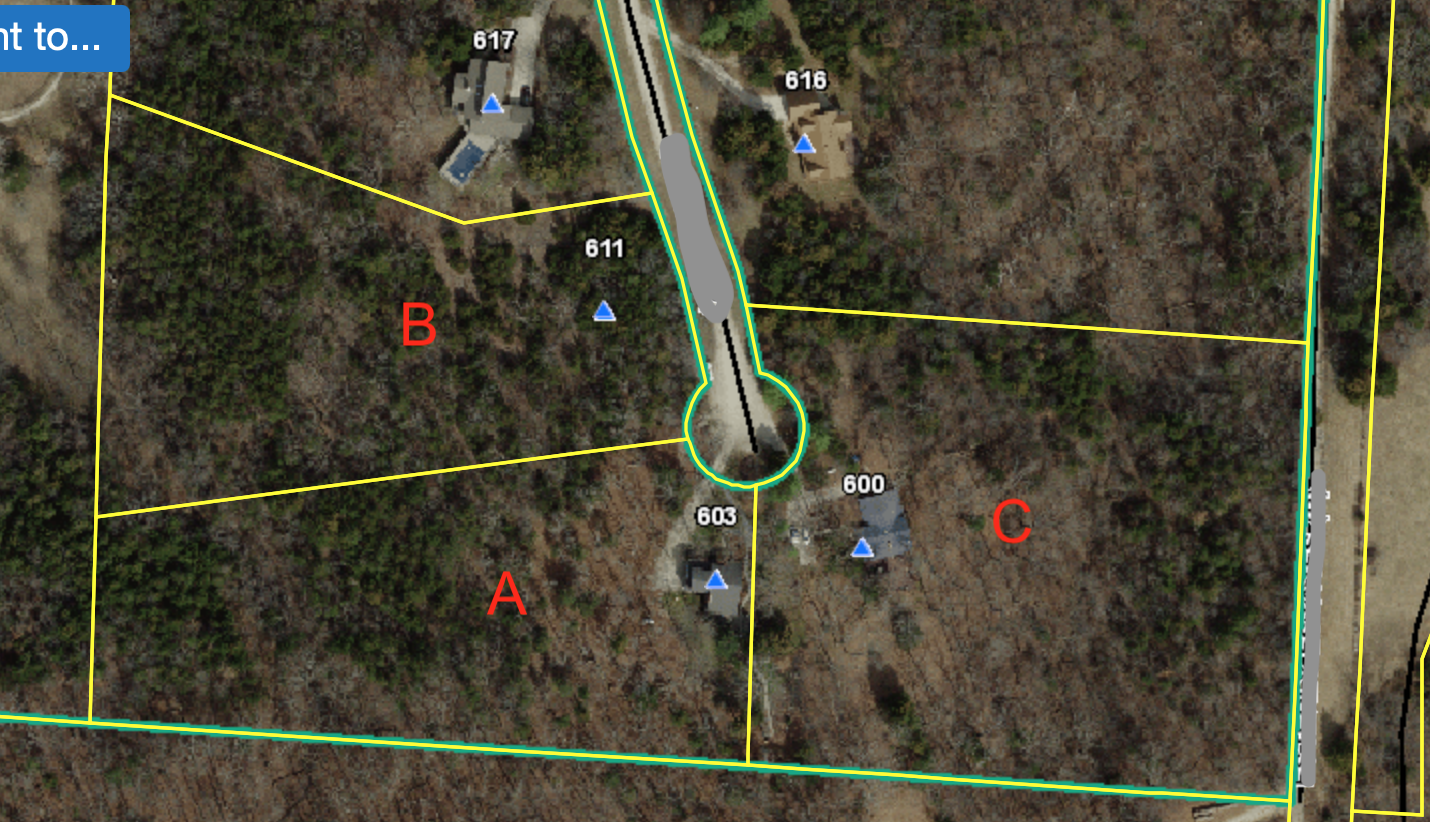
The satellite image above tells you most of what you need to know. The pilot taxied the small plane out to A where pilots always stopped to let their engines warm up before take off. He slipped out and ran across the highway to the small motor bank (Bank of Kennett). This was a tiny little facility. Room for maybe two tellers and a little lobby (6×10?) separated by glass and a door. The way I remember the story, he asked the teller for a chair and she opened the door to hand him one (he said he was waiting for a friend). He stuck a gun in her face, got the cash ($24K) and boogied back across highway (about 100 yards) and took off into the sunset. He was also charged with “interstate flight.” The FBI arrested 39 year old Dennis R. Holmes a few weeks later in Phoenix.

According to a story in the St. Louis Post-Dispatch, Joseph Appleyard, chief pilot at Dolphin Aviation in Sarasota, taught Holmes to fly a few months earlier. “He didn’t see like my average bank robber,” Appleyard said. Holmes rented the plane (in Sarasota) on the Thursday before the robbery, flew to Kennett on Saturday.

The plane was tracked on radar by the nearby Air Force base in Blytheville, AR, but lost him when it put it on the deck and disappeared. He had a range of about 700 miles.

Mr. Holmes was also arrested for holding up a bank in Arcata, CA in February. He fled in a car but quickly transferred to a small plane. He was also a suspect in a $55K stickup the previous October in Michigan. In that one the robber held up the bank just as the high school homecoming parade was about to begin, and he melted into the crowd.

If you’re out there, Dennis… if you’re reading this… how about an interview to make up for the one that got away?

Miss Martha Turner

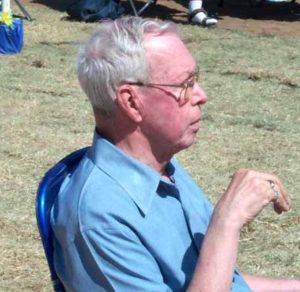
In 2009 Joe Bankhead retired — at the age of 92 — from a 60 year career in and around radio. One of the first things he did was bang out a 20 page history of his time at KBOA in Kennett, Missouri. It’s a long read. A twenty-page core dump of Joe’s recollections. He apologizes a couple of times for his rambling, haphazard style but Joe wrote exactly the way he talked. (Lots of exclamation marks!)

I don’t think Joe really expected anyone to read 20 pages of memories (nor do I) but there’s some good stuff, especially for anyone interested in the early days of radio. So I’m going to share some of those stories here from time to time.

“I’ve got to tell you about Miss Martha Turner. Martha was a clean cut black lady from Hayti who purchased a 15-minute segment to be aired each Saturday morning. On her program she would sing an a cappella song and read all the cards and letters she would receive during the week. She’d arrive at the station three or four hours before her airtime and type out her dialogue (word for word) that she’d recite while on the air I kept a copy of Martha’s script on hand for years and I’m sorry I can’t provide it for you now. That it was unique and entertaining is a huge understatement. Miss Martha Turner deserves her spot in the history of KBOA. I don’t recall her ever trying to sell anything, or ask for donations from listeners. It appears she just wanted to be on the air and accommodate her fans by reading their letters.”

Joe died in 2011 and took with him a lifetime of great memories. I’m still amazed at his ability to recall so much detail at the age of 92. Joe’s son, Jim Bankhead, was kind enough to let me include Joe’s history on KBOA383.com (as a PDF). I transcribed the original and added a few links. It’s also searchable.

Timeline of computer stuff

I’ve got a thing about calendars. That’s not quite right. I’ve got a thing about remembering knowing when things happened and I’m really bad at remembering stuff. Even important stuff. So I kept a journal for a while and when DayTimers came along I kept one with me all the time for meetings and notes and all the rest. I think I mentioned my DayTimer purge. These days Google Calendar is my tool-of-choice for keeping up with everything. With links to Google Drive. I came across the computer related list below while working on another project.

  • 1985 – First computer. Zenith with two 7.5 in floppy drives (no HD)
  • 1/6/89 – Jefferson City Computer Club meeting
  • 10/31/89 – Bought computer made by CompuAdd?
  • 12/6/89 – Rick Williams, MSC, Columbia, MO (1st ref?)
  • 4/21/92 – Purchased computer for $3,525.86. 33/386 4 meg; 101/VGA Samsung; 16 SCSI controller
  • 11/16/93 – Computer Concepts demo (?)
  • 11/16/92 – Switched to AmiPro (word processor/desktop publishing) on office computer
  • 6/20/94 – First “notebook” computer; purchased from Bill Bahr (Iowa) for $1700. Made by Toshiba. Base price: $1400; Fax/modem PCMCIA card: $300
  • 11/21/94 – MCI Internet service – $49.95 for software; $19.95/mo – 7 hours free; $3.00 per hour after that. 9600 baud/14400
  • 12/1/95 – Gateway 2000 computer, $3,100
  • 4/24/95 – Comdex, Atlanta, GA
  • 5/8/95 – New ISP (Internet Service Provider). Summit Information Services, Holts Summit, MO. $30/mo
  • 6/3/96 – Comdex, Las Vegas NV
  • 6/10/96 – Ordered IBM ThinkPad
  • 8/23/96 – Ordered ACT 3.0 (contact manager)
  • 4/20/98 – Comdex, Chicago, IL
  • 4/19/99 – Comdex, Las Vegas, NV
  • 7/1/99 – Shut down Straylight
  • 4/21/04 – Signed up for Gmail
  • 5/7/04 – First home wifi
  • 4/17/06 – First MacBook
  • 1/6/11 – Bought Google and Apple stock. 35 shares Google @ $569; 54 shares of Apple @ $368.03. Our investment guys talked us into selling some. “Too heavy in tech”
  • 6/15/11 – Google sent me a Chromebook to evaluate. Sent two for some reason.
  • 10/28/11 – Closed PayPal account
  • 6/15/12 – MacBook Pro delivered
  • 9/20/13 – First iPhone (5s?)
  • 11/14/14 – Began using Dropbox as primary cloud storage
  • 7/9/16 – Experimented with Evernote for notes/journaling
  • 3/20/20 – First Zoom call (COVID lockdown)
  • 7/18/21 – Subscribed to Spotify/Apple Music. CDs officially dead
  • 11/9/22 – First sustained use of ChatGPT. Blog posts begin
  • 5/12/23 – Retired Dropbox; consolidated into iCloud/Google Drive
  • 9/14/24 – TaxoPress plugin for blog taxonomy overhaul
  • 8/15/25 – BookBuddy library export (1,054 titles); taxonomy mega-project