College theater days

I spent my first two years of college trying to keep my draft deferment and quickly figured out I could do that better as a Speech/Theater major than as a Business major. I got a small part in Taming of the Shrew (below) my junior year which earned me a tiny scholarship ($500 a semester?). In my senior year I played the idiot son John in Lion In Winter. From the review (PDF): “Mays, in an attempt to convey his awkwardness, at times overdid John’s walk.” (Reviews below).

I loved the theater crowd. It was as cliquish as any fraternity or sorority but we didn’t have to dress as nice. As much as I enjoyed it, I never developed an interest in community theater. I still have a recurring nightmare in which I have to go onstage before a huge audience but I have never been to a rehearsal. In the dream, I’m trying to figure out how I can have a script in my hand without the audience noticing. Or come up with a way to adlib through the whole thing.

Before Wikipedia and YouTube

I’ve been sharing old photos from the early days of radio station KBOA. I worked there in the 70s and my dad before me. I’ve been updating content on the website I created about the early days (1947-1957) of the station. KBOA830.com was my first shot at a website, back in 1997 and didn’t get much attention after the initial setup because it focused on that ten year period.

While updating this week, I kept find relevant stuff on Wikipedia and YouTube and couldn’t figure out how I’d missed this stuff when creating the site. Then I realized Wikipedia didn’t come online until 2001 and YouTube in 2005. And I found other sites with great material about performers and on-air talent at KBOA.

My first interview

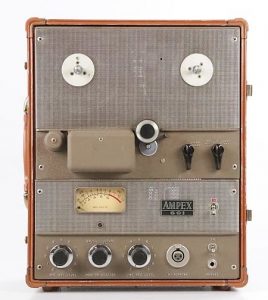
I remember the first recorded interview I did (1972). It was with Bill Walsh and Jack McDaniel, two local businessmen who organized the Fall Festival Parade every year in the little town where we lived. When I got back to the studio and dubbed the audio from a cassette to reel-to-reel tape, I was horrified to hear how awful I sounded. Long, rambling questions. It still makes me cringe.

I grabbed a splicing block, a grease pencil and some splicing tape (look ‘em up) and sliced out my questions. But first I had to record the questions without sounding like a moron… and then — oh so tediously — splice them back with the answers. Yes, the interview still sounded like shit.

No idea how many interviews I recorded during the next 40 years. A bunch. And I don’t think I got much better at it. Looking back it’s easy to see what I was doing wrong: talking too much. I mistakenly thought I was and equal part of the interview. A natural hubris, I suppose.

Few things infuriate me more than listening to an interview with someone who really has something interesting to say but never gets to say it because the interviewer continuously interrupts. Or eats up vast amounts of time with endless, rambling questions.

In recent years I’ve found a way to address this failing of mine. I write out every question I want to ask (trying to stay close to 10) and do my best not to vary. But more often than not, when I listen to the interview, I find I can delete my questions entirely, leaving the listener/viewer with what they came for.

There are some interviewers who add more than they detract. I’m fond of Daniel Tosh’s interviews (if one can really call them that). I like James Lipton’s (Inside the Actor’s Studio) style. But — like me — most interviewers simply can not shut the fuck up and let the subject talk.

Am I alive because of the atomic bomb?

I’m about halfway through Genius, James Gleick’s biography of Richard Feynman, considered by many the most brilliant American physicist of the 20th century. Feynman was probably the smartest of the scientists working on the Trinity Project (America’s atom bomb program). The first (and only test) of the bomb took place July 16, 1945. American bombers nuked the Japanese cities of Hiroshima and Nagasaki a few weeks later (Aug 6-9). Japan surrendered on August 15, 1945.

My father was in the Navy from May, 1943 until March 9, 1946. He served on the USS Mount McKinley; USS Appalachian; USS New Jersey; USS War Hawk; USS Iowa; and one or two others. All of which saw action in the Pacific.

According to Gleick, building the atomic bomb dramatically affected the lives of the scientists who created it. The Japanese lives lost to this terrible weapon have always been balanced against those that would have been lost in an invasion of Japan. Like my father, for instance. Japan surrenders, they turn the ships around and head home. Discharged March 9, 1946 in St. Louis. Meets and marries my mom (March 23, 1946) who was living in St. Louis. Happy ending. For some.

I’ve been sitting here for a few minutes trying to boil down some meaning from this bit of history. But “what if this event hadn’t happened” is a pointless game. It did happen.

“Nothing can happen unless the entire universe makes it happen. A thing is as it is, because the universe is as it is.”

The ravages of time

The photo above was taken last September at the 50 year reunion of the Kennett High School Class of 1966. Richard Peck and Larry Mullen standing; Joe Browning, John Robison and another guy seated. I attended my ten year reunion but skipped all the others. I’m glad I went to this last one. Got to spend a little time with Joe whose energy was released back into the Universe this week.

I took the other photo in 1968 in Richard Peck’s basement. A place to drink beer and be as young as we would ever be. L-R: Richard Peck, Jim Bob Green, John Robison, Jane Marshall and Lynn Strickland. Charlie Peck and Joe Browning down front. This photo became (for me) iconic of that wonderful time. How we came to be the old men in the class reunion photo is a mystery.

Junior High basketball team

My buddy John and I were two of five seventh graders that ‘made’ the junior high basketball team. (Sorry, can’t remember the other three) I remember this as a Very Big Deal at the time. I also remember that I wasn’t a very good basketball player. I didn’t handle the ball well and I wasn’t much of a shot. I was selected solely on the basis of “hustle.”

Coaches love hustle. They believe they can teach you how to be a better ball handler and improve your shooting skills… but they can’t give you that special mojo known as hustle. You have it or you don’t.

What Coach Proctor mistook for hustle in that skinny white boy was a near-pathological need to please this new male authority figure in my life. Throw myself headlong onto the hardwood floor? No problemo. Run “potato races” (sometimes known as “behind the lines”) until my lungs burst? I can do that.

None of which contributed very much to the final score but coaches know they need some of this second-string fire to keep the good players pushed (nudged?).

As I got older I discovered I could have much more fun in a pickup game at the park. Which is where I met Freddie B who lived in near-by public housing and played wearing rubber flip-flops. Freddie didn’t hustle. And he didn’t miss. From anywhere on the court. Swish.

These days, as I allow myself to move with the Tao, I sometimes flow, but I don’t hustle.

Hamra’s Department Store

The photos below were taken by Johnny “Mack” Reeder, probably in the early 50’s but perhaps as early as 1948 or 1949 (maybe a vintage car buff can help me narrow that down). This just off the “courthouse square” in Kennett, MO. The first photo is facing West.

hamras-department-store_4778648292_o

I remember Hamra’s from my youth (born in 1948) but I’m hard-pressed to tell you exactly what they sold. Clothing and fabrics, obviously, and I recall a shoe store next to the main store shown in these photos. There were several stores like this in “downtown” Kennett. Graber’s, James Kahn’s, Penney’s and some I can’t remember.

hamras-department-store_4778649328_o

I don’t think this was a “grand opening” so I’m guessing this was some sort of special sale. The photographer was one of the original employees of KBOA (the local radio station) and might have been recording the big crowd that resulted from advertising.

hamras-department-store_4778011963_o

The third photo speaks to the rural flavor of our small town. Lots of bib overalls. I remember hearing stories about hundreds of people flooding into town on a Saturday to purchase supplies for the farms that made up the local economy in those days.

AirPods

I spent some money on headphones back in the 70s. When I started at KBOA in ’72 all they had were these WWII-era Bakelite hockey pucks with a piece of vibrating tin inside.
headphones2

When I saw my first pair of Sennheiser open-air headphones (in a magazine) I ordered a pair and paid for them myself. And, yes, I took them into the studio for my shift and took them with me when done. They were pretty expensive (for the time) and a bit fragile. But I sounded soooo good in those headphones. More accurately, I could hear what I really sounded like and that was important.

Steve Mays KBOA control room

Fast forward several light years to the first iPods and the famous white earbuds that all serious music buffs hated. I loved them. They sounded fine to me and they fit my ears just fine. I’ve been using them ever since, pretty much every day.

In a few weeks Apple will start selling AirPods ($150) and I’ll buy a pair on Day One. And I might not be the only one. From Business Insider:

12% of U.S. consumers surveyed by Bank of America Merrill Lynch say they intend to purchase AirPods, apparently on the strength of Apple’s marketing, given that few people have actually seen and tried them out. This is a very bullish sign for Apple, says BAML. “12% of the US installed base could lead to up to an incremental $3bn in revenue,” writes the analysts.

“Apple’s marketing” is one explanation. Another might be that people like me have been using Apple earbuds for fifteen years and like them.