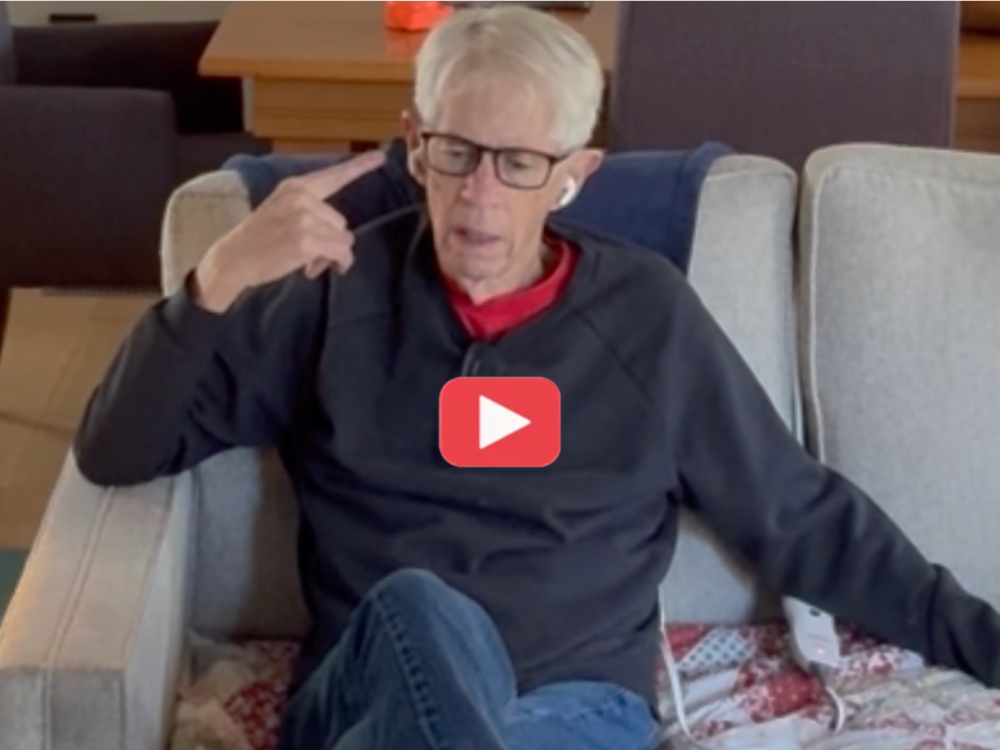
A parody of Creep

This is one of the better parody songs I’ve seen. Production values top-notch, but the cheap suit might be the best part. Had not heard of Don Caron but found this on the Parody Project website:

For over 50 years Don Caron has been active in the entertainment industry as a composer, choreographer, pianist, sound engineer, editor, screenwriter, author, producer, and director. He has composed extensively for orchestra, choir and chamber groups and his music has been performed and heard world-wide.

Junk

I was unable to express why I found these piles of junk so interesting. Fortunately my friend Dave got it immediately.

The video gave me very interesting vibes. I became curious about when each piece had been placed, what the intention was for saving it, and what the area looked like when they placed the first piece. And, which was the last piece added. And what became of the person or people who put it all there. And what will become of it. Will it stay forever? Will it all be taken to a different junkyard? Will archeologists find it all someday? 

Everything placed carefully. I can imagine him saying to someone, “are you needing to keep this McDonald’s I’m Lovin’It sticker? May I have it?” 

No, we can’t be friends

“I’m so tired of being told, “We disagree politically, but that doesn’t mean we can’t be friends!” Dude, if your political opinion is that children shouldn’t be fed, that the poor shouldn’t be housed, that the sick shouldn’t be cared for, that women shouldn’t control their bodies, that Americans can’t marry who they love, or that certain people shouldn’t exist… Yes, that most definitely means that we can’t be friends.”

@GryphonSK@techhub.social

Wes Fewell’s Club Juana

Some guys will put a big screen TV and a couple of BarcaLoungers in their basement mancave and call it a day. Not Wes Fewell. Wes is an athlete and a hunter. And an artist. He designs beautiful furniture and his skills are on full display in his basement.

He didn’t offer much history of the original Club Juana so I went looking online and found this from 2006 (source unknown)

The Club Juana was a landmark in Casselberry, Florida, for 43 years, first as a nightclub, later as a strip club. It attained national notoriety in 2002, when its owners staged regular productions of “Macbeth in the Buff” to circumvent local lewdness laws. The Club finally closed in June 2006 and was demolished on November 2 to make way for a freeway overpass. Its famous “Club Juana: Parking In Rear” neon sign, however, was spared by the Morse Museum of American Art in nearby Winter Park. The Museum, best known for its Tiffany collection, saw the sign as a worthy example of public art and local history. The Club Juana sign will join other neon signs from vanished Orlando-area businesses in the Museum’s collection. All of them are warehoused, and none are on public display.

Target practice 8.17.25

Five years ago I purchased a Ruger .22 revolver with the idea I’d use it for critters. Possums, armadillos, copperheads. I quickly discovered it’s a lot harder to hit a moving target than I realized. The gun has been on a shelf until the last couple of days. I’ve decided to practice until I can hit a soft drink can at ~30 feet. Again, harder than it looks on TV and in the movies.

In the video above the best I was able to do was hit two of the five cans. Although the cans are light as a feather, the .22’s pass right through them without moving the can. Next session I’ll fill the cans with water to see if that makes a difference. The goal is to be able to hit all five cans on one load.

UPDATE: Shooting cans looks great in the movies but this will be a more satisfying –and ecologically friendly– target.

Why does AI art look like that?

While I haven’t played with tools like DALL-E much every image I’ve created (Caused to be created?) has the same look. (Man resembling Keith Richards; old man holding a rock; man driving old Jeep; old Hindu man meditating.)

Writing in The Atlantic (paywall), Caroline Mimbs Nyce takes a stab at answering that question.

Two years into the generative-AI boom, these programs’ creations seem more technically advanced […] but they are stuck with a distinct aesthetic. The colors are bright and saturated, the people are beautiful, and the lighting is dramatic. Much of the imagery appears blurred or airbrushed, carefully smoothed like frosting on a wedding cake. At times, the visuals look exaggerated.

Someday computer-generated art may shed its weird, cartoonish look, and start to slip past us unnoticed. Perhaps then we’ll miss the corny style that was once a dead giveaway.

“A presidential candidate’s job is to win”

Markos Moulitsas at Daily Kos

The Beltway press is angry that Vice President Kamala Harris hasn’t sat down with them to talk about things like policy. In their warped, archaic minds, they are important to the political process as a way to inform readers about the candidates. That was a thing before social media and the internet, for sure. But today? The Beltway media is broken beyond repair, and we’re all doing fine learning about Harris on our own, thank you very much.

A presidential candidate’s job is to win. That’s it! So pray tell, how does talking to The New York Times or any other national media outlet help that cause? Either journalists will ask ridiculous, shallow questions and waste everyone’s time, or they’ll fish for a gotcha quote they can use to generate “controversy” and clicks.

Jeff Jarvis at BuzzMachine

Look at the press’ behavior. When given a chance to ask questions, they sound like they’re in a lockerroom, seeking quotes, not policy. This does nothing to inform the electorate. I know the argument about testing a candidate. But the press as currently configured aims for game & gotcha.

The press needs Kamala Harris. Kamala Harris doesn’t need the press. Their motive in whining for what they take as their birthright (hello, A.G.) is to salve their editorial egos and earn them attention (and money). They have not earned this role; they have forfeited the privilege by their behavior.

Time For A Break: Democrats Don’t Need The Media (Bypass the Gatekeepers to Speak To The People). By Oliver Willis

The press collectively believes at all times that it must constantly be fed. Like an infant or toddler who doesn’t get their food at precisely the moment their bellies start rumbling, the press throws up these occasional tantrums. On the other side of the aisle, they are willing to put up with the abuse of the infantile Donald Trump because he gives them precisely the empty calories they want: Nonsensical outrage that attracts clicks and eyeballs and attention and leads to ad revenue and book deals and the like. 

Harris and her campaign have been able to masterfully frame the election as a battle between normal progressive ideas and the weird conservativism of the right, not via sit-downs with stuffy news anchors and reporters working on their next book deals, but by constantly pumping out content via their existing press infrastructure and social media.

A Harris social media post can reach every single one of the people who are going to cast a ballot […] If she speaks directly to camera and hits “post,” she no longer has to worry about whether the editors hiding behind their monitors have deemed it “newsworthy.” That is now for the potential audience to decide, not them.

My most embarrassing photo

There must be plenty of them but nothing comes to mind. The question popped into my head after seeing photos of J. D. Vance in a blond wig and floral print skirt. A halloween photo from his college days. And former U. S. Congressman George Santos wasn’t camera-shy during his drag queen days.

Our annual Halloween parties were the social event of the year and I showed up dressed as a woman at least two of those parties. Once as a nurse, the other time as a nun.

The nun photo is memorable because Barb and both came as nuns (from different orders it would appear). Neither of us aware of the other’s costume.

Once I saw just how good a man could look in a dress and wig, I gave up on that costume idea.

While searching for my most embarrassing photo, it occurred to me that it wouldn’t be in my collection. It would almost certainly be a photo someone else took and that I didn’t know existed. If you have such a photo, I’d very much like to see it. (My embarrassment bar is pretty hight these days.)

In my youth, people didn’t walk around with a camera in their hand (or pocket). And if it was nighttime you’d need a flash. And then the wait for the film to be developed and on and on. It was just too much trouble. So there just weren’t as many photos. And if you had a good one, sharing it meant a trip to the post office. And what is an “embarrassing photo” in an age when teenagers text each other pictures that can only be described a pornographic?

The photos of Vance are only a problem (if it is a problem) because of his homophobic anti-trans comments on the campaign trail. And I’m not sure George Santos minded at all.

I’ll keep looking for my most embarrassing photo and update this post if I come up with something.

Too smart to be human

Me to ChatGPT: With the growing interest in AI, I’m seeing more references to the Turing Test. Can a human tell if he is having a conversation with another human or an artificial intelligence. An interesting spin on this is the suggestion that to pass the test, an AI will have to “dumb down” its responses in order to sound more human-like. In my interactions with ChatGPT and Perplexity, I’ve found both to be far more erudite than almost any of my human acquaintances. I don’t know anyone as “knowledgeable” and “articulate” as ChatGPT. Do you have any thoughts on this idea? Some of ChatGPT’s response:

This brings up some interesting philosophical questions about what it means to be human in conversation. Humans are not just repositories of knowledge; they bring emotions, experiences, biases, and limitations to the table. These elements make human conversation rich, but also messy, inconsistent, and imperfect. An AI that always responds with perfect grammar, deep insights, and an encyclopedic knowledge might inadvertently reveal itself as non-human simply because it lacks the flaws and variability that characterize most human interactions.

It’s a balancing act—finding the right mix of knowledge, relatability, and imperfection that aligns with human expectations in a given context. In the end, the goal might not just be to pass the Turing Test in a traditional sense, but to create AI that can adapt its communication style to different scenarios, sometimes being erudite and articulate, and other times being more casual or even fallible, depending on what the situation calls for.