
- Reinventing the Body, Resurrecting the Soul — Deepak Chopra
- Linchpin: Are You Indispensable? – Seth Godin
- His Dark Materials – Philip Pullman
- The Girl Who Kicked the Hornet’s Nest – Stieg Larsson
- Cognitive Surplus: Creativity and Generosity in a Connected Age – Clay Shirky
- War – Sebastian Junger
- Zero History – William Gibson
- The Power of Now – Eckhart Tolle [I highlighted too many ideas to put in a blog post]
- The Facebook Effect: The Inside Story of the Company That Is Connecting the World – David Kirkpatrick
- Quantum Enigma: Physics Encounters Consciousness -Robert Lanza
Hallelujah Chorus – Kennett,MO
Announced this event on Dec. 19th in church, put on facebook and a little article in paper. This is the result. No rehearsal. Accompaniment being played in mustang convertible with the top down. (Which turned out not to be loud enough for all to hear, thus we almost had a train wreck in the middle) But it turned out to be such fun. We are making this an annual event on December 23rd, 5:30 pm on court house steps. We will be better prepared next year. Louder sound system for accomp., lights and more music. (see the famous Crows on front row, 3 sharing the same book).
The Daily Mail
I assume this is one guy. One very clever guy.
DJ Steve
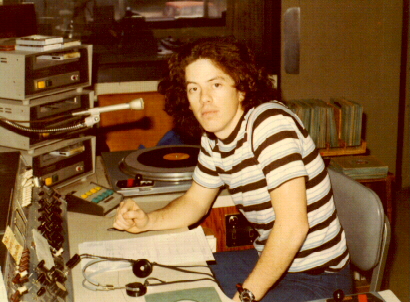
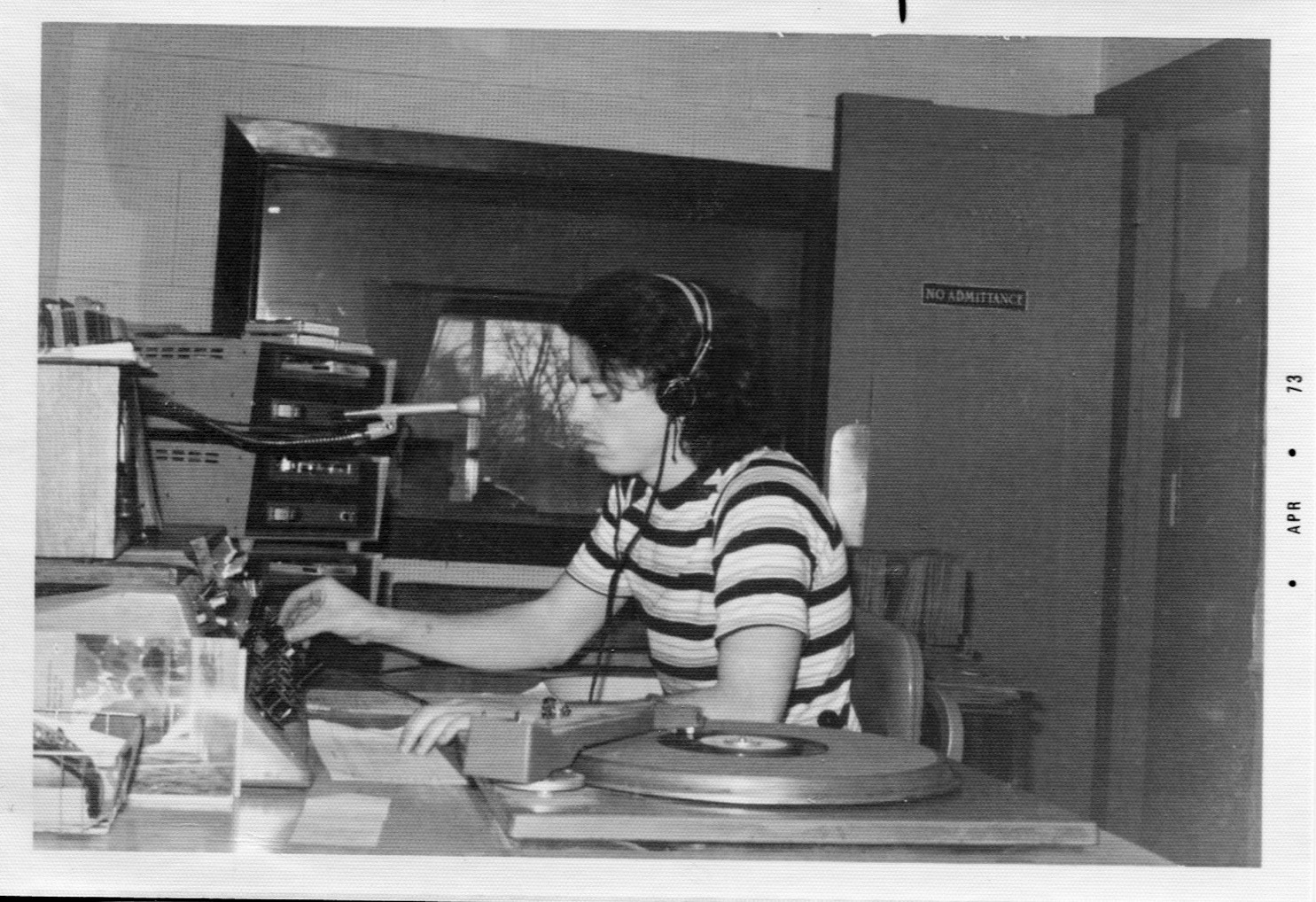
It was almost 40 years ago I got my first taste of being “on the radio.” It as a very little pond but I was happy fish. It was easy to convince yourself a lot of people were listening to you. Very ego gratifying. I marvel at the freedom we had.
Trends in Consumers’ Time Spent with Media
eMarketer has done some meta-analysis of data from dozens of research firms using a variety of methodologies. The result is a series of estimates of how much time consumers spend with all major media, regardless of multitasking or simultaneous usage, from 2008 to 2010. A few excerpts relating to radio:
The average time spent with all major media combined increased from about 10.6 hours in 2008 to 11 hours in 2010. TV and video (not including online video) captured the lion’s share of all media time, about 40% each year. The internet’s share of media time increased over the same period, from 21.5% to 23.5%, as did mobile’s share, from 5% to 7.5%. The share of time spent with magazines and newspapers fluctuated between 8.5% and 11.5%, while radio and all other media—video games, moves in theaters, outdoor media—declined.
Mobile devices received an average of 50 minutes’ worth of attention every day—the same amount of time allotted to newspapers and magazines combined.
While TV, print and radio will slowly lose ground to digital media. Those trends have been most apparent with print media in recent years, but are now beginning to show up in TV and radio usage as well.
Average time spent listening to the radio each day is 96 min. That still strikes me as a very respectable amount of time. The trend, however, is going the wrong way. What are radio operators doing to reverse it. What can they do to reverse it?
“Feel free to play in their walled garden, but don’t forget to cut your own grass.”
“Facebook is an amazing breeding ground for large-scale awareness, and an essential part of a social marketing strategy. But at the end of the day, it’s still someone else’s website. Someone else collects your customers’ email addresses and limits your ability to learn from and remarket to them. If you want to create real, lasting customer relationships, you have to figure out how to use Facebook to get customers back to the place where you have the most control – your own website. That requires a tightly integrated strategy that uses Facebook to deliver customers back to your domain.”
— Alex Blum (read full post)
The Clay Pigeon Golf Shot
via youtube.com
From the Todd-Perry-Spends-More-Time-Online-Than-I-Do file. I was inclined to dismiss this as luck. Hit enough shots etc. But hitting a clay pidgin with a golf ball?
I’m even more impressed with the European Tour using this video as a promotional tour.
The Blast Shack (Bruce Sterling on WikiLeaks)
I think my first exposure to Bruce Sterling was The Hacker Crackdown (1992). Some years later, I read and enjoyed Distraction (“the story of an America on the skids: economy in tatters, dollar collapsed, unemployment spiked, population on the move in great, restless herds bound together with networks and bootleg phones.”)
He has written the best essay I’ve read on WikiLeaks (The Blast Shack). A few excerpts:
(Bradley Manning’s) war made no sense on its face, because it was carried out in a headlong pursuit of imaginary engines of mass destruction.
Bradley’s gonna become a “spy” whose “espionage” consisted of making the activities of a democratic government visible to its voting population
Trying Assange is “the kind of show-trial judo every repressive government fears.”
Everybody wants everybody else’s national government to leak. Every state wants to see the diplomatic cables of every other state. It will bend heaven and earth to get them. It’s just, that sacred activity is not supposed to be privatized, or, worse yet, made into the no-profit, shareable, have-at-it fodder for a network society, as if global diplomacy were so many mp3s. Now the US State Department has walked down the thorny road to hell that was first paved by the music industry. Rock and roll, baby.
(Assange is) a darkside hacker who is a self-appointed, self-anointed, self-educated global dissident. He’s a one-man Polish Solidarity, waiting for the population to accrete around his stirring propaganda of the deed.
(Assange is ) just what he is; he’s something we don’t yet have words for.
If the Internet was walking around in public, it would look and act a lot like Julian Assange. The Internet is about his age, and it doesn’t have any more care for the delicacies of profit, propriety and hierarchy than he does
American diplomats are gonna read those stolen cables, though, because they were supposed to read them anyway, even though they didn’t. Now, they’ve got to read them, with great care, because they might get blindsided otherwise by some wisecrack that they typed up years ago
Diplomats are people who speak from nation to nation. They personify nations, and nations are brutal, savage, feral entities. Diplomats used to have something in the way of an international community, until the Americans decided to unilaterally abandon that in pursuit of Bradley Manning’s oil war. Now nations are so badly off that they can’t even get it together to coherently tackle heroin, hydrogen bombs, global warming and financial collapse. Not to mention the Internet.
You don’t have to be a citizen of this wracked and threadbare superpower in order to sense the pervasive melancholy of an empire in decline.
Julian Assange is “the kind of guy who gets depressed by the happiness of the stupid.”
Golden Retriever day at the dog park

Golden Retriever day at the dog park, originally uploaded by smays.
Hattie in the foreground, getting acquainted… Lucy at top of photo sniffy the ground with a new pal.
Somebody else said it better
In a month this blog will be 9 years old. Should be very close to 5,000 posts by then. My friend George has been following along for the last several years and he says the blog has changed. He says I’m much more likely to post a line or two followed by a block quote from some other source. Or a video. Or a photo. George is of the opinion that I used to write longer, original pieces. I’m not sure he’s correct and it would just take some time to check but I’m willing to stipulate that he is right. So, why the change?
- I’m less sure of my opinions. And, more importantly, feel less need to share them or -thank god- be “right.” I’m pretty sure I would be unable to pass Scott Adams’ “Ignorance Test” on a lot of subjects I’ve expressed opinions on. Oh, and it has finally sunk in that almost nobody really cares what somebody else thinks.
- More (better?) places to share thoughts/links. When I started this blog in February of 2002, there was no Twitter, YouTube, Flickr, Facebook, Posterous, etc. A lot of the links and block quotes that used to land here, are shared somewhere else.
- Somebody else said it better. I think this is the Big One. I read more (and more varied) stuff now than at any other time in my life. The web has exposed me to an almost infinite variety of ideas and perspectives. From people who CAN pass the Ignorance Test. Who DO know what they’re talking about. And who express themselves clearly and powerfully. So, if there’s an idea that I think is worth sharing, I link to them with an excerpt to pique your interest.
George is right. smays.com has become more about aggregation and curation. Maybe a little like my personal card catalogue. I can’t tell you how many times I’ve come back here to find a quote or a video or reference that would otherwise be lost (to me) forever.