Don’t know how I missed this delightful little parady song:
My Cubicle, My cubicle
It’s One of Sixty two
It’s my small space in a crowded place
Just a six-by-six foot booth
And I hate it that’s the truth
[Thanks, Matthew]

Don’t know how I missed this delightful little parady song:
My Cubicle, My cubicle
It’s One of Sixty two
It’s my small space in a crowded place
Just a six-by-six foot booth
And I hate it that’s the truth
[Thanks, Matthew]
Does it do me (as an advertiser) any good to force someone to watch or listen to a commercial for my product or service, if they don’t want to? I can argue that my commercial is what paid for the free TV show they’re watching so it’s only fair that they watch it. Doesn’t matter. If the ad is about something I don’t care about (most of them)…Tivo fast-forward.
If you can find a way to show me ONLY the ads I care about, I’ll probably watch them. But Dave Winer says the end of advertising (as we know it) lies at the end of that road:
“When they finish the process of better and better targeted advertising, that’s when the whole idea of advertising will go poof, will disappear. If it’s perfectly targeted, it isn’t advertising, it’s information. Information is welcome, advertising is offensive. Who wants to pay to create information that’s discarded? Who wants to pay to be a nuisance? Wouldn’t it be better to pay to get the information to the people who want it? Are you afraid no one wants your information? Then maybe you’d better do some research and make a product that people actually want to know about.”
I think what Winer is saying is that once you get the right information…about the right product (specifically for me)… you won’t HAVE to pay someone to put it in front of me. I will already have made that happen or have facilitated it. I WANT to know more about your product/service. At that point, it’s no longer advertising.
The point he’s trying to make is a subtle one and hard to grasp if you’ve grown up bombarded by radio and TV ads. For better or worse, we won’t have to wait long to find out if he’s right.
“In its biggest offline media play to date, online search giant Google this morning announced plans to begin extending the reach of its online search advertisers to the nation’s largest satellite radio service, XM Satellite Radio. The deal is the latest development in Google’s push to expand beyond the Internet into the traditional media marketplace, and follows a series of tests with print media and radio outlets.”
— Media Daily News [Thanks, XM Ben]
I spotted this in the monthly newsletter of StateNets (formerly the National Association of State Radio Networks): The Tennessee Radio Network has 66 full time (?) affiliates and only 11 have websites.
Of all the surveys and data and research I’ve read, this simple fact, unscientific as it is, speaks volumes to me about the radio business in 2006. If every one of your advertisers (okay, most of them) has some kind of online presence…why wouldn’t you?
In the same issue, Tom Dobrez –the head sales guy for the association– writes about “The New Media Blitz”:
“…we are all starting to feel its impact. A trip to 3 major markets in the last few weeks confirms the low level of respect radio is garnering from the nation’s major marketers. It’s just not hip. Its not now its so yesterday. The onslaughts have come from everywhere. First it was satellite radio, then Ipod and internet now its product placements etc. … It will be near impossible to get any media decision makers attention with spots only. The old way we sell it are GONE!”
Here’s my advice to my old StateNets buddies: Go down to the basement…set the Time Machine for 2000…and call me when you get there.
My buddy Morris left the radio news game this spring. After 30+ years. Tried his hand at the newspaper business but that didn’t work out. He says he wants to try something online. Blogging, podcasting, etc. I think he knows it will be a tough row to hoe (as momma used to say) but he sounds very positive. In his latest email he observed there just weren’t that many “serious news operations” (he was referring to radio, I believe) in Missouri.
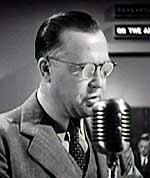 Morris’ situation raises a good question. If you’re a radio news reporter, and you had to go out and find another job tomorrow, where would you look? Another radio station? Group ownership has reduced the competition (and need?) for your services. The local newspaper? They’ve got their own problems. A traditional fall-back has been PR for some company/association/department. But I always wondered if that wasn’t based on the notion that you could get all of your radio news buddies to run your press releases. On the other hand, I was in a room full of PR folks back in January so the jobs seem to be there.
Radio reporters have what seem to be some very marketable skills. They can do interviews. They can write stories. They can read well aloud. So, where do they go when it’s time to go?