If you want my attention, you must earn it

My pal Todd sent me an email yesterday with a link to a YouTube video. I asked why he didn’t just direct message me on Twitter or Google Chat.

“Email is easier for me,” was his reply. He was sharing something he thought was interesting so he gets to decide what works best for him. Right?

A lot of people screen their in-coming phone calls. This infuriates some callers who feel you have an obligation to take their call.

All of this got me thinking about who controls communications of this sort. The “sender” or the “receiver.”

Every evening our USPS mail box is filled with junk mail that we routinley throw in the dust bin (for my UK pals). I asked the mailman about this last week, if there is any easy way to stop 3rd class mail. He mumbled something about writing each of the senders. Yeah, right. In that instance, the direct mail people control the communication up to the point I shit-can the stuff.

I was intrigued by the decision of UNC professor Paul Jones to abandon email altogether:

“I spent 30 years investing in email,” Jones said. “The undergrads I teach use everything but email. Journalists use Twitter. You can use anything else to get in touch with me — text messages, AIM, G-chat, Facebook, Facebook chat … but I was investing too much into email and getting little back.”

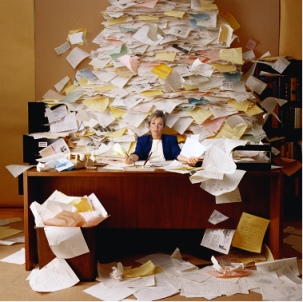
I send a lot of email but don’t expect anyone to open and read what I send. It’s my responsibility to make the subject line so interesting and relavent to the recipient that she WANTS to read it.

This seems pretty cut-and-dried to me. You might want to communicate something to me, but you need my permission. I have to open the email (or snail mail); pick up the phone; grant your friend request.

It’s my attention. If you want some of it, you have to earn it.


James Arness

[See comment below]

When I heard that James Arness had died my first thought was, “How could he still be alive?!” It’s just that Gunsmoke was so long ago.

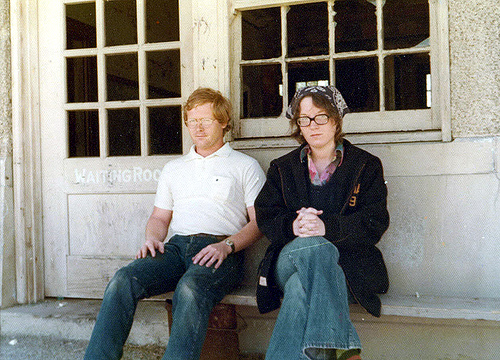
So I dug out this photo taken when Craig Watson and I “interviewed” the popular TV actor when he appeared at the Sikeston Bootheel Rodeo. KBOA news guys John Reeder did the recording and Craig (on the right) and I asked some questions. Marshall Dillon signed my Fanner 50 holster.

When the net was young

A couple of nights ago I was browsing through some old Day-Timers (calendars) and came across a few memories from 1994:

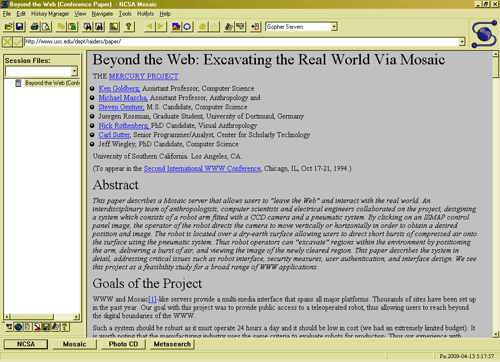
April 26 – A meeting with some folks at MOREnet and the University of Missouri J-School. My first look at a web browser (Mosaic). I was blown away. The Internet was a very different creature before the browser.

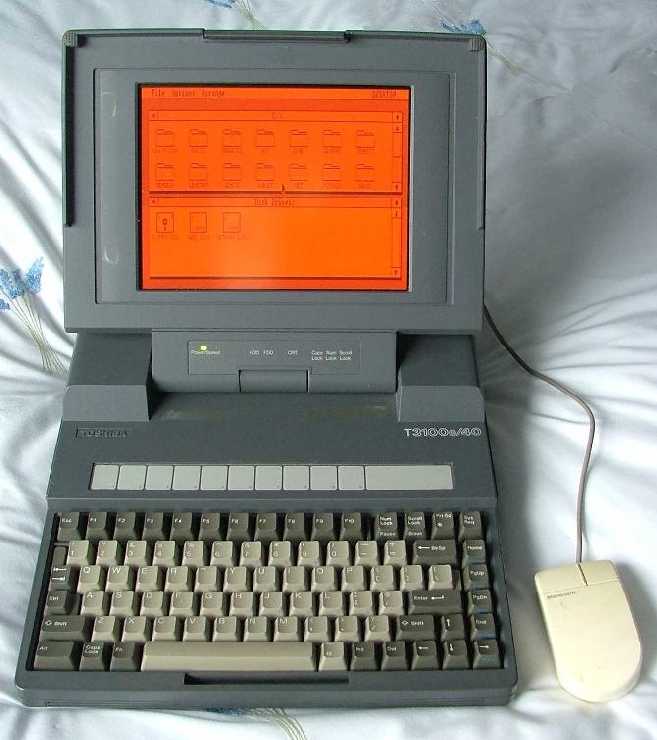
June 20 – Sent check to someone named Bill Bahr a check for $1,700 for a used Toshiba notebook computer. Base price was $1,400 plus $300 for a fax/modem PCMCIA card.

I think it was this one. It was a heavy mother but I was giddy at the idea of being able to take a computer with me on the road.

Everywhere media

Like many others, I followed news of the destruction of Joplin, Missouri, on Twitter. A tornado destroyed most of the southeast Missouri town and almost immediately videos and photos began showing up on YouTube, Facebook and Twitter.

It brought back memories of my radio days.

Our station had an old Army surplus radar that gave us something of a competitive edge when it came to storm coverage. We also relied on news from the National Weather Service that came in on a teletype. And the local weather spotters who radio’d eyeball reports in.

Then one night a big storm hit and I scurried out to the station only to discover power from the city was out. But we were able to broadcast thanks to a generator that just ran our transmitter and one studio. No radar, no teletype, zip.

So I started taking phone calls from listeners who described what was happening where they were. We did that for most of an hour.

Most old radio guys have lots of stories like that. Bad weather was radio’s time to shine.

When I started working for a statewide radio network in 1984, it was frustrating not to be able to talk directly to the listeners, especially when a big story –like a tornado– was breaking. We only got on the air if our affiliates chose to put us on the air.

Same deal for covering the story. If the story was hundreds of miles away, we had to rely on our affiliate stations to send us reports we then put on the statewide network. And many of them did/do a remarkable job.

Assuming the radio stations in Joplin are on the air, our newsroom was probably getting reports last night.

This is what I was thinking about last night as I watched my twitter feed fill up with links to video and photos and first-hand accounts of the “devastation” (a term that has now been used so many times as to be almost meaningless).

At least two of our reporters –one in Missouri and one in Wisconsin– were re-tweeting reports about the big storms in their respective states. I was glad to see that and not very worried about the accuracy. The sources they were re-tweeting were credible.

It reminded me of a story about the BBC which has “a special desk that sits in the middle of the newsroom and pulls in reports from Twitter, Facebook, Flickr, YouTube and anywhere else it can find information.”

Whatever the disaster… natural or man-made… someone is there with a video camera and within minutes the story is being “reported.” What this means for ‘traditional’ news organizations like ours is still being worked out but it’s clear it will never be like it was.