
Media 101

My recent visit to Central Methodist University included a tour of the campus which wound up in the studios of what was –I believe– the student radio station. I’m not sure when or why the station went off the air but the plan is to bring it back as an internet station.

During the few minutes I chatted with a couple of instructors and students about the project, I got the impression the approach will be… traditional, for lack of a better term. By that I mean, they’ll have a control room and studios with the usual assortment of recording and mixing hardware. Instead of pumping it all out to a transmitter and tower… they’ll stream it.
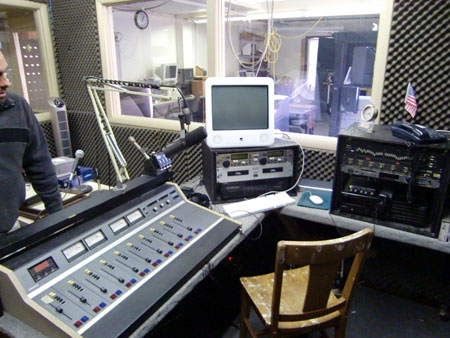
As for programming, they plan to do what we used to call “block programming.” An interview program followed by a news program followed by… Music licensing issues prevent them from programming music.

The way college radio stations have always been programmed. I don’t doubt the students can learn some useful skills and gain some valuable experience doing this but I’m not sure it will prepare them for the future that is already here.

So what would I do if they put me in charge of the program for a semester?

I’d start by dropping the term “radio” and go with “media.” Not “new media,” just media.

I’d assemble production teams made up of a producer and host (and co-host?). These teams would be responsible for one 25 minute program a week. Can be any topic (more on that in a moment)

A Senior Producer and Managing Editor would coordinate these teams (using Basescamp or some similar online collaboration tool) and insure quality standards and deadlines were being met.

All or most of these programs would be produced as live feeds and podcasts. Instead of a “college radio station” (Internet or otherwise), you’d have a portal site (I hate that term) that featured each of the individual programs with a link to that programs blog (where the hosts and producer interact with listener/viewers). Show notes, comments, etc.

The central feature of the portal page would be a video section. It could be a live stream of one of the shows being recorded or some live event on campus. Or just a live webcam from the student center.

Equipment. Each team would have a laptop, a digital camera (video capable) and a small webcam. All shows would be produced on location. No reason to schlep back to a studio jammed with expensive equipment.

I wouldn’t limit this project to just students. I’d open it up to the community as well, but with students producing.

Once these podcasts are up, it’s an easy matter to track which ones produce a following. If nobody downloads, you fix the podcast or replace it. But you aren’t limited to the 24 hours of a real-time station. You can have as many programs as you have people to produce and watch/listen.

So what are the students learning here?

  • How to write, edit and tell a story
  • How to shoot and edit video and share it with the world
  • How to build an online community or tribe
  • How to produce a live webcast
  • How to take and edit photos
  • How about a course in Smart Phone Reporting?

…and so on and so forth. I’m not an educator so there could be lots of things wrong with this approach. I’m pretty sure it would cost a lot less than a more traditional approach while involving many more students (in and out of the communications program). If you have suggestions on this mythical program, please include them in the comments. Or, if you see flaws, post those as well.

PS: I think this might be a powerful recruitment tool, as well.

UPDATE/12.08.08: On a recent edition of NPR’s Morning Edition, Steve Inskeep interviewed journalist Sreenath Sreenivasan who, within an hour of the attacks in Mubai, began hosting a web radio call-in show with other Indian journalists, relaying what they knew. Sreenivasan used a service called Blog TalkRadio:

“BlogTalkRadio is the social radio network that allows users to connect quickly and directly with their audience. Using an ordinary telephone and computer hosts can create free, live, call-in talk shows with unlimited participants that are automatically archived and made available as podcasts. No software download is required. Listeners can subscribe to shows via RSS into iTunes and other feed readers.”
Seth Godin on radio’s future

Mark Ramsey has posted audio (and partial transcript) of an interview with marketing maven Seth Godin, on the future of radio. This is an update to an earlier interview. These three nuggets sloshed out of my pan:

“So if you’re an advertiser and you have a choice between reaching a ton of people who couldn’t care less, and so you have to talk really fast, yell, and make obscene promises on the radio to get them to show up at your dealership, or reach a smaller group of people about something that they’re very interested in a very connected way, in the long run advertisers are going to come back to the smaller, more tightly knit group.”

“Everything radio has done has been about leveraging a rare piece of spectrum, and the thing we have to acknowledge is that spectrum isn’t rare anymore. So the one asset you built your whole organization on is going away really fast and instead of putting your head in the sand and complaining about that, take advantage of the momentum so that when it does finally disappear, you have something else.”

“Consider the FCC’s ruling recently about the white space spectrum. What white space spectrum is going to mean is that in five years every car sold is going to have an infinite number of radio stations on it. Not 100 or 1,000 but more radio stations than you could listen to in your lifetime, and if that’s true, tell me again why you’re going to win?”

As I ponder these points, I’m listening to the very eclectic music mix on the Coffee Zone iPod. On the way to work, I’ll be live streaming Pandora from the iPhone.

Dan Shelley reveals “secrets” of talk radio

Back in my radio days I co-hosted a daily, hour long talk show. It was mostly the kind of silliness you find on morning shows but we (Tom Colvin did the show with me) had a good time. And we were never angry.

Most of the talk show stars with which I’m familiar are a) pissed off and b) really, really conservative. Before I stopped listening (many years ago), I often wondered why they were so angry.

My old pal Dan Shelley offers something of a behind-the-scenes look at talk radio as practiced at WTMJ in Milwaukee, where he was news director and program director before taking a job in New York.

“To begin with, talk show hosts such as Charlie Sykes – one of the best in the business – are popular and powerful because they appeal to a segment of the population that feels disenfranchised and even victimized by the media. These people believe the media are predominantly staffed by and consistently reflect the views of social liberals. This view is by now so long-held and deep-rooted, it has evolved into part of virtually every conservative’s DNA.”

“To succeed, a talk show host must perpetuate the notion that his or her listeners are victims, and the host is the vehicle by which they can become empowered. The host frames virtually every issue in us-versus-them terms. There has to be a bad guy against whom the host will emphatically defend those loyal listeners.

“This enemy can be a politician – either a Democratic officeholder or, in rare cases where no Democrat is convenient to blame, it can be a “RINO” (a “Republican In Name Only,” who is deemed not conservative enough). It can be the cold, cruel government bureaucracy. More often than not, however, the enemy is the “mainstream media” – local or national, print or broadcast.”

“Forget any notion, however, that radio talk shows are supposed to be fair, evenhanded discussions featuring a diversity of opinions. The Fairness Doctrine, which required this, was repealed 20 years ago. So talk shows can be, and are, all about the host’s opinions, analyses and general worldview. Programmers learned long ago that benign conversations led by hosts who present all sides of an issue don’t attract large audiences.”

While reading Dan’s article I found myself thinking of talk radio hosts as “professional” wrestlers who get really mad once in the ring. They forget it’s not real and they are entertainers, not athletes or warriors. Of course that wouldn’t work in the WWF. Somebody would get hurt.

If anyone knows of a soft-spoken, optimistic, not-mad-at-anybody, conservative talk show host, gimme a shout. I’d love to hear what that sounds like. And if there are any WTMJ listeners out there, I’d love to know Charlie Sykes’ on-air response –if any– to Dan’s article.

Radio station streaming live video from Palin event

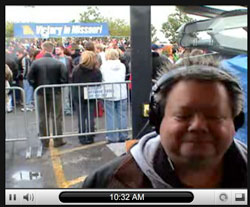
Hit99fmvideoSarah Palin is holding a rally in Springfield, Missouri, and radio station Hit 99 FM is streaming video live from the event. They could have made it easier to find but deserve props for the effort. I’m having trouble getting audio but perhaps that will change when the event gets underway.
Interesting that this is a music formatted station, not a news/talk’er. David Brazeal is there and might interview someone from the station. We’ll post it here if he does.

PS: This is what we lovingly refer to as “a face for radio.”

9/29/20: Birth of commercial radio

Thanks to the folks at Wired for reminding us today is the anniversary of the birth of commercial radio.

“In 1922, 30 radio stations were in operation in the United States, and 100,000 consumer radios were sold. Just a year later, 556 stations were on the air and half-a-million receivers were sold. Radio was on its way, and the commercial broadcast model would reign essentially unchallenged for eight decades until the advent of satellite radio and podcasts.”

My dad was a radio guy and so was I for a number of years. I am really glad I didn’t miss it.

If the boat is leaking, learn how to swim

Had a chat with an acquaintance who now lives and works in another part of the country. He’s a long-time radio news guy and he called to get my advice on how his newsroom can better take advantage of “new media” (which ain’t that new anymore). As he talked about his newsroom and the company he works for (a good one), it became clear there was no clear direction for making the transition from Old Media to New Media. And unlikely to be one. So what can he do?

First, what he cannot do. He probably cannot change (or provide) the larger online strategy his company needs. But he can begin learning the skills he needs to survive. In no particular order:

  • Start blogging (any topic)  This includes reading other blogs
  • Start using an RSS news reader
  • Set up a twitter page (get a grasp of social networking)
  • Get a smart phone and learn how to use it (see above)
  • Keep a small digital (still/video) camera on his person at all times
  • Get a YouTube and flickr account and start using them. (any subject)
  • Begin the process of creating your brand

To an old radio dog, all of this sounds like a lot more work than it really is. But here’s the question I posed to my friend: If your current job went away overnight, what would you do? Try to get a job at another radio station? A newspaper? TV station?

What kind of skills to you think they’re looking for these days? Will it be enough to give them a cassette tape of your best work? Maybe a list of the RTNDA awards you’ve won?

The skills he learned in J-school are important. His many years of “radio” experience are valuable. But it’s a new game, that demands new skills. You got ’em or you don’t.

KBOA 830

In an earlier post I wondered about some recent move affecting the radio station I worked at many years ago. Our friend Jeff pointed us to a post on a radio message board:   

"Eagle Bluff Enterprises has received FCC permission to move KOTC from Kennett, Missouri to Memphis, Tennessee.  KOTC (830 AM) signed on in July 1947 as KBOA.  KOTC went silent on 6-1-08.  The justification for the STA was "The station has been temporarily turned off pending format changes and equipment repairs".  After the move, KOTC will diplex its 10 KW signal from a tower shared with WHBQ, 560 AM, in Memphis."
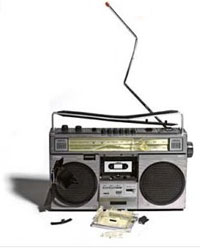
When I worked at KBOA the frequency (a daytime clear channel) was 830. When consolidation hit there was a series of call letter/frequency shuffles I was never interested enough to try to sort out.

I think they moved the KBOA calls to a frequency (105.5) licensed to Piggott, Arkansas, but operating in Kennett, MO. The 830 freq was assigned some newer, local (Kennett) calls (KOTC).

The KBOA I knew and loved died long ago. And it was nice to read some kind words about KBOA830.com. Thanks to all.

Sprint in the NFL radio business

“Sprint Nextel subscribers will be able to listen to live radio broadcasts of National Football League games this season as part of new partnership between the wireless provider and sports league.

IphonefootballThe live, cell-phone-accessible radio broadcasts—the centerpiece of the new NFL Mobile Live platform–will be available to all Sprint wireless subscribers who purchase a basic data plan as part of their services. In addition, as part of the agreement a select group of premium subscribers will be able to view live broadcasts of the NFL Network’s eight Thursday Night Football games on their phones starting on Nov. 6.” — MEDIA WEEK

Hmmm. Here’s one of several “take away’s” from this story by Mark Ramsey:

“For some reason, many broadcasters confuse the term “content” with “the stuff that’s on our air.” When I use the term “content” I mean the material that’s of serious interest to listeners. Stuff they will seek out. Not filler. Not commodities. McDonalds and NOBU may both offer “food,” but that’s where the similarity ends, and don’t think for a moment the patrons don’t know the difference.

In this case, the content is owned in its entirety by a third party – not a radio company. When it comes to professional sports play-by-play, radio is a distribution channel, not a content owner. Thus we will lose out to the owners of content in deals like this.”

Our company does broadcasts for a whole bunch of big (and small) colleges. We’ve been streaming (via Yahoo!) for years and on satellite radio for the last few years. It seems inevitable that these broadcasts will go directly to phones, sooner or later. Stay tuned? Dialed in?

Latest news consumption survey

The latest Pew biennial news consumption survey is out and offers no big surprises. Two new (to me) terms caught my eye: Integrators and Net-Newsers:

“Integrators, who get the news from both traditional sources and the internet, are a more engaged, sophisticated and demographically sought-after audience segment than those who mostly rely on traditional news sources. Integrators share some characteristics with a smaller, younger, more internet savvy audience segment – Net-Newsers – who principally turn to the web for news, and largely eschew traditional sources.”

I certainly think of myself as “engaged” and “sophisticated,” but long to be “younger” and “savvy.” Sigh.

These surveys often make no mention of radio. I was pleased to see that radio is hanging in, at least against TV.

“Notably, radio news also is an important element in Integrators’ news diet. Nearly half of Integrators (46%) listen to news on the radio during a typical day. While the internet is the main news source for Integrators during the course of the day, about as many in this segment rely on radio news as TV news during the day (32% radio vs. 36% TV news).”

The Big Question (assuming it is still up for question) is what happens when the Integrators have all gone to that Community Center In The Sky?

Pandora: “Game over for music radio”

“Terrestrial radio is in bigger trouble than ever, I am convinced. I just finished driving down a highway in rural (state), listening to streaming music on the free Pandora Radio app for my upgraded version 2.0 iPhone. This was via edge, not 3G. Pandora plays randomized songs. But when an all-you-can-eat music service (maybe Apple’s, someday) has this same kind of app, it’s game over for music radio.  I’ll be able to listen to any song I want while driving, and won’t even have to load it on my iPod before leaving.

If you are unfamiliar with Pandora, it works like this: I enter the name of a song or artist. Pandora creates a “station” that plays music like the example I submitted. I “like” or “dislike” each song and Pandora keeps tweaking my play-list accordingly. I can have as many stations as I choose. Just music. No annoying DJ’s. No commercials.

If I’m the program director of an “only the hits” radio station, should I be concerned about this technology? I can’t please all the people, all the time. But all of the people can please themselves, all of the time. What is my Plan B?