Comedy Central’s Motherload Net coming November 1st

“The Motherload Net will consist of five video-based channels featuring a mix of clips from Comedy Central’s programming as well as original content produced specifically for the broadband network.

“We’ve taken everything that is great about Comedy Central and shifted it into broadband,” explained Comedy Central president Doug Herzog. “They can program it themselves.”

The channels, offering more than 450 video clips at launch, are: Originals, TV Shows, The Daily Show with John Stewart, Comedians, and Cult Classics. Each channel will be updated five days a week, with a total of 50-80 new clips being added each week.”

iPod Nano

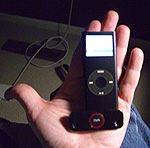
Zowie. Nobody needs to read one more gushing review of the iPod so I’ll try to tone this down, but…damn. The UPS man left a little cardboard box on the front porch today and inside was my iPod Nano. As in small. I already had iTunes installed with my meager music collection imported but syncing up with the iPod was about a 4 minute process. 259 songs…zip…in my shirt pocket.

I don’t remember very many computer experiences being this easy (I know, I know…the Mac thing). The user interface is…a thing of beauty. Sorted all my songs. Easy to navigate. And the sound? Well, I’m not audiophile but it sounded perfect to me. The iPod ads frequently talk about photos and I couldn’t imagine that being very useful, given the size of the screen, but I have to admit it’s kind of cool. I’ll put some more on.

It’s easy to see why these things (in all flavors) are selling so fast. I showed it to Barb and she immediately decided she wants one. Anniversary present, in the bag.

And you know what? I’ve had the thing for half a day and I’m already thinking, “Maybe I should head on over to iTunes and buy a few songs.” We’ll talk about podcasts in a future post.

iPod Nano

Walt Mossberg calls the iPod Nano “the best combination of beauty and functionality of any music player I’ve tested — including the iconic original white iPod. And it sounds great. I plan to buy one for myself this weekend.”

I’ve tried three or four cheap little MP3 players and they work, sorta okay… but I’ve had iPod lust since I saw the first one. And the new Nano is just too much temptation. And, yes, I know I can get more gigs for less money blah, blah blah. I’m paying extra for the cool.

Every day there’s more and more interesting new podcasts out there so it’s time to gear up. Review to follow.

On-demand media

From a new survey by the Arbitron ratings company and Edison Media Research (as reportd by The Washington Post):

Four formats — news-talk, adult contemporary, pop hits and black-oriented — account for more than half of all radio listening in the nation. For more than a generation, the radio industry has attributed this to listeners, saying they demand that narrow focus. But the on-demand media revolution has revealed that argument to be little more than corporate spin.

About half of Americans age 55 or older have bought “Me Media” devices, such as TiVo and iPods, that put the consumer in the control booth, but according to a new survey by the Arbitron ratings company and Edison Media Research, about 90 percent of everyone younger than 55 is already on board.

The iPod, Apple’s digital music player, is more like the transistor radio than any other gadget in media history, in that it is making a powerful entrance into the American home mainly through the teen market.

The percentage of people who say they “love” their iPod (35 percent) or their satellite radio (40 percent) versus those who “love” over-the-air radio (19 percent).

But the study says there’s still time for radio to respond: Only 20 percent of Americans own an iPod, subscribe to satellite radio or listen to Internet radio, whereas 95 percent of the country regularly listens to radio.

Like Norm said, “It’s an on-demand world and I’m wearing Milk Bone underpants.” Or something like that.

Garrison Keillor: Confessions of a Listener

“The deregulation of radio was tough on good-neighbor radio because Clear Channel and other conglomerates were anxious to vacuum up every station in sight for fabulous sums of cash and turn them into robot repeaters. I dropped in to a broadcasting school last fall and saw kids being trained for radio careers as if radio were a branch of computer processing. They had no conception of the possibility of talking into a microphone to an audience that wants to hear what you have to say. I tried to suggest what a cheat this was, but the instructor was standing next to me. Clear Channel’s brand of robotics is not the future of broadcasting. With a whole generation turning to iPod and another generation discovering satellite radio and Internet radio, the robotic formatted-music station looks like a very marginal operation indeed. Training kids to do that is like teaching typewriter repair.

After the iPod takes half the radio audience and satellite radio subtracts half of the remainder and Internet radio gets a third of the rest and Clear Channel has to start cutting its losses and selling off frequencies, good-neighbor radio will come back. People do enjoy being spoken to by other people who are alive and who live within a few miles of you.”

— From the  The Nation (May 23) [via Doc Searls]

Not podcasting.

Mark Ramsey (Radio Marketing Nexus) explains the difference between posting mp3’s for download and podcasting:

“…podcasting represents the passive movement of audio to your iPod without having to download it yourself. If you think that’s not different then consider the difference between going out to a restaurant and having your meal delivered to you at home.”

Another one of those things you have to experience to understand.

Radio to decline 2.5%. Blame iPods and satellites.

Some interesting stats coming out of the Kagan Radio/TV Summit in New York. The CIBC World Markets director of research says radio can expect an overall 2.5% annual radio audience decline this year owing primarily to iPods and satellite radio.

According to independent research commissioned by Sirius, once consumers get a Sirius radio, they spend 83% of their radio time with Sirius and 7% with traditional radio. So whats commercal radio to do? According to the presentation: Increase local content; upgrade national sales efforts; get better research data; Hire TV people (“they know how to sell in a declining market.”)

iPod

I find it interesting when words or objects of popular culture make their way into novels (I believe I posted on this the first time I saw Sheryl Crow’s name in a novel). I spotted a reference to iPods in Robert B. Parker’s Bad Business [pg 197], which was published in March of 2004.

“Vinnie put the shells on the coffee table and leaned the shotgun against the couch at the near end. Then he took an iPod and some earphones out and put them on the coffee table.”

The rise of podcasts

NPR’s Robert Smith reports on the rise of “podcasts” — amateur music and talk shows created by the users of Apple’s popular iPod personal music devices and other digital music players. Whole “shows” of music and talk can be downloaded from the Internet to individual players automatically, and some of the show hosts have become celebrities among the burgeoning podcast audience. Related stories from NPR:Personal Radio Via Podcasting Grows More Popular; Slate’s Gizmos: The Future of Radio; Does the iPod Play Favorites?; TiVo, iPod, the Human Ego and the Future.

Pod-Think.

Consultant John Silliman Dodge recently offered broadcasters his “iPod approach” to programming and marketing radio. In a recent article for FMQB he asks:

“Look at your 21st century customer: Blackberry in one hand, iPod in the other, and a cell phone on the belt. Ask yourself the defining question: how does my radio station fit into this person’s life?”