
Podcasting is easy and inexpensive which has a lot to do with why so many people are doing it. But, like with many “hobbies,” it can be difficult to sustain over the long haul and some podcasters are starting to pack it in. They call it podfading. Rob Walch (Podcast411) estimates at least a fifth of podcasters don’t make it to their 10th show and he won’t interview a podcaster until the show has at least 10 episodes. This week Henry and I recorded our 16th podcast and I see no signs of fading. I think we both have sort of an unspoken target of 52 shows. Would be fun to make it a full year.
New look for Learfield.com
Andy and I have been working…or not working…or thinking about working on a new look for the Learfield corporate website for most of a year. And tonight we “relaunched.” Tomorrow a few hundred people will start calling and emailing to tell me they can’t find something on the company intranet or that they think the new look sucks. Or both. But that’s all part of the drill. The site is three years old and way past dew for a make-over. The new design has lots of white space and has a nice, open feel about it.
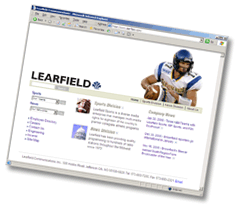 I’m reminded of the early days (1996?) when we put up the first FrontPage monstrosities. Nobody gave a second thought to websites back then so it didn’t matter if they looked like shit. Or maybe we just hadn’t seen enough good sites to recognize bad ones. No more. Increasingly, the worlds first impression of your company is the website and it better look good, have some useful content and be well organized. It is a never ending struggle. But it’s time for a cold Bud.
Selling radio spots online
Broadcast sales execs are still upbeat about the future. Sort of. From an informal Banc of America Securities survey of 46 GSMs and other sales execs at the recent Radio Advertising Bureau meeting:
- Nearly one-quarter of respondents indicate that they already use online services . . . to sell available airtime,and another 30% plan to use such services in the future.
- The new worry is the iPod and the Internet radio, not satellite radio. 26% think Internet radio is a bigger threat than satellite radio. That’s up from 10% of respondents a year ago.
From Billboard Radio Monitor [via RAIN]
Chimps and Geeks
If you also missed the careerbuilder.com chimp ads in the Super Bowl, you can see them here. I’d pay a hundred bucks to spend the day watching those commercials being made. Nothing on god’s green earth is funnier than a chimp in a coat and tie.
Did I mention I’m all registered, booked and reserved for Gnomedex 6.0? It’s five months away and I can hardly wait. For three days I won’t have to explain or defend blogging and podcasting and RSS and all the rest. I will be be among believers. Not just believers, but those who are creating and applying these revolutionary technologies. I have no idea who the speakers will be or what they’ll be talking about. But everyone in the room will have a clue.
Stickers! More stickers!
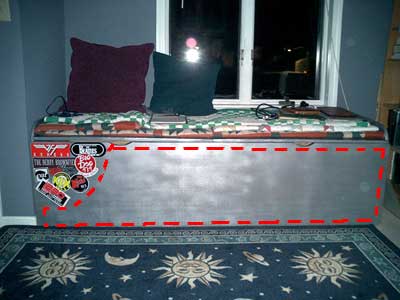
We have a long way to go. Send those stickers to: smays c/o Learfield Communications, 505 Hobbs Rd., Jefferson City, MO 65109
Cell phone radio
A Canadian wireless company is offering subscribers more than 1,500 podcasts via their cell phones. The catalogue of podcasts will updated throughout the day as new feeds are received, bringing fresh content to subscribers continually. Unlike terrestrial radio, though, it won’t be free. It’ll cost subscribers $5 per month. But then subscribers can download their choice of podcasts for immediate listening, and save the ones they want to play again later on their phone. [iloveradio.org]
When I started doing affiliate relations back in the early eighties, Don Osborn said something that I have never forgotten: There is no dead air. Every minute is filled with something (music, news, sports, weather, etc). To add some of our network programming, a radio station must take something off the air. My challenge was to persuade the station decision-makers their listeners would be better served by our programming than what they were currently airing.
What does this have to do with cell phone radio? Every minute I spend listening to a podcast on my my cell phone (or nano) is a minute I’m not listening to my local radio station. The listener is now the program director but he/she still has the same 24-hour clock. Do I listen to The Ricky Gervais Show on my cell phone…or the local morning show on KXYZ?
There’s a lot of smart radio guys out there. I have to believe they understand this. The “cell phone radio” story reminded me of an interview I did with Mary Quass last year, in which she saw this coming.
I owe it all to squirt cheese
“To this day, the taste of squirtable cheddar is forever paired in Mays’ memory with the hot, dusty stench of chicken manure and mayonnaise; and yet, he cannot help but consume the delicacy at every opportunity. And though that day 50 years ago may have seemed trivial at the time, its lasting influence on the state of the blogosphere is but more evidence of the power of Squirt Cheese in History.”
— David Brazeal
Five hours a week listening to radio
“Online users spend as much time surfing the web as they do watching TV, and they spend far more time at it than they spend with other media, says a new study from Jupiter Research. The report was based on a survey of just under 3,000 regular online users, defined as people who go online at least once a month from home, work or school. It found that on average online users are now spending about 14 hours a week surfing the internet, which is equal to the amount of time that they spend watching TV. By comparison, on average each week they spend one hour reading magazines, two hours perusing newspapers and five hours tuning into the radio. In fact, they spend more time online than they do with all those other media combined.” [Heidi Dawley, Media Life]
Sounds like 30 minutes of radio listening (on average) on the way to and from work each weekday. Compared to a couple of hours online every day.
Looking back
 Four years ago today I started jotting this stuff down. My first post was a quote from Carl Hiaasen’s novel, Basket Case, describing two types of journalists. I’m hardly a prolific blogger (just 1,800 posts in four years), but I’ve been reasonably consistent. I spent a few minutes browsing, trying to get a sense of what I thought was interesting or important enough to write about. My tags tell the story: Advertising, blogging, books, dogs, friends, family and home, journalism, radio, Kennett, movies, music, podcasting, Sheryl Crow, television and work. And death.
My father died in 2002 and my brother couldn’t get home from Indonesia in time for the funeral. I recorded the service and put it online so he could hear it. I said goodbye to Larry Joe and Mr. Rudy. I shared John D. Macdonald’s view of death and my own thoughts on reincarnation.
I posted a lot of quotes from books and lines from movies. Which was one of the reasons I started this journal. I discovered a fascination with tattoos I didn’t know I had. I wrote about shoes more than is probably healthy. And I felt it important to tell you about every dental check-up.
I stumbled across the term “podcasting” in October, 2004. In August of last year I moved from Blogger to Typepad. I met Steve Mays West.
I confessed that I thought I looked my best in theater restrooms. I sold the family home and got my best clue, if not my first. I shared some great blues; helped some friends start blogging and watched this little girl dance for hours on end.
I spent a lot of time feeding and caring for this beast. But it’s been good for me. Time well spent. I don’t want to spend too much time looking back but it’s nice to know I can.
Music on an iPod
“When one out of five of everyone you know is listening to music on a portable device packed with hundreds or thousands of songs, commercial-free, what can your station bring them that they can’t self-program better?”
— Mark Ramsey quoting a national study by American Media Services