From Hugh McLeod’s Work Manifesto

Work is your real life. It is the way you translate your feelings, your thoughts, your hopes and your desires into something valuable, tangible and useful every day. You can choose to make work into a dreaded, necessary evil that you can’t wait to finish so that you can get busy with your “real life.” Why not just do work you love?

Your secret desire holds the clue to your best work. You say that you would love to do meaningful work, but don’t know how to find it. What is your secret desire? What idea are you a little embarrassed to share with someone because it is so delicate or bold or crazy or exciting? You often claim to not know what you want to do, but in fact censor yourself from what you know you want for fear of appearing ridiculous.

You can’t fool your kids. Many of you claim passionless, dull and frustrating careers with the excuse that you must provide for your family. Providing for your family is noble; using it as an excuse to hide from your own greatness is a bad example for your kids. If you want them to grow up motivated, creative, free and enterprising, be that yourself. They are watching and emulating your every move.

Bruce Sterling: The Future of the Internet

“The future of the Internet lies not with institutions but with individuals. Low-cost connections will proliferate, encouraging creativity, collaboration, and telecommuting. The Net itself will recede into the background. If you’re under 21, you likely don’t care much about any supposed difference between virtual and actual, online and off. That’s because the two realms are penetrating each other; Google Earth mingles with Google Maps, and daily life shows up on Flickr. Like the real world, the Net will be increasingly international and decreasingly reliant on English.

“The Internet crawled out of a dank atomic fallout shelter to become the Mardi Gras parade of my generation. It was not a bolt of destructive lightning; it was the sun breaking through the clouds.” — Science fiction writer and futurist Bruce Sterling in his final column for Wired

This idea resonates with me because I have very little faith or confidence in institutions… and a lot of confidence in (some) individuals. And the Net allows me to find and connect with individuals in ways institutions can not.

Blogging’s impact in the newsroom

Steve Rubel points to an article in The American Journalism Review about how bloggers are changing journalism in the US. This should be required reading for any working journalist. The AJR piece concludes with some blogging tips from Dallas Morning News Editorial Page Editor Keven Ann Willey, who led her staff in launching the nation’s first editorial page blog. Here are her excellent suggestions:

1. Be brief and informal. Breezy, conversational tone is good. Two hundred words is too long. Go for the quick hit, light touch, witty aside. Attitude required.

2. Don’t be too proud to blog.

3. Respond to previous blog postings. This is about conversation, after all. It’s the back and forth that makes a blog engaging.

4. Vary your topics. Don’t be a wonk.

5. Don’t write anything you wouldn’t want your mother to read in the paper.

6. Use hyperlinks.

7. Incorporate interesting, provocative reader e-mail. The best blogs are two-way streets.

8. Be quick to correct yourself.

9. Don’t feel obligated to answer all blog-generated e-mail.

10. Don’t over edit; but designate a blog boss.

Do we really have a scoop?

E-Mediat Tidbits: “It’s a perennial newsroom quandary: When a reporter has a hot story, should you break it online immediately or hold it for the press or airtime deadline?”

The anecdote related by an editor for the Nashua Telegraph suggests don’t hold the story:

“It is not TV or radio or other papers that are going to beat you — it is your readers. There are more of them, they know more than you, and they don’t have deadlines.”

I know that many of the people working in our newsrooms still can’t quite believe this could be true. And I can’t believe they can’t believe it (Can you belive it?). All those bloggers… all of those video-capable cell phones…

For the longest time there was this, “if-a-tree-falls-in-the-forrest” mindset. If the bank was robbed at 3:00 p.m. but none of the news media had reported it… it was like it hadn’t happened. It wasn’t real until we told you about.

From now on, when the tree falls…somebody blogged it.

How to pick a president or a lawyer

Scott Adams makes a compelling case for why Bill Gates would be a good president (of the United States). If the election were held tomorrow, I’d vote for Mr. Gates without a moment’s further thought. The bonus nugget in Adams’ post was how to pick an attorney:

“I’ve always felt that you should pick a president the same way you’d pick an attorney to help you out of a dangerous legal problem. Do you want the attorney who dresses nicely and belongs to your church? Or do you want the attorney who can rip out your opponent’s heart and put it on the hibachi before he dies? Maybe it’s just me, but I want an attorney who is part demon.”

Of course. Everyone rags on lawyers but when they get in a jam, they want a gun-slinger.

Snowed in

Big Snow - 12/01/06
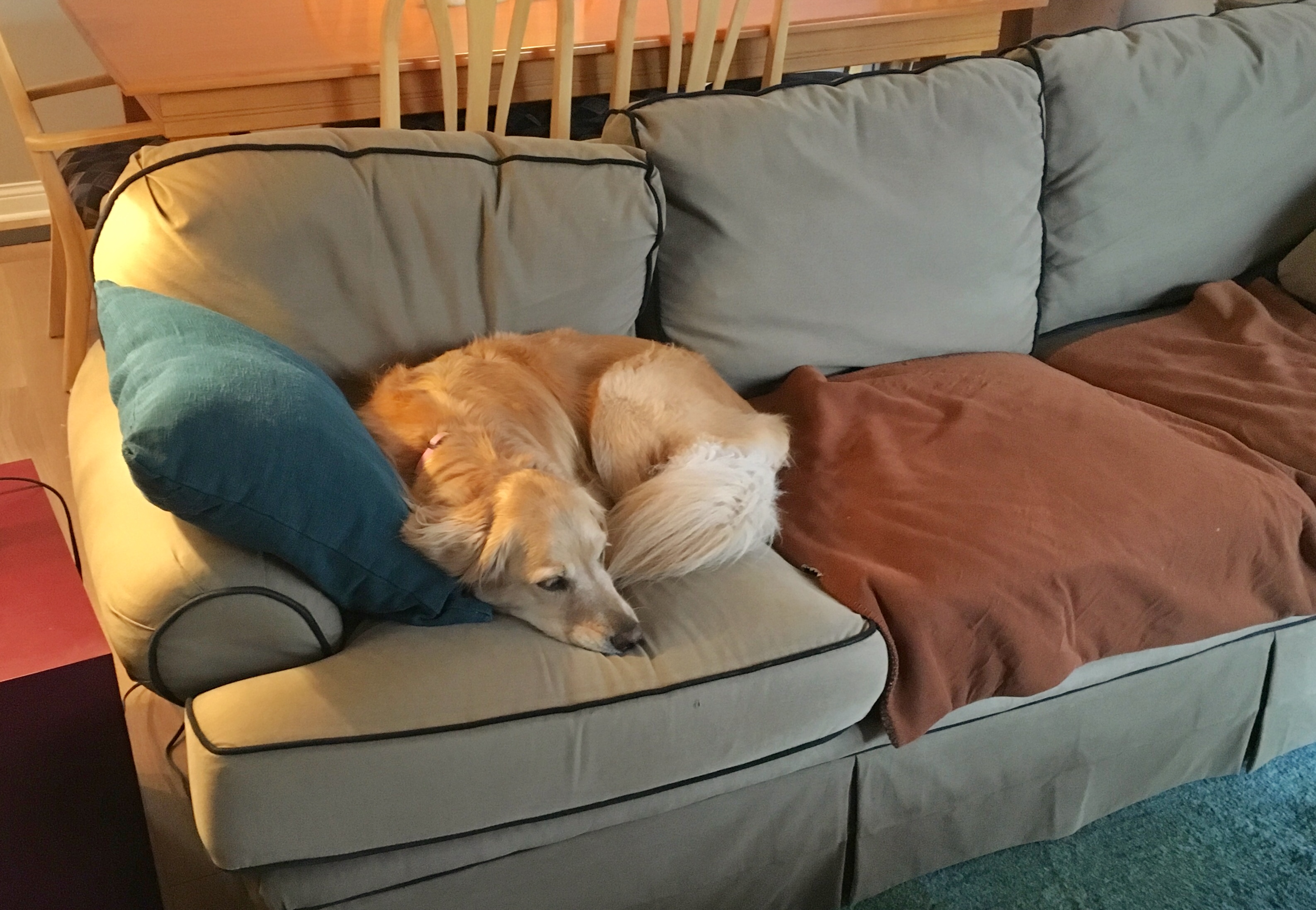
It started as sleet and freezing rain and later changed to snow and we woke up to find 12-14 inches on the ground. Ripley and Lucy are frustrated, unable to find their favorite places to take care of business.

I hiked down the hill to take some photos but it is damned cold so I only got about 50 yards. I’ll take another run at it later today. For now, here’s a shot of the deck, road to house, our back yard, another of the back yard, the front of our house and our neighbor’s bench.

The future of local news?

I stumbled across this on one of the Wired blogs (Epicenter). Have you heard of Topix? It’s a news aggregator that uses a geolocating algorithm they’ve developed to get all the news relevant to any zip code or city from all of its 50,000 news sources. Punch in the coordinates for Jefferson City and you get all the stories out of all the local papers, without repeats, in one place.

You can also use Topix to search 5,500 public company and industry verticals, 48,000 celebrities and musicians, 1,500 sports teams and personalities. You used to have to pay big money to do a Lexis-Nexis search to get info like this or pay a clipping service like Burrelles. Now anyone can do it for free.

According to Epicenter (a Wired blog), Topix is backed by Tribune, Gannett and McClatchy. This is one of those things that’s hard to describe but kind of cool in practice. Check it out.

Clear Channel does deal with Reuters for web content

Clear Channel Radio’s online division has announced that it will add news and video content from Reuters to its News on Demand service on CC Web sites.

“Clear Channel Radio’s News on Demand product combines on-demand video and text feeds from Reuters with CCR’s 24/7 coverage of breaking news, business/financial stories, entertainment news and human-interest features. The product also allows CCR stations to upload their own local news to their sites, giving both local and national news coverage from station sites on demand.”

I’d love to see exactly what “on demand” means but I can’t argue with the strategy. I hope more of our affiliates will get their online act together and inlcude our our state news and sports content on their sites. And I wonder where AP was/is in this mix. Too pricey perhaps? I’d love to hear more about this. SteveMays at Gmail dot com [Radio and Records]

Superman Returns: Up in the sky…

Fix my cape.They held a little celebration in Metropolis, Illinois, to mark the release of the “Superman Returns” DVD. UPI photographer Bill Greenblatt shares this photo of one Superman “look-a-like” adjusting the cape of another Man of Steel dead-ringer.

I have to wonder if Bill was being ironic when he captioned this image with “A wooden cut-out of Superman hangs on a building as hundreds lineup for a free DVD on the release date of “Superman Returns” in Metropolis, Illinois on November 28, 2006. Metropolis is the adopted home of Superman.”

The hopeless boredom on the faces of the people in line… the “Man of Plywood” missing an arm… thank you, Bill… thank you.

60 Minutes segment: A Pill to Forget

In May of 2004 I posted: “If you experienced the worst day of your life… something truly horrible…and there was a drug that made you forget the previous 24 hours, would you take it? If not, why?”

Last Sunday on 60 Minutes, Lesley Stahl did a segment titled “A Pill to Forget?” From the 60 Minutes website:

“If there were something you could take after experiencing a painful or traumatic event that would permanently weaken your memory of what had just happened, would you take it?”

Turns out there is such a pill. Sort of. It’s called propranolol, a medication commonly used for high blood pressure … and unofficially for stage fright.

It turns out our memories are sort of like Jello – they take time to solidify in our brains. And while they’re setting, it’s possible to make them stronger or weaker. It all depends on the stress hormone adrenaline. Propranolol seems to make the memories less intense.

The people in the 60 Minutes story had no trouble answering the question I posed back in 2004: Hell yes!