How flat is your organization?

This interview with Cristobal Conde, the president and CEO of SunGard, is a good example of why I’ll be willing to pay for the New York Times, when that day comes (couple of weeks?). The Q & A covers several very basic and interesting areas and I encourage you to read the entire piece. Here are a few bits to whet your appetite:

“You have to work on the structure of collaboration. How do people get recognized? How do you establish a meritocracy in a highly dispersed environment?

The answer is to allow employees to develop a name for themselves that is irrespective of their organizational ranking or where they sit in the org chart. And it actually is not a question about monetary incentives. They do it because recognition from their peers is, I think, an extremely strong motivating factor, and something that is broadly unused in modern management.

On leadership:

“I think too many bosses think that their job is to be the leader, and I don’t. By creating an atmosphere of collaboration, the people who are consistently right get a huge following, and their work product is talked about by people they’ve never met. It’s fascinating.

On micromanagement:

“If you start micromanaging people, then the very best ones leave. If the very best people leave, then the people you’ve got left actually require more micromanagement. Eventually, they get chased away, and then you’ve got to invest in a whole apparatus of micromanagement. Pretty soon, you’re running a police state. So micromanagement doesn’t scale because it spirals down, and you end up with below-average employees in terms of motivation and ability.

Instead, the trick is to get truly world-class people working directly for you so you don’t have to spend a lot of time managing them. I think there’s very little value I can add to my direct reports. So I try to spend time with people two and three levels below because I think I can add value to them.

PowerPoint:

“I actively despise how people use PowerPoint as a crutch. I think PowerPoint can be a way to cover up sloppy thinking, which makes it hard to differentiate between good ideas and bad ideas. I would much rather have somebody write something longhand, send it in ahead of the meeting and then assume everybody’s read it, and then you start talking, and let them defend it.

Advice to young people:

“My advice to young people is always, along the way, have a sales job. You could be selling sweaters. You could be selling ice cream on the street. It doesn’t matter. Selling something to somebody who doesn’t want to buy it is a lifelong skill. I can tell when somebody comes in for an interview and they’ve never had any responsibility for sales.”

Print this interview and slide it under the bosses door. Wear gloves and don’t get caught.

One in five radio execs social networking

How many US radio industry executives (from the 50 largest companiues) are on Facebook or Linkedin? Here’s what the folks at McVay New Media discovered:

“Out of 116 radio executives, running the fifty largest USA radio companies, 14 of them had Facebook accounts and 19 of them had LinkedIn accounts. The most common member of the executive team to have a presence on either website was the Chief Operating Officer.”

While less than scientific –some executives are online under different names– the results raise the question:

“How can we embrace the digital direction of the industry if our leaders are not even participants themselves? Think of it this way. If it were exposed that less than one in five of radio’s C-level executives owned radios, we would significantly doubt their confidence and personal investment in the radio industry.”

“If today’s radio companies are to evolve into the digital media world, wouldn’t it first make sense for radio’s leaders to evolve into the digital media world? Clearly, many leaders in the media industry are still learning the language of digital. Yet, the fastest way to learn a new language is immersion.”

“Tools like Facebook, LinkedIn, and Twitter can offer any C-level executive a simple and efficient direct forum with employees, shareholders, and customers. In fact, a strong executive could use social networking to improve their company’s image, foster positive communication, and directly confront market feedback.”

Is our (Learfield) industry “headed in a digital direction?” I believe it is. Are our leaders participating themselves? Only a few and in very limited ways. I might rephrase the question:

If only 1-in-5 of our senior managers regularly attended college sporting events, would we “doubt their confidence and personal investment” in collegiate sports marketing?

The Book of Eli

They did it. The finally made a Denzel Washington movie that completely sucked. The story is Kwai Chang Caine goes to Deadwood with a good dose of Road Warrior.

I can only assume the studio hopes the reps of Denzel and Gary Oldman will pull enough people in the first week or two to make a little money. The film could not have been expensive to shoot.

As for why two fine actors like Washington and Oldman would sign on for this… no idea.

If you’re the type that makes a mental list of “reality errors” in the movie (where do they get gasoline 30 years after the end of the world?), don’t bother. The Book of Eli has too many.

Poll: 2 in 5 Americans read paper daily

One of the findings of an Adweek Media/Harris Poll taken in December 2009. Only 43% of US adults say they read a daily newspaper – either online or in print – almost every day, while 72% read one at least once a week and 81% read one at least once a month. The study found that one in ten adults say they never read a daily newspaper.

“Daily newspaper readership skews heavily toward the older age groups. Almost two-thirds of those ages 55+ (64%) say they still read a daily newspaper almost every day. Younger Americans read newspapers less often. Just more than two in five of those ages 45-54 (44%) read a paper almost every day as do 36% of those ages 35-44. However, less than one-fourth of those ages 18-34 (23%) say they read a newspaper almost every day and 17% in this age group say they never read a daily newspaper.

Though many newspapers are exploring the possibility of charging a monthly fee to read a daily newspaper’s content online, the poll results suggest this tactic is unlikely to work. Three-fourths of online adults (77%) say they would not be willing to pay anything to read a newspaper’s content online. Among the minority willing to pay, one in five online adults (19%) would only pay between $1 and $10 a month for this online content and only 5% would pay more than $10 a month.

The average monthly amount consumers are prepared to pay ranges from $3 in the US and Australia to $7 in Italy.

I want to be depressed by these findings but must confess that I do not read a hold-it-in-your-hands newspaper and I’ve never been better informed. I spend the first two hours of every days gobbling up news from dozens of sources. And much (most?) of the real news comes from newspapers that are bleeding red ink.

What will I be reading if/when those traditional sources are no long? I have no idea.

First live video from capitol hearing room?

As far as I know, I did the first live video feed from a committee room at the Missouri state capitol. I know, you’re asking yourself why would anyone bother. You could ask that about a lot of important-but-not-too-interesting news.

We’ve been streaming audio of debate in the Missouri House and Senate for 8+ years and recorded audio of lots of hearings, but never video. Finally all of the pieces of the puzzle seemed to be in place: hardware, software, wifi.

I used a little Logitech webcam (on the tripod); the Casio Exilim for back-up (on the small tripod) and ran it (the LogiTech) through CamTwist up to USTEAM. I think I can skip CamTwist next time. You can sample a few seconds below.

It ain’t CBS but I didn’t have wait on the sat truck, either. Next time, I might just try this on the iPhone if I can get close enough.

Back to Google Reader Shared items

On several occasions I have gushed about Posterous, the life-streaming/blogging tool. I used it for most of the past year but put it aside a couple of days ago. At least for my personal use. Several of our company blogs are using posterous.

I had to stop for sort of a silly reason. I kept sending personal stuff to one of the company blogs. Not good. The only sure way to avoid this was to pull the plug on the personal account.

I like having a place I can quickly share something of interest and it was there all the time, in Google Reader. For me it does all that I liked about posterous (with a few bonus features). Latest links are back in the sidebar.

Bruce Sterling: State of the World 2010

Every year the Well (one of the early, pre-web, online communities) invites Bruce Sterling to chat about the state of the world. This year, he paints a grim picture of where the “present” is heading:

“Various entities and institutions have scrambled together safety pins and gobs of glue to rig the global economy so that it appears to be ambling along, but isn’t it a great conceptual Jenga, ready to fall if you move the wrong block? What kind of shuffling and reshuffling can we expect, if there’s a global economic meltdown? And has the collapse already happened – are we like the coyote, run far beyond the edge of the cliff, waiting for gravity’s effect?”

On Google News and Twitter:

“I’m looking over my Twitter stream here, because it seems a more useful barometer to me now than Google News. Google News definitely has that rickety Jenga feeling that JonL is talking about. Whenever you see something on Google News nowadays, you have to wonder: “who owns this so-called news organization now? What’s left of them financially? Is there even a shred of objective fact in this?”

The God Theory

My interest in quantum theory, time and the relationship between consciousness and reality lead me to a book by Bernard Haisch titled The God Theory. (I’ve included a chunk of Dr. Haisch’s bio below). I include this post for my own reference.

“If you look up at the faint smudge in the night sky that is really the distant, huge Andromeda galaxy, you might see light that, from your point of  view, took two million years to traverse hat vast intergalactic distance before it was absorbed in your retina and registered as an image. For a beam of light itself, however, things look different. Instead of radiating from some star in the Andromeda galaxy and racing through space for two million years, every single photon sees itself, metaphorically speaking, as born and instantaneously absorbed in your eye. It is one simple jump that takes no time at all, according to the theory of special relativity. That’s because, in the reference frame of a particle traveling at the speed of light, all distances shrink to zero and all time collapses to nothing. From its own perspective, the photon of light leaps instantaneously from there to here because distance has no place in its existence. We can almost say that the photon was created because it had someplace to land and, in an instant, it jumped from there to here, even across two million light years of space from our perspective.”

“Bernard Haisch, Ph.D., is an astrophysicist and author of over 130 scientific publications. He served as a scientific editor of the Astrophysical Journal for ten years, and was Principal Investigator on several NASA research projects. After earning his Ph.D. from the University of Wisconsin in Madison, Haisch did postdoctoral research at the Joint Institute for Laboratory Astrophysics, University of Colorado at Boulder and the University of Utrecht, the Netherlands. His professional positions include Staff Scientist at the Lockheed Martin Solar and Astrophysics Laboratory; Deputy Director of the Center for Extreme Ultraviolet Astrophysics at the University of California, Berkeley; and Visiting Scientist at the Max-Planck-Institut fuer Extraterrestrische Physik in Garching, Germany. He was also Editor-in-Chief of the Journal of Scientific Exploration.”

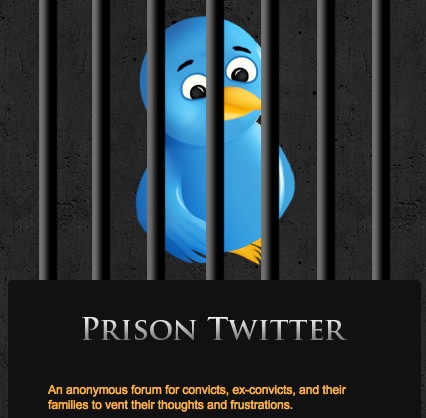
Tweeting from the slammer

I didn’t follow the story of the arrest and conviction of Jeff Smith last year. Here’s a couple of grafs from Wikipedia:

“Jeff Smith was a Democratic member of the Missouri Senate, representing the 4th district, covering the western portion of the City of St. Louis. On August 25, 2009 he pled guilty to two counts of obstruction of justice and resigned his seat. He admitted his involvement, and attempted cover-up, in two federal election law violations committed during his 2004 campaign for Congress.

Each conspiracy count is punishable by up to 20 years in prison and $250,000 in fines. He resigned effective August 25, 2009 and was sentenced to 1 year and a day of prison. He also was fined $50,000. His lawyer requested Smith be sent to a prison camp in Marion, Illinois.”

This morning I learned from @chadlivengood that Mr. Smith (@jeffmsith7027) is on Twitter. Seems Mr. Smith emails his tweets to a friend who posts for him.

I’m a curious why he has access to email but not Twitter? Anybody help me out with that? Would love to interview someone with the federal prison system who could illucidate.

Are there lots of federal prisoners on Twitter? Is there a list somewhere? What –if anything– does this say about social networking? Do prisoners within the same facility follow each other? Would it be tacky to do @fakejeffsmith feed with humorus tweets. Yes, I’m pretty sure it would.