
Shadows
In some schools of Eastern thought, the permanent, unchanging self is an illusion. A mash-up of hopes, fears, concepts, ideas, faded memories… constantly changing, never the same from moment to moment. I don’t pretend to understand this well enough to share it. But the photo below spoke to me in this context. The shadows are the clearly defined, easily recognizable “persons” we bebelieve ourselves to be. And that others do/should see. In fact, we are Erector Sets made up of all the bits and pieces that flow past, ever changing.

Your Next Doctor Might Be Your Car
“Since 2010, the USC School of Cinematic Arts and BMW have been working on Nigel, a Mini Cooper outfitted with 230 sensors that creates a log of everything that happens in the vehicle, letting users see it all via an iPhone and iPad app. Now USC’s Center for Body Computing is getting in on the Nigel project, looking at how the car could be used to monitor driver health as well as vehicle health.”
“One day, she imagines, a car’s pollution sensors, heart-rate sensors (maybe integrated into the steering wheel), GPS, and oxygen content sensors could all work together to tell drivers if, say, a certain polluted area of the highway affects their health–or if their heart rate goes up every time they arrive home or at the office.”
Physicians no longer control information
“Physicians no longer control information. While the idea of a patient bringing new research to her doctor isn’t a new phenomenon, in the broader historical context it’s huge. For the better part of civilization our role as physician has centered around privileged access to information and knowledge. But the web has created a type of disintermediation. The face-to-face encounter with a physician is evolving as a more narrowly defined element in an individual’s quest to understand their condition and get better. Access to information is the bedrock of the health 2.0 movement.”
“There’s too much to know. There was once a time when physicians could get their hands around what they needed to know. You’d go to the mailbox and pick up that 200 page journal and you were all set.
“
“Medical students continue to learn in a system that assumes we can teach a doctor what they need to know instead of empowering them to access what they need to know.”
Bryan Vartabedian is a a pediatric gastroenterologist at Texas Children’s Hospital/Baylor College of Medicine. He writes about the convergence of social media and medicine.
What does mobile explosion mean for news?

Some nuggets from new Pew Research Center report based on a survey of 9,513 U.S. adults conducted from June-August 2012 (including 4,638 mobile device owners)
- Half of all U.S. adults now have a mobile connection to the web through either a smartphone or tablet
- Nearly a quarter of U.S. adults, 22%, now own a tablet device-double the number from a year earlier
- 64% of tablet owners and 62% of smartphone owners say they use the devices for news at least weekly
- As many as 43% say the news they get on their tablets is adding to their overall news consumption. And almost a third, 31%, said they get news from new sources on their tablet
- Fully 60% of tablet news users mainly use the browser to get news on their tablet, just 23% get news mostly through apps and 16% use both equally
Bad Lip Reading: Paul Ryan’s Video Diary
Less to think about?
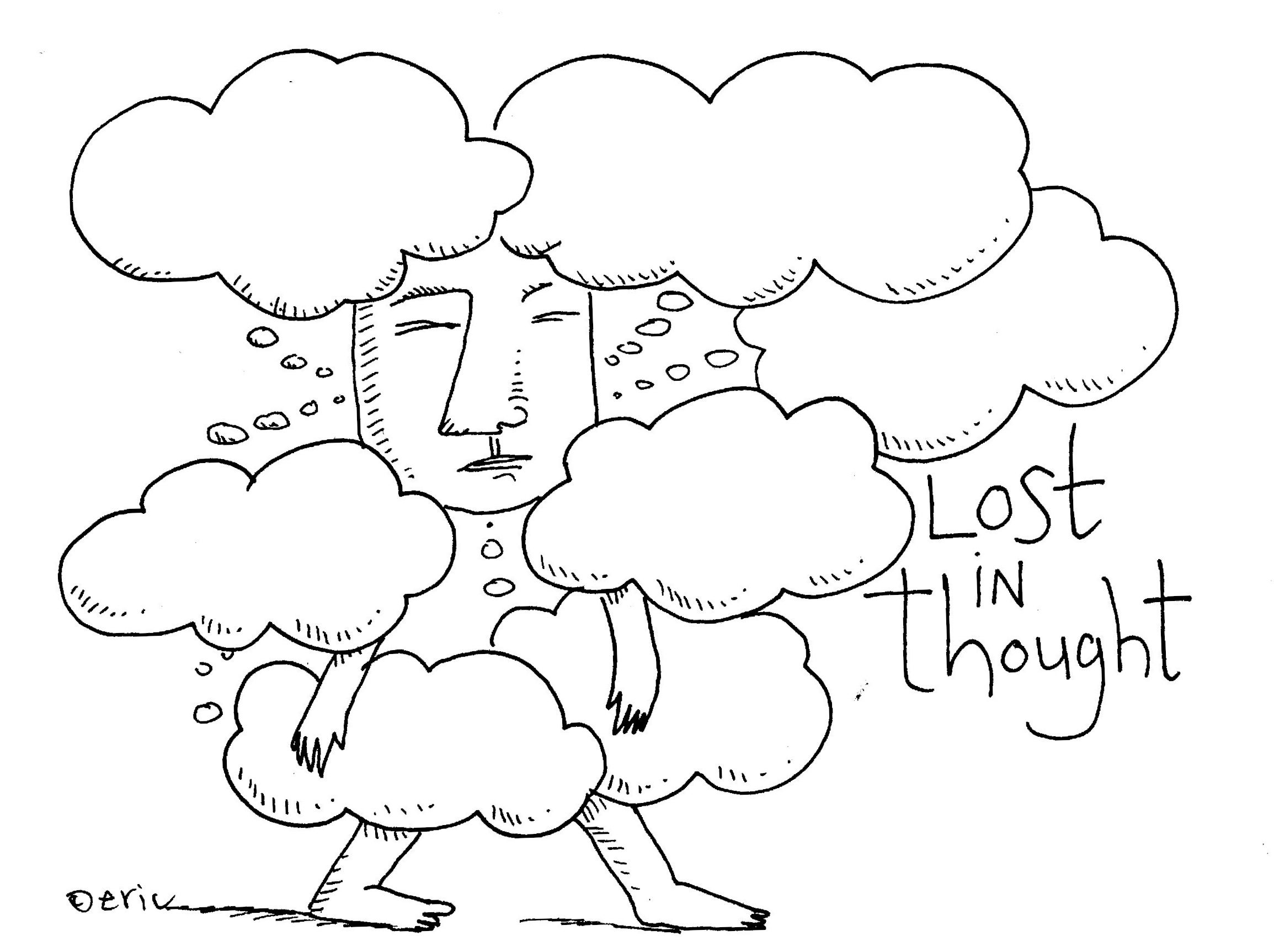 Depending on your source, we (adult humans) have between 40,000 and 60,000 thoughts in a day. Let’s split the difference at 50,000. How many of those, I wonder, might be thoughts related to your job and the work you do? Twenty percent? Given that most of us spend eight hours a day on the job, that seems reasonable. So, 10,000 work-related thoughts a day.
Now, lets assume your Uncle Ernie croaks, leaving you enough money you no longer have to work for a living. Can we assume that — eventually — you will no longer have those 10,000 thoughts? Your mind probably won’t go into neutral but will replace those thoughts. How, I wonder, does that work? What mental process determines what gets those CPUs?
Walking slooowly toward the door
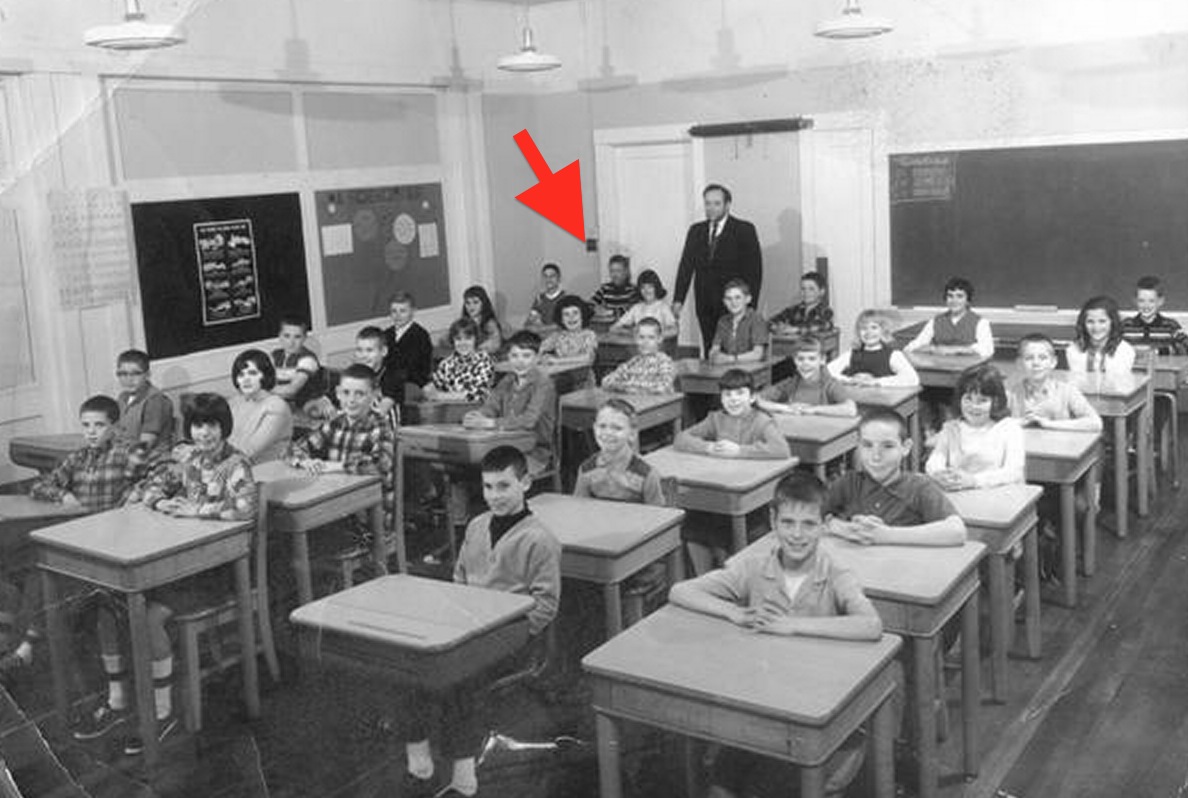 In grade school I became adept at timing a trip to the pencil sharpener (located next to the classroom door) so I arrived exactly at 3:00 p.m. and could bolt at the first sound of the bell and be the first one out the door.
I began a similar slow shuffle this week by announcing April 1, 2013 would be my last day of full-time employment at the company I have worked for the past 29 years.
Yes, that’s a lot of “notice,” but I won’t be 65 until next March and want to be sure to qualify for some of that great public health care for which the US is known and admired.
And there are a few things to hand off. Shoot, it’s going to take weeks to remember where I hid the master list of all the passwords for the company websites I’ve been tending.
I’m making an effort to not think of this move as retirement but haven’t come up with the right word. Sabbatical suggests I’ll be coming back to a full-time gig and that’s not likely. Freelancer has a sexy ring to it but sort of implies income. I have no interest in “consulting” anyone. So far, I like my buddy George’s suggestion: Soldier of Fortune!
The list of things I won’t be doing is pretty firm. No RV. No vegetable garden. No cruises.
“So, what are you going to do?” is a common question.
“I have no idea,” is a troubling answer for folks who have known me as a hopeless workaholic. And I understand their concern. I always insisted I would work until I dropped. This new let’s-see-what-happens Steve is a new and troublesome persona.
After driving the MINI Cooper that first time, I said, “Yes! No more cars that aren’t fun!” That’s sort of how I’m approaching this next chapter. Only fun and interesting stuff from this point on. (Not that making banners for the company websites wasn’t fun)
What bothers my friends, I think, is my lackadaisical attitude about this transition (metamorphosis?). I’m making an effort NOT to plan the rest of my life. I’ve come to believe such planning is folly (Planners scoff at this kind of talk). Planning is important, I suppose, if the outcome is important to you. But I’m trying accept any outcome (I’ll let you know how that goes).
As I walk verrry slooowly toward the pencil sharpener, I’ll probably share some of what I see and experience along the way. And I’m counting on those who have made the journey and bolted onto the playground to pass along their advice. I’d especially like to hear suggestions on interesting things to do, placed to go, people to meet. I might even take on a project or job along the way. (Will work for free if I can do it the way I want. $100K if you want to have some input)
Thought Cloud

I’d like to have a tag cloud of my thoughts. A “thought cloud.” I think it would be useful to see a cloud representation of my thoughts. I’m thinking almost constantly, but have no real data on what I’m thinking about.
I’ve been spending a fair amount in recent years, trying to observe my thoughts. To be aware of what’s happening in my head. One of the more challenging things I’ve attempted.
But what if there were a better way to monitor my thoughts, convert them to text, and show them to me. Last hour. Last 24 hours. Last week. Month, Year, whatever.
Would I be surprised by the results? I think so. Based on my reading and personal experience, we are rarely aware of our thoughts. You can test this by trying to be aware of your thoughts for sixty seconds. Listen to that voice in your head and jot down the keywords and phrases for one minute.
Could I do anything with this information? No idea. Would I really want to know? I would.
William Gibson Wired interview
In the old days, if you wanted to become insanely knowledgeable about something like that, you basically had to be insane — you had to travel around the world, finding other people who were sufficiently crazy to know everything there was to know about that. That would have been so hard to do, dependent on sheer luck, that it kept the numbers of those people down.
But now you can be a kid in a town in the backwoods of Brazil, and you can wake up one morning and say, “I want to know everything about stainless steel sports watches from the 1950s,” and if you really applied yourself, to the internet, at the end of the year you would have the equivalent of a master’s degree in this tiny pointless field. I’ve totally met lots of people who have the equivalent of that degree.
I never wanted to be a collector of anything; I just wanted to pointlessly know really a lot about one thing
My friend Doug Coupland recently tweeted something to the effect that he was once again trying to get into Facebook but he said, “It’s like Twitter but with mandatory homework.” That might be another good way to describe it. With Twitter you’re just there; everybody else is just there. And its appeal to me is the lack of structure and the lack of — there’s this kind of democratization that I think is absent with more structured forms of social media.
Now, last week, 30 years ago? What’s the difference? What does it matter? It’s all there on YouTube. And so I find myself discovering things like a decade late, or I discover things before very many people have found them. It’s atemporal. It’s just all over the long calendar, and that’s going to make things different. But that’s been going on for a long time.
Full interview