
Seeing my blog through the ChatGPT lens (Memory)

In the two-plus years I’ve been playing with ChatGPT one of the more interesting uses I’ve found is in analyzing the 6,400 posts on my blog (going back more than 20 years). I suspect the day is coming when an AI will be able to scan/read all of those posts. As an experiment, I picked one topic —memory— that I had posted on as far back as 2004. From several perspectives: neuroscience, philosophy, fiction, Eastern spiritual traditions.

ChatGPT concluded its analysis with the following:

It’s both a philosophical inquiry and a deeply personal theme — where your intellectual interests and life story fuse. These posts read almost like a personal anthology on memory — each entry a fragment in your ongoing effort to understand self, time, and what persists.

Artificial intelligence has taken one topic from my blog to a place I could have never imagined. A gestalt of this particular topic. A whole much greater than the parts. Again, ChatGPT:
Continue reading

Hope

Time is an illusion. A concept. There is only “now.” Memories happen in the now… the future can only be imagined in the now. A common view in Eastern spiritual traditions, philosophy, and science. Anxious and worried thoughts are usually about a future that exists only in the mind. So here’s my question…

What about hope? The hope we experience in the now is inherently future-based. If we’re hoping for a different/better future, are we missing the now? I put the question to ChatGPT: Continue reading

Memories


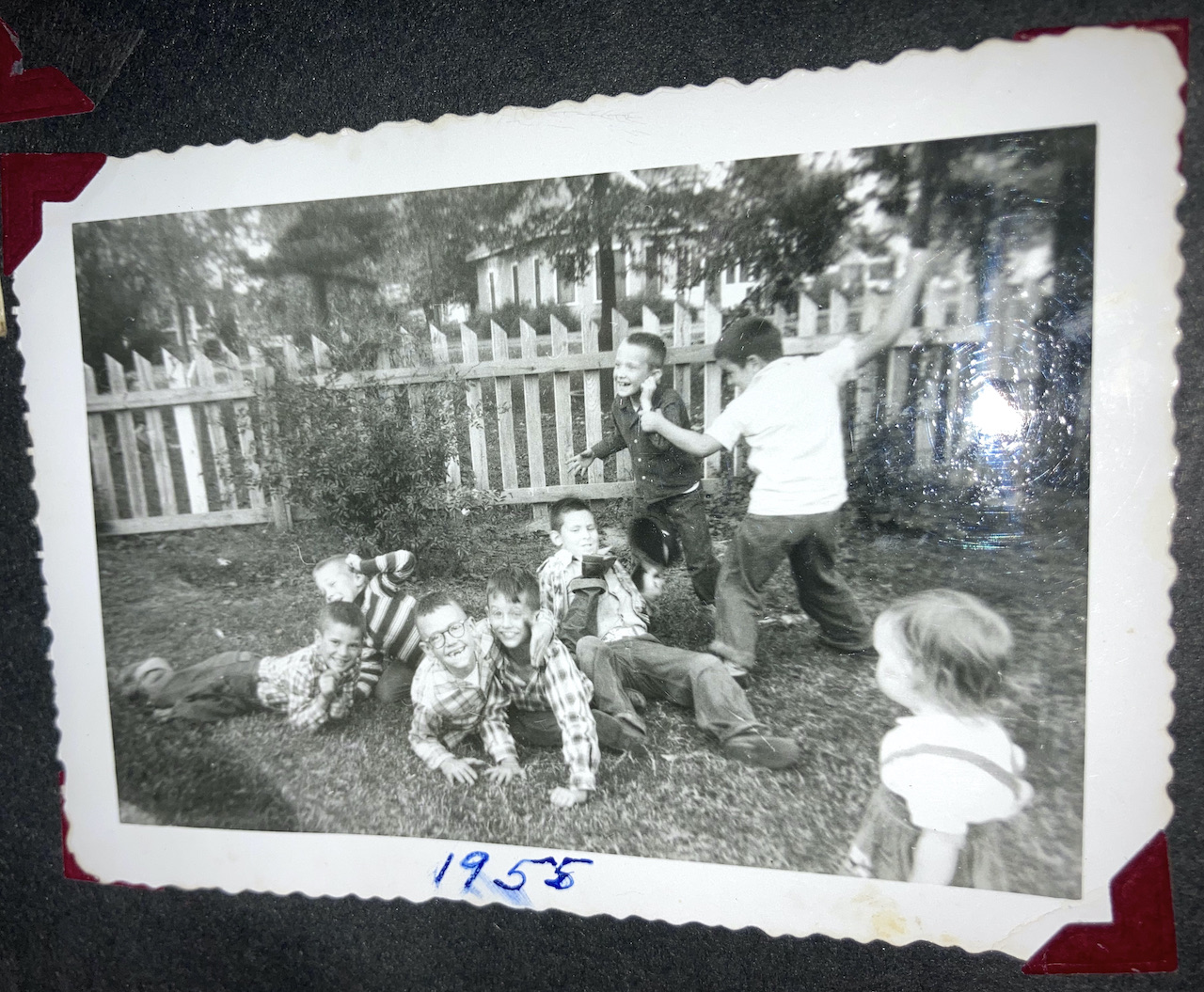
To some extent we are the sum of our memories. Or it feels that way. But neuroscience tells us that every time a memory is recalled, it is recreated by the brain, slightly different each time it’s retrieved. So, a memory of a memory. Of a memory. Imagine each memory as a photo in a shoebox. Everytime you pull one out, it’s just a little bit different. We’re not bothered by this because we are unaware of the change. We have no memory of the previous version. Neuroscience also tells us we are able to recall only a fraction of our experiences.

My conclusion: We are not our memories.

So who/what am I? Perhaps the most important question one can ask, and that few ever do. Are we our thoughts and feelings? If so, what are we in those rare moments when we are not thinking or feeling? I like Sam Harris’ description of such mental objects as “temporary patterns of energy.”

Experience Self vs. Memory Self (Daniel Kahneman)

  • Being happy “in” you life, vs. being happy “about” your life
  • We don’t choose between experiences, we choose between memories of experiences
  • We don’t think of the future as experience, we think of the future as anticipated memories
  • Why do we give so much weight to memories, relative to the weight we give experiences?
  • We do not attend to the same things when we think about life and when we actually live.

Forgetting

Most of us has had the experience of committing something to memory. The multiplication tables; important dates in American history, etc. But how does one go about intentionally forgetting something? The following is from a novel (crime fiction) by Lawrence Block, one of my favorite authors. The protagonist is a contract killer and the excerpt describes how he avoids thinking about the people he kills.

“Years ago he’d learned how to clear his mind after a job. Very deliberately he let himself picture the master bedroom on Caruth Boulevard as he had last seen it. Portia Walmsley lay on her back, stabbed through the heart. Beside her was her unnamed lover, comatose with drink, his fingers clenched around the hilt of the murder weapon. It was the sort of image you’d want to blink away, especially if you’d had something to do with it, but Keller fixed it in his mind and brought it into focus, saw it in full color and sharp relief.”

“And then, as he’d learned to do, he willed the image to grow smaller and less distinct. He shrank it, as if viewing it through the wrong end of a telescope, and he washed out the bright colors, dimming the image to black and white, then fading it to gray. The details blurred, the faces became unrecognizable, and as the image disappeared, the incident itself its emotional charge. It had happened, there was no getting around it, but it was as if it had happened years and years ago, and to somebody else.”

I don’t know if this works. Like everyone, I’ve had moments in my life I’d rather not recall but I’ve never made this kind of conscious effort to forget.

Dreams of stuff that never happened

The subject of memory comes up a lot in my reading. Cognitive science; philosophy; Buddhism and Taoism. Eventually they all get around to talking about the sense of self. That feeling of “I” that almost everyone experiences. Memory seems to be the glue that holds the self together throughout the years. I few nights ago I was reminded there are two types of memory (perhaps more, but two that I’m aware of).

I was going to call the first — and most common — “real memory.” But memories don’t seem as real to me as they once did. I considered “Memories of Stuff that Probably Happened,” but that’s a mouthful. Let’s call these Accessible Memories. I’m sure people who study this kind of stuff have a name for these, I just don’t know what it is.

Accessible Memories are of people, places, things that (probably) existed or happened in your past. I call them “accessible” because you can “go back” and retrieve them. Let’s say someone you work with mentions taking her son to Little League practice. If you played you probably have memories and you can intentionally retrieve some of them. In my experience, it’s usually the same ones. Perhaps because they’re good memories… or bad memories. In my experience, the longer I spend thinking about that time in my life, the more memories I can access. But my sense is there is a finite number of memories. Perhaps with drugs or hypnosis I could recall all of my memories but that’s another topic. But for whatever reason, I have a strong sense these memories are of stuff that happened.

Let’s talk about dreams for a moment. Most of my dreams involve people and places from my past. As well as events that, though distorted and warped, have some basis in experience. But every so often I’ll have a dream that features totally unfamiliar elements, involving people/places/events that were never part of my waking life. Where did those images come from? Creepier still, one of these “made up” dreams might reoccur months or years later.

I’m aware of these “made up” dreams because I remember them. Sometimes upon awakening. Sometimes days later, “out of the blue” as it were. This is the other type of memory that I find so mysterious. Can one have a memory of something that never happened. Not just an inaccurate memory where you get some of the details wrong. But of something completely… imaginary? But that’s not right. The dream did happen. And I’m having a memory of that dream. Are dreams and memories completely different phenomenon? Can I dream about a memory? Why not?

Since I can have a memory of a dream (based on experiences), why not a memory of a dream featuring people that never existed and stuff that never happened? It feels like I’m conflating dreams and memories and they’re probably two different but related experiences. But these memories-of-dreams-of-stuff-that-never-happened fascinate me. And make my head hurt. (I keep looking for Leonardo DiCaprio’s little top from the movie Inception.)

Memories and dreams are “head stuff.” That’s the only place they happen (I know, I know. That’s the only place everything happens). So they feel less real to me than, say, the breath I’m taking at this moment. I can reach into wherever memories are kept and paw through them like a shoebox full of old photos… I can’t go digging around for a favorite dream. They’re mostly gone. For good reasons, I’m told. But once in awhile one “pops into our heads.” A memory, but always fleeting. Perhaps dreams-of-stuff-that-never-happened (DOSTNH) belong to someone else and got caught in a cosmic consciousness riptide before drifting over to one of my dreams.

Memory creates the illusion of continuity

Daniel Kahneman said, “There are the experiences in our lives… and our memories of those experiences. And they are not the same.”

Memory seems to be the secret sauce to that feeling of a continuous, unchanging ME. But I’m finding it increasingly difficult to think of my memories as “mine.” It was easier when I thought of them as photographs in a shoebox on a shelf in my mind.

“Memories are not etched permanently in the brain. Instead, every time a memory is retrieved, it is destroyed and then re-created, and it becomes a memory of a memory. Any current memories we have are copies of copies of copies… many times over depending on how many times we have recalled that particular experience. Because of this process of creating, destroying, and re-creating memories, our recollections are unstable and subject to alteration. Each time we recall an event from our lives, the memory of that event can change. […] We never have a full recollection of anything that’s happened to us, and our memories are constructed from hints, scraps and traces found within the mind.” — Living As A River

I have a memory of a four-year-old Steve jumping up and down on the bed and then crashing through the bedroom window. Obviously that didn’t happen and I have no idea when or how the memory was formed. How many other of my memories are “constructed?”

Thirty years ago Barb and I went to New York with another couple. It was miserably cold and I remember almost nothing of that weekend. I have a photo of me with a parrot sitting on my shoulder. That must have happened but I’m not sure if I have a memory of the experience or if the photo somehow created that memory.

So what remains when the person, that oh-so-strong sense of a permanent self, is gone?

“A vague memory remains, like the memory of a dream, or early childhood. After all, what is there to remember? A flow of events, mostly accidental and meaningless. A sequence of desires and fears and inane blunders. Is there anything worth remembering? Realize that your present existence is like a shower of sparks, each spark lasting a second and the shower itself — a minute or two.” — Nisargadatta Maharaj

My memories seem so important. Would there be a “me” without them? And, yet, when I examine them, one at a time, they are indeed “mostly accidental and meaningless.”

James Gleick says “We experience childhood one way when we’re living it and another way when we relive it in memory.” Good. That means it was more fun than I recall.

Again, James Gleick: “But if memory is the action of recollection, the act of remembrance, then it implies an ability to hold in the mind two constructs, one representing the present and another representing the past, and to compare them, one against the other. How did we learn to distinguish memory from experience?”

Might that be why memories are mostly fuzzy and vague, “…constructed from hints, scraps and traces found within the mind.” We seldom confuse experience with memory.

I’m spending a lot of time thinking about the question who or what am I? And the answer I keep coming up with is: I am this immediate experience. And nothing more. As Alan Watts said, “This is it.” But it’s impossible for me to think of an experience as a discrete ‘thing.” Each is gone before I can bring it into consciousness. I can only think about the experience that just slipped away. It easier to think in terms of process, a flow of experiences. Ever changing. Never the same. That means keeping all the inputs wide open. Turn down the noise, turn up the signal. Be here, now.

A thousand years is but an instant

“A thousand years is but an instant. There’s nothing new, nothing different; same pattern over and over. The same clouds, same music, the same things I felt an hour or an eternity ago. There’s nothing here for me now, nothing at all. Now I remember, this happened to me before. This is why I left. You have begun to find your answers. Although it will seem difficult the rewards will be great. Exercise your human mind as fully as possible knowing that it is only an exercise. Build beautiful artifacts, solve problems, explore the secrets of the physical universe, savor the input from all the senses, filled with joy and sorrow and laughter, empathy, compassion, and tote the emotional memory in your travel bag. I remember where I came from, and how I became human, why I hung around, and now my final departure’s scheduled. This way out, escaping velocity. Not just eternity, but Infinity.”

From Waking Life by Richard Linklater

Time Travel: A History by James Gleick

screen-shot-2016-10-05-at-12-01-53-pm“From the acclaimed author of The Information and Chaos, here is a mind-bending exploration of time travel: its subversive origins, its evolution in literature and science, and its influence on understanding time itself.”

Sleeping into the future is what we do every night.

“Man can do what he will, but he cannot will what he wills.” — Arthur Schopenhauer

“People living in different countries kill each other at irregular time intervals, so that also for this reason anyone who thinks about the future must live in fear and terror. I trust that posterity will read these statements with a feeling of proud and justified superiority.” — Albert Einstein’s message in the time capsule buried at the 1939 New York World’s Fair

We know that complete certainty must always elude us. We know that for certain.

“Time and space are modes by which we think, and not conditions in which we live.” — Albert Einstein

“I have approximate answers and possible beliefs and different degrees of certainty about different things, but I am not absolutely sure of anything.” — Richard Feynman

What is time? Things change, and time is how we keep track.

Schopenhauer asserted that life and dreams are pages from the same book. To read them in their proper order is to live, but to browse among them is to dream.

No one can really explain how memories are formed and retrieved. Nor can anyone explain away Proust’s paradoxical contention: that the past cannot truly be recovered by searching our memories, by interrogating them, by rewinding the film or reaching back into the drawer; rather, that the essence of the past, when it comes to us at all,comes unbidden.

If you ever see yourself coming out of a time machine, run the other way as fast as you can. Nothing good can come from meeting yourself. — Charles Yu

We experience childhood one way when we’re living it and another way when we relive it in memory.

But if memory is the action of recollection, the act of remembrance, then it implies an ability to hold in the mind two constructs, one representing the present and another representing the past, and to compare them, one against the other. How did we learn to distinguish memory from experience?

Our conscious brains invent the concept of time over and over again, inferring it from memory and extrapolating from change. And time is indispensable to our awareness of self. […] You order the slices of your life. You edit the film even as it records.

“There were buttons and switches everywhere—buttons to call for food, for music, for clothing. There was the hot-bath button, by pressure of which a basin of (imitation) marble rose out of the floor, filled to the brim with a warm deodorized liquid. There was the cold-bath button. There was the button that produced literature, and there were of course the buttons by which she communicated with her friends. The room, though it contained nothing, was in touch with all that she cared for in the world.” — The Machine Stops by E. M. Forster

Why do we need time travel, when we already travel through space so far and fast? For history. For mystery. For nostalgia. For hope. To examine our potential and explore our memories. To counter regret for the life we lived, the only life, one dimension, beginning to end.

“We know it all now, with our thoughts travelling at the speed of tweet. We are time travelers into our own future. We are Time Lords.” — Ali Smith

If we confuse the real world with our many virtual worlds, it’s because so much of the real world is virtual.

Time’s winged chariot isn’t taking us anywhere good. […] The past, in which we did not exist, is bearable, but the future, in which we will not exist, troubles us more.

“We perceive time only because we know we have to die.” — Heidegger