
Mr. Wolf will be using the Bring A Trailer website to find a new home for the Land Rover. Scheduled to leave Jefferson City on March 18. Mr. Wolf will then do his magic and list the truck along with lots of photos, videos (see comment below) and information that will get the best price possible. I’ll wager nobody does this better than Mr. Wolf. By way of example, this Rally-Style, 390 FE-Powered 1949 Lincoln 9EL Club Coupe 5-Speed. I first saw this car while visiting Mr. Wolf in 2018. Continue reading
When AI can “read” my blog
Even the people who seem to understand AI large language models best, don’t pretend to know how capable they will become in the near future. Against that backdrop, can you foresee a time when an AI can scan/analyze the 6,400 posts of my blog (without having to upload the files)? [Full thread]
Claude.ai: Given that you’ve written 6,400 posts, you’ve clearly been at this a long time — that’s a substantial body of thought. Here are the possibilities I find most genuinely compelling:
Intellectual archaeology
Tracing how your thinking has actually evolved over time — not how you remember it evolving. Most prolific writers are surprised when an outside reader identifies the real turning points, the ideas you quietly abandoned, the obsessions that recur in disguise. An AI could map this with precision a human editor never could, simply because of the volume.
Finding your strongest work
Long-form bloggers almost always have brilliant posts buried under the sheer weight of output. An AI could identify which pieces are most original, most internally coherent, or most likely to resonate — not by traffic metrics, but by the quality of the thinking itself. That’s a different and arguably more honest filter.
The book you haven’t written
6,400 posts almost certainly contain one or more books worth of coherent argument that you’ve never assembled into a single form. An AI could identify the connective tissue — the thesis that runs underneath years of posts — and propose a structure you couldn’t see because you were too close to it.
Contradiction and tension mapping
Where have you argued both sides of something over the years? Not as a gotcha, but as a genuine map of your intellectual uncertainty — the questions you keep returning to because you haven’t resolved them. Those unresolved tensions are often where the most interesting thinking lives.
A “second brain” interface
Rather than one-time analysis, an ongoing conversational layer over your entire archive — so you could ask things like “have I written about this before?” or “what’s my actual position on X when I look across everything I’ve written?” Your blog becomes a queryable extension of your own memory.
Your readers’ experience
Surfacing unexpected connections for new readers — showing someone who just found one post, the three other posts from 2014 and 2019 that are in genuine dialogue with it, even though you never linked them.
The thread connecting all of these is that the real value isn’t in the individual posts — it’s in the patterns across all of them that nobody, including you, has ever been able to see all at once.
Apple: The First 50 Years
I haven’t owned every Apple gismo, but a lot of them: airpods (23); Apple Music (10); Apple Watch (8); iPad (45); iPhone (131); iPod (64)
PixxiBook
Claude.ai explains Vietnam War-era militaria
Ron Bandelier served during the Vietnam War and shared some of his memorabilia yesterday. This beret was worn by the Ron’s unit. I asked Claude.ai if could tell me anything about the beret.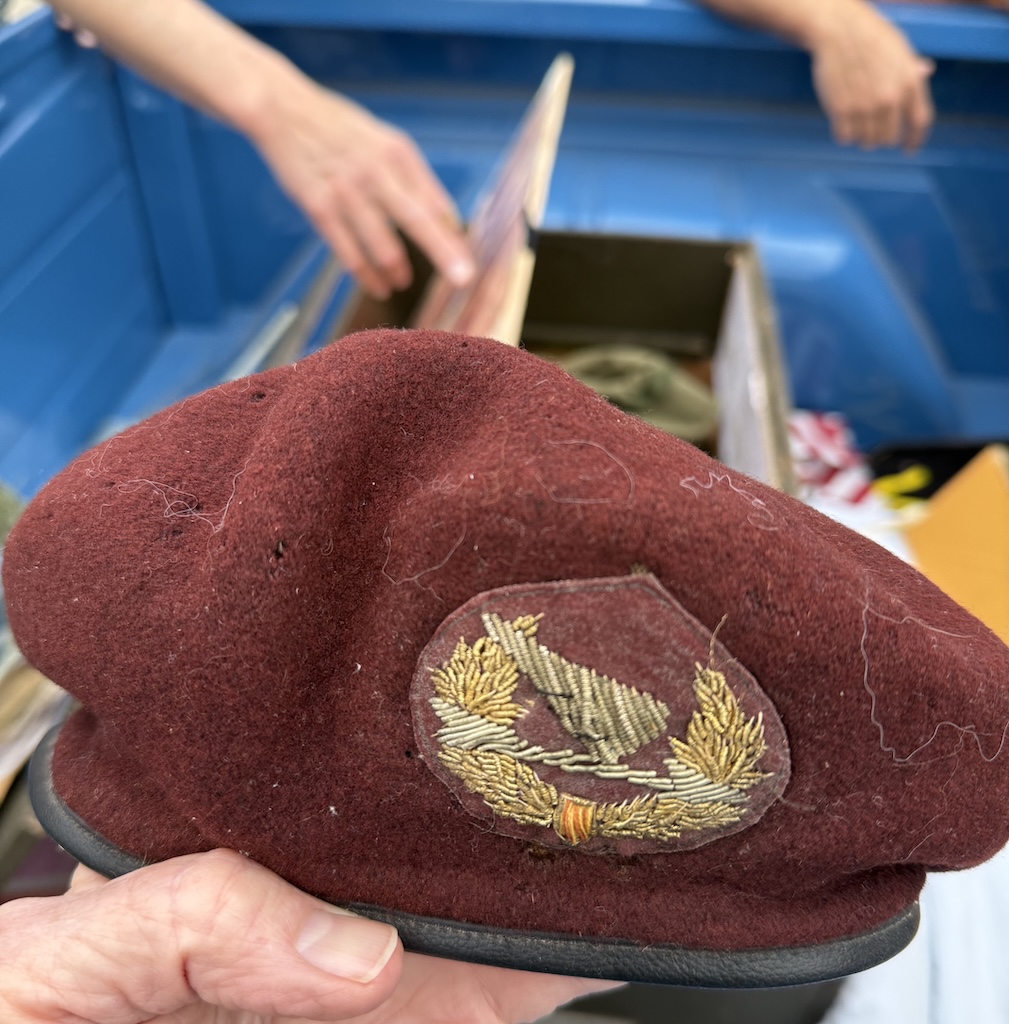
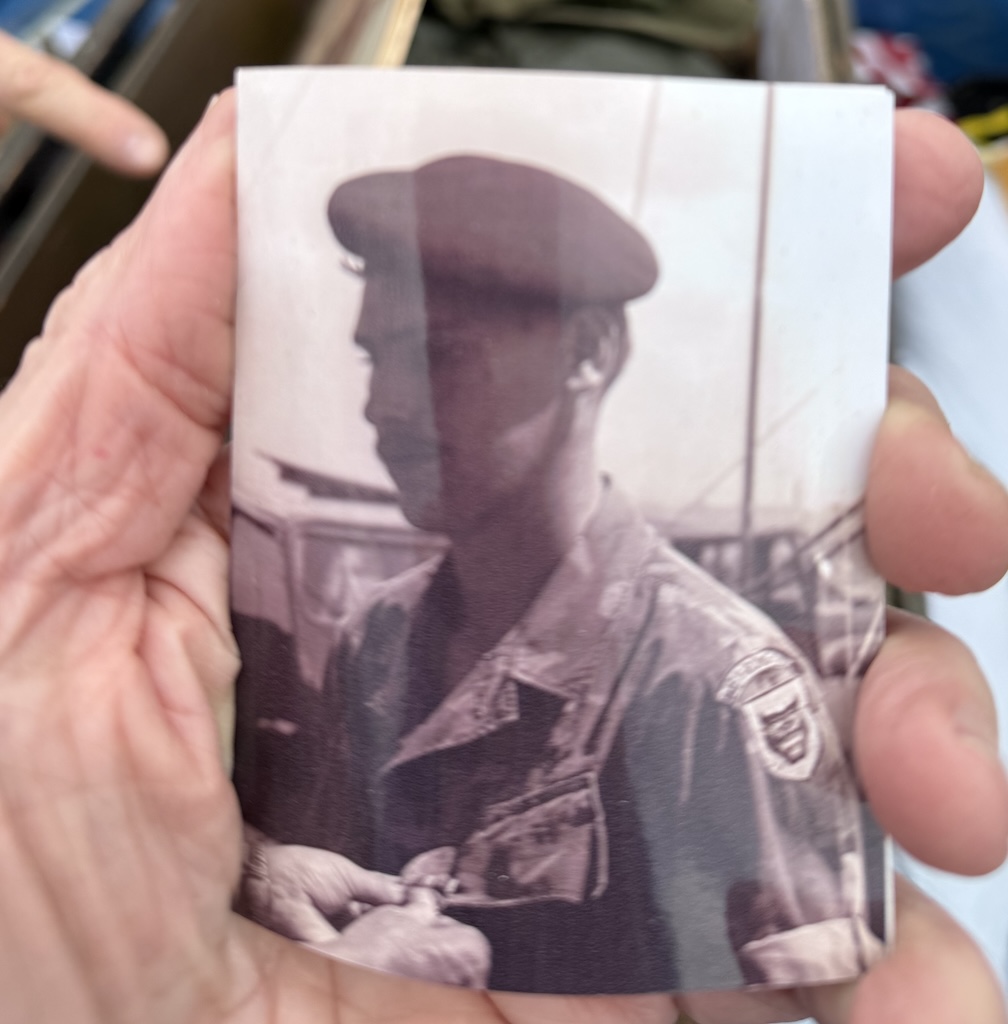
Claude.ai: What you have here is a really interesting piece of Vietnam War-era militaria. Here’s what I can identify: The maroon/wine color is most associated with airborne/parachute units. In the US Army context during Vietnam, maroon berets were worn by members of the 173rd Airborne Brigade, which served extensively in Vietnam from 1965 onward.
The gold bullion embroidered badge — featuring a laurel wreath and what appears to be a torch or fasces at the base — is characteristic of a senior NCO or officer’s flash/badge. The heavy gold wire (bullion) embroidery was typically used on dress or parade versions rather than field wear.
The vintage photo shows a soldier wearing what appears to be the same or very similar beret with a shoulder sleeve insignia (SSI) patch visible, which could help narrow down the specific unit significantly if that patch could be identified more clearly. Do you have any other items from the same box that might help identify the specific unit?
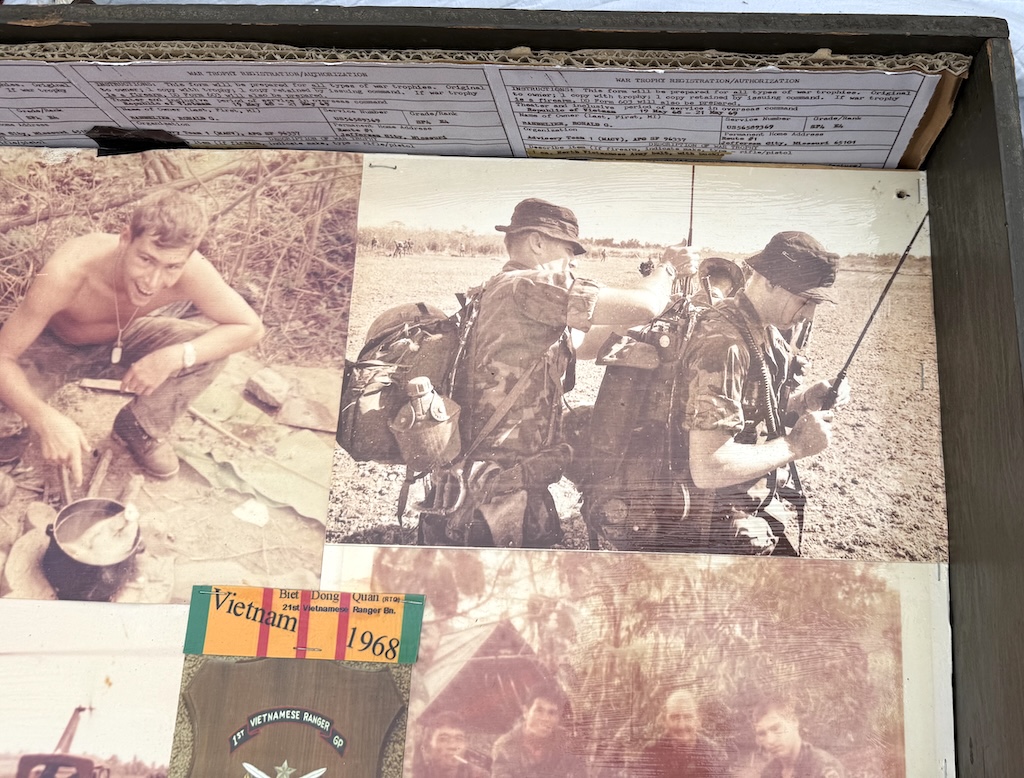
Excellent Find — This Identifies Everything! This box lid is a goldmine of information. Here’s what I can read:
Unit Identified: 1st Vietnamese Ranger Group
- The patch clearly reads “1st Vietnamese Ranger GP” (Group)
- The label reads “Biệt Động Quân — 21st Vietnamese Ranger Bn.”
- Vietnam 1968 is clearly marked
The Beret Explained
This now makes perfect sense. US Army advisors assigned to Vietnamese Ranger (Biệt Động Quân) units wore the maroon beret alongside their South Vietnamese counterparts. The gold bullion badge would have been the Vietnamese Ranger insignia, not a US unit badge. This was a point of pride — American advisors wore the same beret as the elite Vietnamese unit they served with.
The War Trophy Documents
The papers at the top appear to be War Trophy Registration/Authorization forms — official US Army documents permitting soldiers to bring captured enemy weapons or equipment home. The name Hambeline, Ronald G. and rank SP4 (Specialist 4th Class) is partially visible, along with what appears to be an Artillery Team (MACT) assignment and a Missouri home address.
Significance
This is a cohesive advisor’s grouping. MACV advisors to Vietnamese Ranger units are well-documented but their personal memorabilia is relatively rare. This deserves careful preservation and possibly research into the soldier’s service record.