
Before remote controls
This is me fooling around with old video clips. Nothing more.
Age of robot worker will be worse for men
From The Atlantic
Two Oxford researchers recently analyzed the skills required for more than 700 different occupations to determine how many of them would be susceptible to automation in the near future, and the news was not good: They concluded that machines are likely to take over 47 percent of today’s jobs within a few decades.
Men hold 97 percent of the 2.5 million U.S. construction and carpentry jobs. The Oxford study estimates that these male workers stand more than a 70 percent chance of being replaced by robotic workers. By contrast, women hold 93 percent of the registered nurse positions. Their risk of obsolescence is vanishingly small: .009 percent.
By contrast, women typically work in more chaotic, unstructured environments, where the ability to read people’s emotions and intentions are critical to success. If your job involves distracting a patient while delivering an injection, guessing whether a crying baby wants a bottle or a diaper change, or expressing sympathy to calm an irate customer, you needn’t worry that a robot will take your job, at least for the foreseeable future.
Scott Adams: Direct citizen voting
“Imagine a system that involves direct citizen voting on every issue. But in addition to voting yes or no on a ballot question you can also assign your vote FOR A PARTICULAR TOPIC to any other voter who is open to that assignment. For example, I might cast my own direct vote on simple topics, such as gay marriage, weed, and doctor-assisted dying. I feel I know enough about those issues to be useful.
But if the proposed law is about economic policy, I might want to delegate my vote to Paul Krugman, or whoever I thought had the best thinking on that topic. You could also delegate your vote to your better-informed spouse, a friend, or anyone you would trust making decisions for you. But I would make it illegal to delegate a vote to anyone representing an organization. And I would make it illegal to delegate more than one voter topic to another person. That keeps individuals from becoming too powerful outside their field of expertise.
The beauty of my system is that you never have to wait for elections to improve things. The minute that you hear an expert saying something brilliant on a particular topic, you call up your voting app and assign rights to that expert for all of your votes in the category. If you hear a smarter expert tomorrow, you reassign your vote to that person.”
Humans out at advertising agency
Marketing communications firm (plans) “to utilize technology-based resources such as software, virtual robots, and media algorithms to create and implement advertising and marketing programs for its clients.” Excerpts below from The Ad Contrarian:
”We will need to keep a few tech people on staff to insure that our systems are functioning well and are properly integrated. But that’s it. Last-century resources like account managers, copywriters, art directors, and media planners — in other words, people — will be replaced by digital resources.”
”We have developed what we call ‘virtual robotics’ that can actually understand a client brief when it is converted into code via a proprietary algorithm we have developed. The robot program then goes online and hunts down previously created advertising and marketing campaigns in similar categories which it ‘borrows’ from — much like a traditional creative team does,” he explained.
I wrote a lot of radio commercials (we called them “spots”) over the years and while I wrote a few good ones, many were of grind-it-out-get-it-on-the-air variety. Yeah, I can imagine software doing those as well as I did.
Barb mugging for the camera
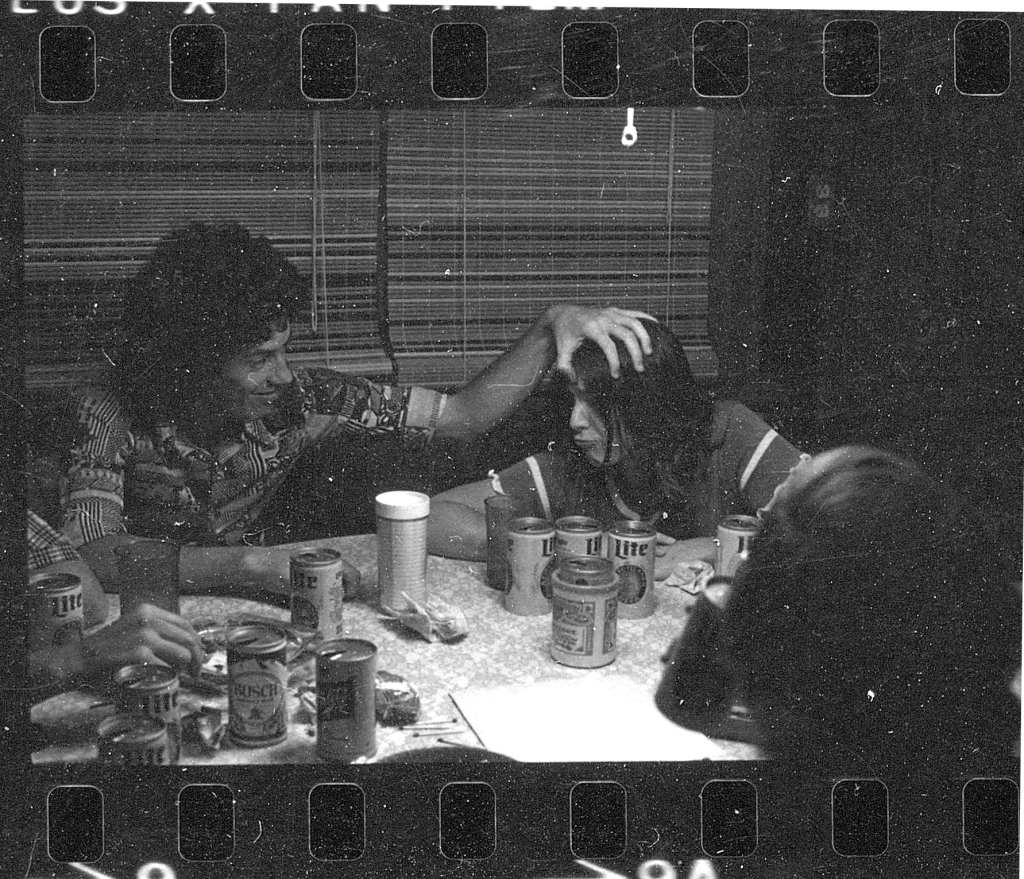
This photo was way under exposed on the contact sheet and I’ve tried to salvage. Not sure what was going on here except two young people very much in love.
Contact Sheet
The images below were scanned from an old (1973-74?) contact sheet. Pretty sure the photos were were taken by Larry Thomason at one of the frequent poker nights he held in a small house (think “man cave”) in his parent’s back yard. Larry printed a few shots from this particular night but most of these never made it off the contact sheet. I’ve left them in that format because 1) I like it and 2) it was Larry’s call as to what he wanted to print and he’s gone now and I can’t ask him.
-
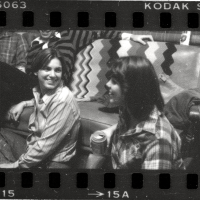
- Barb and Jan
-
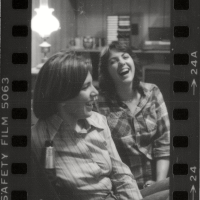
- Barb and Jan
-
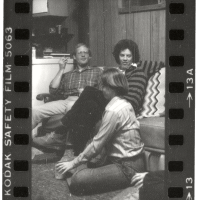
- RP, Steve and Barb
-

- Richard Peck
-

- John Robison
-
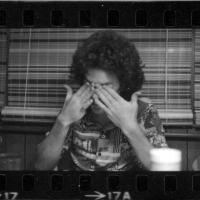
- Steve Mays
-

- Steve Mays
-
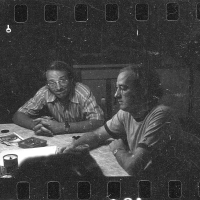
- Buddy Peck & John Robison
Radio dial just too small
 Been thinking some more about broadcasters lobbying for mobile carriers to turn on the FM receiver chip in phones. Never gonna work. Radio dial just too small. A little back-story:
Since getting my first iPhone several years ago, I’ve always listened to music with earbuds when in the car. The 4Runner didn’t have a good way to interface and I just never bothered when I got the MINI. Apple Music has me listening more these days so I purchased an aux cable to play iPhone music through the MINI speakers.
Lo and behold! The MINI has really good speakers. Way better experience than the earbuds. (Yes, everybody told me that) Anyway, back to the radio dial…
With the unlimited data plan (ATT) on my phone, I can listen to (almost) all the music there is. And the playlists. And the customized “stations”… as well as the half-dozen podcasts I follow.
“Hey, Siri. Podcast. Tech News Today.” Voila!
No radio station can match this. ALL the radio stations can’t match this.
Recall? What recall?
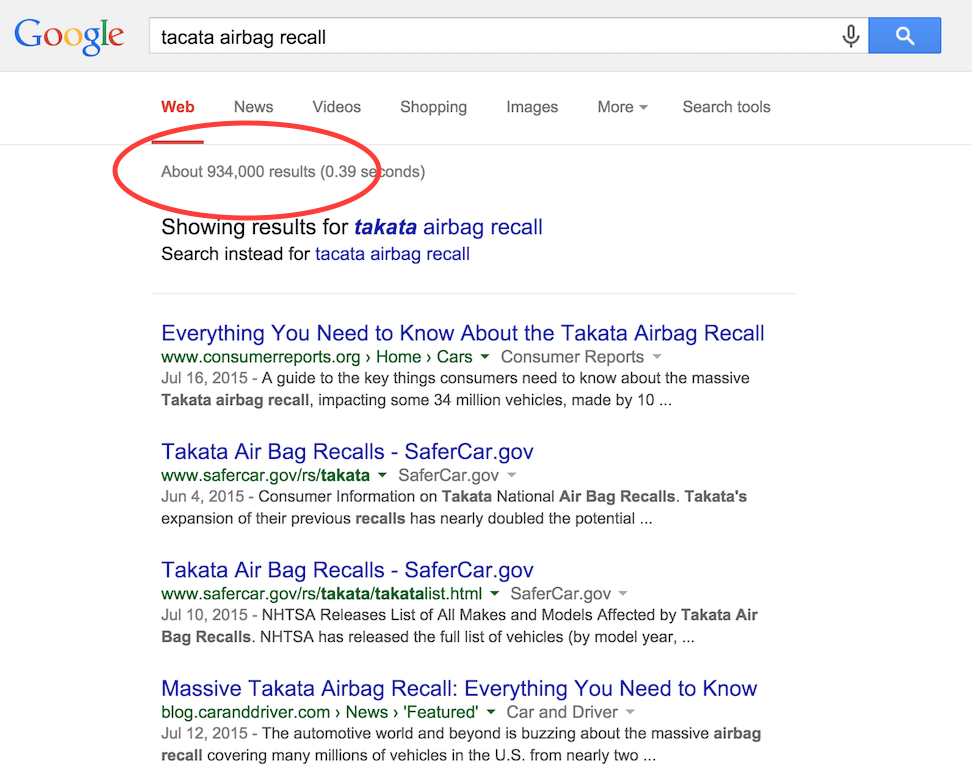
While getting my car serviced (at the MINI dealership in St. Louis) earlier this week I mentioned the Takata airbag recall and the young man at the part window got puzzled look on his face.
“You’ve heard about the exploding airbag canisters and the big recall, right?
Nope, he insisted. He hadn’t heard about any airbag recall. About that time another young man came up to the next part window so I asked him. Same response. Had no idea what I was referring to.
I’m certain they weren’t fucking with me. Somehow they had missed seeing/hearing/reading _anything_ about this long-running story. I find that amazing.
Unless I’m missing something here, this means these two men could not have watched a network or cable newscast, read a newspaper, or spent 2 minutes on an online news site for the past 6 months (longer?).
How is that possible? And what else is going on in the world about which these young men are oblivious? I assume they’re on Facebook and would have seem some reference to this story there. No?
Charlie’s Mix-Tape
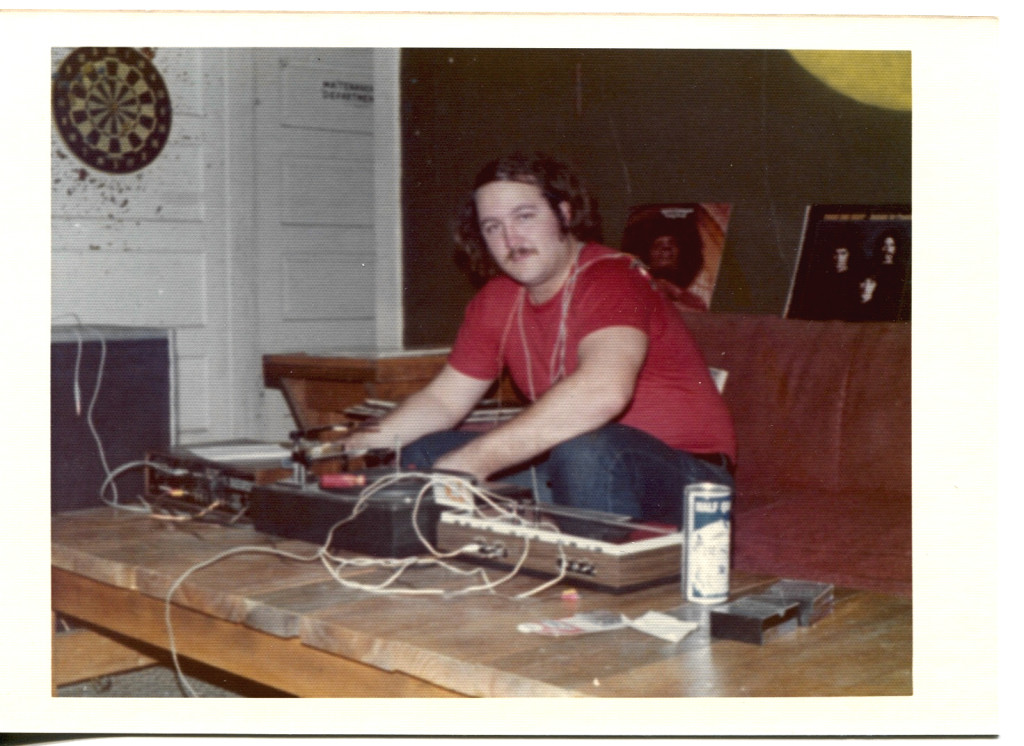
Want to take your music with you? Then you’re gonna have to work for it. This is Charlie making a mix-tape back in 1974. Amp on the left. Turntable in the middle. Two-deck cassette recorder on the right. When the cassette if full, there was a “high speed” dubbing mode so you could crank out extras for friends.