Charlie’s Mix-Tape

charlie-mixtape
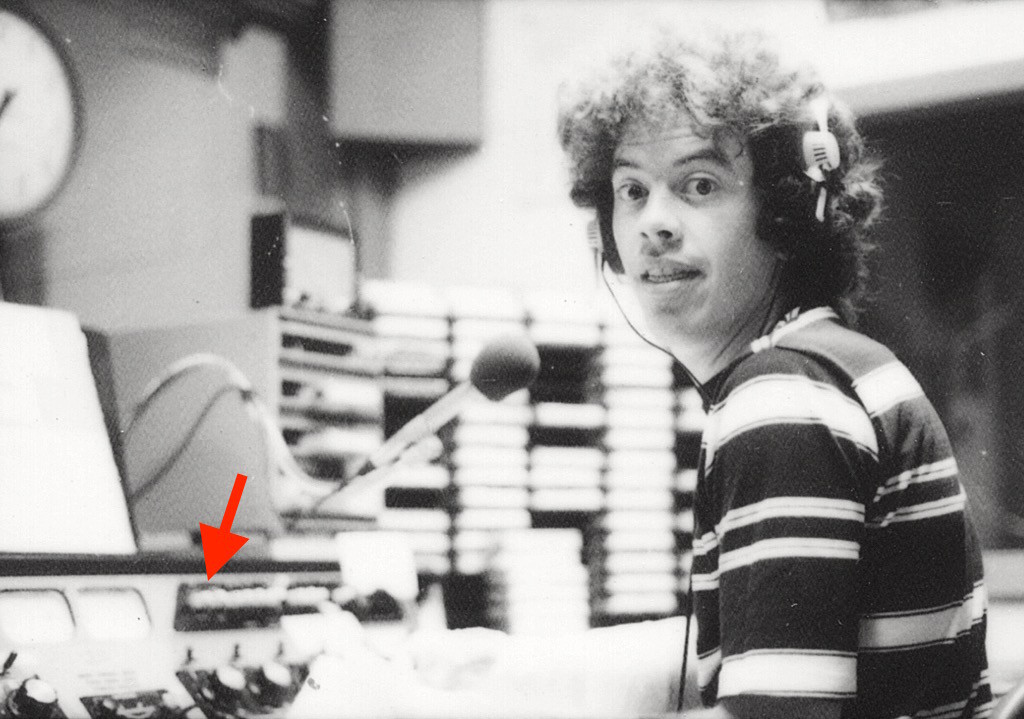
Want to take your music with you? Then you’re gonna have to work for it. This is Charlie making a mix-tape back in 1974. Amp on the left. Turntable in the middle. Two-deck cassette recorder on the right. When the cassette if full, there was a “high speed” dubbing mode so you could crank out extras for friends.

Tidying Up

tidying upThe Life-Changing Magic of Tidying Up (“The Japanese Art of Decluttering and Organizing”) by Marie Kondo. If you really, really want to declutter your life (and most people do not), this is the only book you’ll need. More philosophy than how-to and that will turn off many. And here method only works if you do exactly what she says to do, and in the order she says to do it.

I’ve nearly completed her method, only photos remain and I’ll tackle those this afternoon. In the process, I have held in my hand every item I possess. That alone will frighten off most people. But I now see why she believes that is important.

If you’re tired of drowning in stuff, read this book. If not, keep swimming. A few excerpts:


Tidying: deciding whether or not to dispose of something and deciding where to put it.

When your room is clean and uncluttered, you have no choice but to examine your inner state.

Tidying is just a tool, not the final destination. Putting things away creates the illusion that the clutter problem has been solved. But sooner or later, all storage units are full. This is why tidying must start with discarding.

People who can’t stay tidy can be categorized into just three types: “can’t-throw-it-away” type; “can’t-put-it-back” type; and the “first-two-combined” type.

You only have to experience a state of perfect order once to be able to maintain it. Examine each item you own, decide whether you want to keep or discard it, and then choose where to put what you keep. […] You only have to decide where to put things once.

Discard things when they cease being functional. Discard things that are out of date.

Take each item in one’s hand and ask: “Does this spark joy?” If it does, keep it. If not, dispose of it. […] You must take each (item) in your hand.

Always think in terms of category, not place. (Don’t organize by room!)

In addition to the physical value of things, there are three other factors that add value to our belongings: function, information, and emotional attachment.

Start with clothes, then move on to books, papers, komono (miscellany), and finally things with sentimental value.

Put all your clothes in one heap, take them in your hand one by one, and ask yourself quietly, “Does this spark joy?”

There are two storage methods for cloths: one is to put them on hangers and hang from a rod and the other is to fold them and put them away in drawers.

Store things standing up rather than laid flat. […] Never ball up your socks.

Remove all books from your bookcases. You cannot judge whether or not a book really grabs you when it’s still on the shelf.

The problem with books that we intend to read sometime is that they are far harder to part with than the ones we have already read. […] “Sometime” never comes. You may have wanted to read it when you bought it, but if you haven’t read it by now, the book’s purpose was to teach you that you didn’t need it.

My basic principle for sorting papers is to throw them all away.

People never retrieve the boxes they send “home.” Once sent, they will never again be opened.

If you just stow things away in a drawer or cardboard box, before you realize it, your past will become a weight that holds you back and keep you from living in the here and now.

The reason every item must have a designated place is because the existence of an item without a home multiplies the chances that your space will become cluttered again. […] The essence of effective storage is this: designate a spot for every last thing you own.

There are only two ways of categorizing belongings: by type of item and by person. [page 138]

Clutter has only two possible causes: too much effort is required to put things away or it is unclear where things belong.

Keep everything out of the bath or shower. Whatever is used in the bath should be dried after use.

A deluge of information whenever you open a closet door makes a room feel “noisy.” […] By eliminating excess visual information that doesn’t inspire joy, you can make your space much more peaceful and comfortable.

At their core, the things we really like do not change over time. Putting your house in order is a great way to discover what they are.

When we really delve into the reasons for why we can’t let something go, there are only two: an attachment to the past or a fear for the future.

The question of what you want to own is actually the question of how you want to live your life. […] The best way to find out what we really need is to get rid of what we don’t. […] Selecting and discarding one’s possessions is a continuous process of making decisions based on one’s own values.

On Not Being There

A few excerpts from a fascinating article by Rebecca Lemon in The Hedgehog Review:

Almost daily, we encounter people who are there but not there, flickering in and out of what we think of as presence. A growing body of research explores the question of how users interact with their gadgets and media outlets, and how in turn these interactions transform social relationships. The defining feature of this heavily mediated reality is our presence “elsewhere,” a removal of at least part of our conscious awareness from wherever our bodies happen to be.

I recently spent 90 minutes in a video Hangout with +Steve Brown. He was in Tucson and I was here in Jefferson City, MO in a coffee shop. That’s were our respective bodies were but I’m not sure where my awareness or consciousness was. In the cloud? Cyberspace? Somewhere other than that coffee shop. Back to Ms. Lemon’s article:

Mark Carranza—[who] makes his living with computers—has been keeping a detailed, searchable archive of all the ideas he has had since he was 21. That was in 1984. I realize that this seems impossible. But I have seen his archive, with its million plus entries, and observed him using it… Most thoughts are tagged with date, time, and location.

“clickworkers, gold farmers, porn zappers” – Many of them based in suburban Manila in former elementary schools and other unlikely sites, the content moderators perform the unsavory job of repeatedly adjudicating whether images posted to Twitter feeds, Facebook pages, or other social networking sites are sufficiently offensive to be eliminated from view. Moderators at PCs sit at long tables for hours, an “army of workers employed to soak up the worst of humanity in order to protect the rest of us.” By some estimates, the content-moderating army is 100,000 strong, twice the size of Google’s labor pool, and many of its members have college degrees.

Why the UPS driver runs

“An American Management Association survey found that 66 percent of US-based employers monitor the Internet use of their employees, 45 percent track employee keystrokes, and 43 percent monitor employee e-mail. UPS uses a system, Kronos, under which each of its delivery trucks is equipped with 200 sensors, which feed information back to headquarters about driving speed, seatbelt use, and delivery efficiency. Even trying to cheat the system can hurt the worker. Drivers commonly evade the seatbelt sensor by keeping the seatbelt locked but not strapping themselves in. UPS can claim higher safety compliance even though workers are actually more endangered.”

The end of capitalism has begun

The provocative headline of this article (by Paul Mason in The Guardian) is enough to make some dismiss it out of hand. I hope you’ll give these excerpts a quick scan and, if you see something interesting, click through to the article.

  • Information is a machine for grinding the price of things lower and slashing the work time needed to support life on the planet. As a result, large parts of the business class have become neo-luddites. Faced with the possibility of creating gene-sequencing labs, they instead start coffee shops, nail bars and contract cleaning firms: the banking system, the planning system and late neoliberal culture reward above all the creator of low-value, long-hours jobs.
  • We’re surrounded not just by intelligent machines but by a new layer of reality centred on information. Consider an airliner: a computer flies it; it has been designed, stress-tested and “virtually manufactured” millions of times; it is firing back real-time information to its manufacturers. On board are people squinting at screens connected, in some lucky countries, to the internet. Seen from the ground it is the same white metal bird as in the James Bond era. But it is now both an intelligent machine and a node on a network. It has an information content and is adding “information value” as well as physical value to the world. On a packed business flight, when everyone’s peering at Excel or Powerpoint, the passenger cabin is best understood as an information factory.
  • The knowledge content of products is becoming more valuable than the physical things that are used to produce them.
  • Today the whole of society is a factory. We all participate in the creation and recreation of the brands, norms and institutions that surround us. At the same time the communication grids vital for everyday work and profit are buzzing with shared knowledge and discontent. Today it is the network – like the workshop 200 years ago – that they “cannot silence or disperse.”
  • By creating millions of networked people, financially exploited but with the whole of human intelligence one thumb-swipe away, info-capitalism has created a new agent of change in history: the educated and connected human being.
  • The power of imagination will become critical. In an information society, no thought, debate or dream is wasted – whether conceived in a tent camp, prison cell or the table football space of a startup company.
  • The democracy of riot squads, corrupt politicians, magnate-controlled newspapers and the surveillance state looks as phoney and fragile as East Germany did 30 years ago.

We are data: the future of machine intelligence (2015)

“Artificial Intuition happens when a computer and its software look at data and analyze it using computation that mimics human intuition at the deepest levels: language, hierarchical thinking — even spiritual and religious thinking. The machines doing the thinking are deliberately designed to replicate human neural networks, and connected together form even larger artificial neural networks.”

This is from an article by Douglas Coupland. Maybe one of the more frightening things I’ve read about data collection. Let’s start with a few of one-liners:

“Amazon can tell if you’re straight or gay within seven purchases.”
“Doug’s Law: An app is only successful if it puts a lot of people out of work.”
“The amount of internet freedom we have right now is the most we’re ever going to get.”

He starts his piece with a description of an imaginary app called Wonkr. I had to read this a few times to decide if he was serious or not.

“You put Wonkr on your phone and it asks you a quick set of questions about your beliefs. Then, the moment there are more than a few people around you (who also have Wonkr), it tells you about the people you’re sharing the room with. You’ll be in a crowded restaurant in Nashville and you can tell that 73 per cent of the room is Republican. Go into the kitchen and you’ll see that it’s 84 per cent Democrat. You’ll be in an elevator in Manhattan and the higher you go, the percentage of Democrats shrinks. Go to Germany — or France or anywhere, really — and Wonkr adapts to local politics. The thing to remember is: Wonkr only activates in crowds. If you’re at home alone, with the apps switched off, nobody can tell anything about you.”

“Wonkr’s job is to tell you the political temperature of a busy space. “Am I among friends or enemies?” But then you can easily change the radius of testability. Instead of just the room you’re standing in, make it of the block or the whole city — or your country. Wonkr is a de facto polling app. Pollsters are suddenly out of a job: Wonkr tells you — with astonishing accuracy — who believes what, and where they do it.”

“Wonkr is a free app but why not help it by paying say, 99 cents, to allow it to link you with people who think just like you. Remember, to sign on to Wonkr you have to take a relatively deep quiz. Maybe 155 questions, like the astonishingly successful eHarmony.com.”

If you’re busy, put this aside until you have 10 minutes. It’s packed tighter than cocaine mule’s carry-on.

The Electric Car

From a 2015 blog post by Geoff Ralston

“Gas stations are not massively profitable businesses. When 10% of the vehicles on the road are electric many of them will go out of business.  This will immediately make driving a gasoline powered car more inconvenient.  When that happens even more gasoline car owners will be convinced to switch and so on.  Rapidly a tipping point will be reached, at which point finding a convenient gas station will be nearly impossible and owning a gasoline powered car will positively suck.  Then, there will be a rush to electric cars not seen since, well, the rush to buy smartphones.” (Don’t miss video link in comments)

How to hire radio talent

Mark Ramsey is a “media strategist, researcher and trend-maker.” What we used to call a consultant. Here’s part of his answer to the question: “what qualifications should we be looking for in talent, programming, and sales that are different from today’s conventional qualifications?”

For talent, nothing else will be more important than that talent’s skill and engagement with social media and digital platforms.

Here’s some questions he’d ask before hiring:

  • How big is your personal audience, the one you have direct relationships with, as measured by social media?
  • How many Twitter followers do you have?
  • How big is your Facebook fan page, and how strong is your engagement?
  • How many Instagram followers and likes do you have?
  • How many YouTube subscribers and total views do you have?
  • Do you have a website for your own brand?
  • How big is your brand’s personal email list? How often do you send out email? What do you send?
  • What podcasts do you produce? How much listenership do they receive? How many podcast subscribers do you have?

“In other words, to what degree do you – the talent – take responsibility for building your own personal brand? And how can you demonstrate the power of that brand to me?”

I think he’s right. As I’ve watch social media grow and evolve I’ve wondered how I would have fared in this new media environment. Glad I didn’t miss the “spinning records” era.