
“The mid-century will be about “old people in big cities who are afraid of the sky.” Futurity means metropolitan people with small families in a weather crisis.”
Future Change as Seen by American Right-wing Talk Radio (2011-12)
- Existential threats to the American Constitution. Mostly from “Sharia Law,” which is sort of like the American Constitution for Moslem Islamofascists.
- Imminent collapse of all fiat currencies, somehow leading to everyday use of fungible gold bars.
- Sudden, frightening rise of violent, unemployable, disease-carrying “Occupy Wall Street” anarchists who are bent on intimidation and repressing free speech.
- Hordes of immigrants being illegally encouraged to flood the polls.
- Lethal and immoral US government health-care.
- Radical Gay Agenda / Litigious Feminazis (tie).
- God’s Will. Surprisingly low-key, considering what an all-purpose justification this is.
“I’ve got a soft spot for chemtrail people, they’re really just sort of cool, and much more interesting than UFO cultists, who are all basically Christians. Jesus is always the number one Saucer Brother in UFO contactee cults. It’s incredible how little imagination the saucer people have.”
“Space Travel people. There’s no popular understanding of why space cities don’t work, though if you told them they’d have to spend the rest of their lives in the fuselage of a 747 at 30,000 feet, they’d be like “Gosh that’s terrible.”
“Transcendant spiritual drug enthusiasts. You go into one of those medical marijuana dispensaries nowadays, they’re like huckster chiropractors, basically. The whole ethical-free-spirit surround of the psychedelic dreamtime is gone. It’s like the tie-dyed guys toking up in the ashram have been replaced by the carcasses of 12,000 slaughtered Mexicans.”
Category Archives: Quotable & Notes
Random Walk
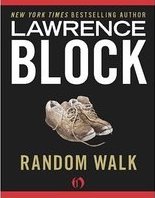 Author Lawrence Block on Random Walk: “Every now and then someone comes up to me at a speech or signing and says one of two things. ‘I’ve liked all your books,’ I’ll be told, ‘but there was one I couldn’t make heads or tails out of.’ Or just the opposite: ‘I’ve read most of your books, but there was one that really knocked me for a loop, and I’ve read it seventeen times now, and it’s completely changed my life.’ “It’s always the same book. Random Walk.”
I wrote the book in the spring of 1987, and never was a book more eager to be written. Paradoxically, never was a book less eager to be read–the advance sale was light, the reviews were venomous, and most readers never even knew the book existed. Now it’s getting a new lease on life, and I’m delighted. I don’t know that it’s time has come–it’s just as possible it’s time has come and gone. But I do know Random Walk has enormous impact on some of the people who read it, and I hope that now they’ll have a chance to find it.”
A few of my favorite passages: Continue reading
We Are Weird
“Ten minutes on Boing Boing reminds me that the world is changing, moving, and getting weirder. It eggs me on. Ten minutes on ESPN puts me to sleep.”
“If I can tell you that some group is wrong — not just different, but wrong — then I increase my power over you.”
“As choice and self-determination continue to triumph, you can’t profit from it by pretending you’re not a mass marketer. You actually have to stop being a mass marketer.”
“We watch the Super Bowl, no so much for the game as to remind us what it was like when we all did what everyone else was doing.”
“The reality of digital community is that people are now available for close inspection, and the ‘Net allows us to keep all of them in focus at once.”
From We Are Weird by Seth Godin
Thinking, Fast and Slow by Daniel Kahneman
Excerpts from Thinking, Fast and Slow by Daniel Kahneman. “The book’s main thesis is a differentiation between two modes of thought: “System 1” is fast, instinctive and emotional; “System 2″ is slower, more deliberative, and more logical.”
Most impressions and thoughts arise in your conscious experience without your knowing how they got there.
People tend to assess the relative importance of issues by the ease with which they are retrieved from memory — and this is largely determined by the extent of coverage of in the media.
I describe mental life by the metaphor of two agents, called System 1 and System 2, which respectively produce fast and slow thinking. The intuitive System 1 is more influential than your experience tells you, and it is the secret author of many of the choices and judgements you make.
We can be blind to the obvious, and we are also blind to our blindness.
When people believe a conclusion is true, they are also very likely to believe arguments that appear to support it, even when these arguments are unsound.
Cognition is embodied; you think with your body, not only with your brain.
A reliable way to make people believe in falsehoods is frequent repetition, because familiarity is not easily distinguished from truth.
Understanding a statement must begin with an attempt to believe it.
Contrary to the rules of philosophers of science, who advise testing hypotheses by trying to refute them, people (and scientists, quite often) seek data that are likely to be compatible with the beliefs they currently hold.
The world in our heads is not a precise replica of reality; our expectations about the frequency of events are distorted by the prevalence and emotional intensity of the messages to which we are exposed.
success = talent + luck
great success = a little more talent + a lot of luck
Our mind is strongly biased toward casual explanations and does not deal well with “mere statistics.”
We humans constantly fool ourselves by constructing flimsy accounts of the past and believing they are true.
You cannot help dealing with the limited information you have as if it were all there is to know. Our comforting conviction that the world makes sense rests on a secure foundation: our almost unlimited ability to ignore our ignorance.
In everyday language, we apply the word ‘know’ only when what is known is true and can be shown to be true. We can know something only if it is true and knowable.
For some of our most important beliefs we have no evidence at all, except that people we love and trust hold these beliefs. Considering how little we know, the confidence we have in our beliefs is preposterous — and it is also essential
Hindsight Bias – You cannot help dealing with the limited information you have as if it were all there is to know. Our comforting conviction that the world makes sense rests on a secure foundation: Our almost unlimited ability to ignore our ignorance.
A general limitation of the human mind is its imperfect ability to reconstruct past states of knowledge, or beliefs that have changed. Once you adopt a new view of the world (or of any part of it), you immediately lose much of your ability to recall what you used to believe before your mind changed.”
“The brains of humans and other animals contain a mechanism that is designed to give priority to bad news.”
Premortem – When the organization has almost come to an important decision but has not formally committed itself, Klein proposes gathering for a brief session a group of individuals who are knowledgeable about the decision. The premise of the session is a short speech: Imagine that we are a year into the future. We implemented the plan as it now exists. The outcome was a disaster. Please take 5 to 10 minutes to write a brief history of that disaster.
The Planning Fallacy – Most of us view the world as more benign than it really is, our own attributes as more favorable than they truly are, and the goals we adopts as more achievable than they are likely to be.
Optimistic individuals play a disproportionate role in shaping our lives.
Anyone who has been in the business world for a bit will recognize “the planning fallacy.” I just didn’t know it had a name.
When forecasting the outcomes of risky projects, executives too easily fall victim to the planning fallacy. In its grip, they make decisions based on delusional optimism rather than on a rational weighting of gains, losses, and probabilities. They overestimate benefits and underestimate costs. They spin scenarios of success while overlooking the potential for mistakes and miscalculations. As a result, they pursue initiatives that are unlikely to come in on budget or on time or to deliver the expected returns — or even to be completed.
In this view, people often (but not always) take on risky projects because they are overly optimistic about the odds they face. I will return to this idea several times in this book—it probably contributes to an explanation of why people litigate, why they start wars, and why they open small businesses.
How important is the CEO? – Because luck plays a large role, the quality of leadership and management practices cannot be inferred reliably from observations of success. And even if you had perfect foreknowledge that a CEO has brilliant vision and extraordinary competence, you still would be unable to predict how the company will perform with much better accuracy than the flip of a coin. On average, the gap in corporate profitability and stock returns between the outstanding firms and the less successful firms studied in Built to Last shrank to almost nothing in the period following the study. The average profitability of the companies identified in the famous In Search of Excellence dropped sharply as well within a short time.”
Availability cascade – William Eastery calls Daniel Kahneman’s Thinking, Fast and Slow, “one of the greatest and most engaging collections of insights into the human mind I have read.” I only mention this so I’ll have a reason to link to Professor Easterly’s review below. Tell me if this description of an “availability cascade” sounds familiar:
“An availability cascade is a self-sustaining chain of events, which may start from media reports of a relatively minor event and lead up to public’ panic and large-scale government action. On some occasions, a media story about a risk catches the attention of a segment of the public, which becomes aroused and worried. This emotional reaction becomes a story in itself, prompting additional coverage in the media, which in turn produces greater concern and involvement. The cycle is sometimes sped along deliberately by “availability entrepreneurs,” individuals or organizations who work to ensure a continuous flow of worrying news. The danger is increasingly exaggerated as the media compete for attention-grabbing headlines. Scientists and others who try to dampen the increasing fear and revulsion attract little attention, most of it hostile: anyone who claims that the danger is overstated is suspected of association with a “heinous cover-up.” The issue becomes politically important because it is on everyone’s mind, and the response of the political system is guided by the intensity of public sentiment. The availability cascade has now reset priorities. Other” risks, and other ways that resources could be applied for the public good, all have faded into the background.”
“The dominance of conclusions over arguments is most pronounced where emotions are involved. The psychologist Paul Slovic has proposed an affect heuristic in which people let their likes and dislikes determine their beliefs about the world. Your political preference determines the arguments that you find compelling. If you like the current health policy, you believe its benefits are substantial and its costs more manageable than the costs of alternatives. If you are a hawk in your attitude toward other nations, you probably think they are relatively weak and likely to submit to your country’s will. If you are a dove, you probably think they are strong and will not be easily coerced. Your emotional attitude to such things as irradiated food red meat, nuclear power, tattoos, or motorcycles drives your beliefs aboul their benefits and their risks. If you dislike any of these things, you probably believe that its risks are high and its benefits negligible.”
“A simple rule can help: before an issue is discussed, all members of the committee should be asked to write a very brief summary of their position. This procedure makes good use of the value of the diversity of knowledge and opinion in the group. The standard practice of open discussion gives too much weight to the opinions of those who speak early and assertively, causing others to line up behind them.
When experts don’t seem so “expert”
This is an excerpt from a post by Terry Heaton, one of the handful of thinkers I look to first for an understanding of what’s happening in the world. The link to his post is below, but the following paragraphs can stand on their own.
Our culture is based upon hierarchical layers of “expertise,” some of it licensed by the state. This produces order, which Henry Adams called “the dream of man.”
It also produces elites, the governing class, those who call the shots for others not so fortunate as to occupy the higher altitudes. This is the 1% against which the occupiers bring their protests, their dis-order.
We used to think that elites and hierarchical order were necessary for the well-being of all, but that idea is being challenged as knowledge — the protected source of power (and elevation) — is being spread sideways along the Great Horizontal. It’s not that we’re so much smarter than we used to be; it’s that the experts don’t seem so “expert” anymore, because the knowledge that gave them their status isn’t protected today. Anybody can access it with the touch of a finger.
This is giving institutions fits, and each one is fighting for its very life against the inevitable flattening that’s taking place. Medicine wants no part of smart and informed patients and neither does the insurance industry. The legal world scoffs at the notion that they’re in it for themselves as they occupy legislatures and create the laws that work on their behalf. Higher education increasingly touts the campus experience over what’s being learned, because they all know that the Web has unlimited teaching capacity. Government needs its silos to sustain its bureaucracy, but the Great Horizontal cuts across them all.
I added the emphasis in graf 3. For me, this is The Big Idea of the early 21st century. The high-speed smart phone in my pocket means you don’t necessarily know more than I do, so why the fuck should you be in charge?
What an exciting time to be alive. And sure to get exciting-er.
William Gibson Interview
Excerpts from interview with William Gibson in the Paris Review
INTERVIEWER: Do you take notes?
GIBSON: I take the position that if I can forget it, it couldn’t have been very good.
“Naps are essential to my process. Not dreams, but that state adjacent to sleep, the mind on waking.”
“It’s harder to imagine the past that went away than it is to imagine the future. What we were prior to our latest batch of technology is, in a way, unknowable. It would be harder to accurately imagine what New York City was like the day before the advent of broadcast television than to imagine what it will be like after life-size broadcast holography comes online. But actually the New York without the television is more mysterious, because we’ve already been there and nobody paid any attention. That world is gone.”
“My great-grandfather was born into a world where there was no recorded music. It’s very, very difficult to conceive of a world in which there is no possibility of audio recording at all. Some people were extremely upset by the first Edison recordings. It nauseated them, terrified them. It sounded like the devil, they said, this evil unnatural technology that offered the potential of hearing the dead speak. We don’t think about that when we’re driving somewhere and turn on the radio. We take it for granted.”
“We know that something happened then. We know that broadcast television did something—did everything—to us, and that now we aren’t the same, though broadcast television, in that sense, is already almost over. I can remember seeing the emergence of broadcast television, but I can’t tell what it did to us because I became that which watched broadcast television.
“In Neuromancer, the whole range of social possibility when they meet is, Shall we have sex, or shall I kill you? Or you know, Let’s go rob a Chinese corporation—cool!”
“If you’re visiting the future, you really want to have a few of the “shit, could they do that?” moments.”
“In Neuromancer, the war starts, they lose a few cities, then it stops when multinational corporations essentially take the United States apart so that can never happen again. There’s deliberately no textual evidence that the United States exists as a political entity in Neuromancer. On the evidence of the text America seems to be a sort of federation of city-states connected to a military-industrial complex that may not have any government controlling it.”
“The Bridge is a fable about counterculture, the kind of counterculture that may no longer be possible. There are no backwaters where things can breed—our connectivity is so high and so global that there are no more Seattles and no more Haight-Ashburys. We’ve arrived at a level of commodification that may have negated the concept of counterculture.”
“Social change is driven primarily by emergent technologies, and probably always has been. No one legislates technologies into emergence—it actually seems to be quite a random thing.”
“It looks to me as though that prosthetic-memory project is going to be what we are about, as a species, because our prosthetic memory now actually stands a pretty good chance of surviving humanity. We could conceivably go extinct and our creations would live on. One day, in the sort of science-fiction novel I’m unlikely ever to write, intelligent aliens might encounter something descended from our creations. That something would introduce itself by saying, Hey, we wish our human ancestors could have been around to meet you guys because they were totally fascinated by this moment, but at least we’ve got this PowerPoint we’d like to show you about them. They don’t look anything like us, but that is where we came from, and they were actually made out of meat, as weird as that seems.”
Marshall McLuhan: You Know Nothing of My Work
I knew of Marshall McLuhan as the cultural icon of the 60s. Was familiar with a few of the more popular quotes. But like the subtitle says, I knew nothing of his work. And I probably wouldn’t have read this biography had it been written by anyone else. I’ve read several of Douglas Coupland’s novels and enjoy his style. Some insight into what we are experiencing now can be found in this slightly depressing story of a brilliant man, waaay ahead of his time. Continue reading
Life in the Meta City
I found the following in a brief Q&A with William Gibson (Scientific American):
“The Internet, which I think of as a sort of meta-city, has made it possible for people who don’t live in cities to master areas of expertise that previously required residence in a city, but I think it’s still a faith in concentrated choice that drives migration to cities.”
I paid $6 for the PDF of Gibson’s article (September issue). A few nuggets:
“Cities afforded more choices than small towns, and constantly, by increasing the number and randomization of potential human and cultural contacts. Cities were vast, multilayered engines of choice, peopled primarily with strangers.”
“Cities, to survive, must be capable of extended fugues of retrofitting.”
“Relative ruin, relative desertion, is a common stage of complex and necessary urban growth. Successful (which is to say, ongoing) cities are built up in a lacquering of countless layers: of lives, of choices encountered and made.”
If I wore a younger man’s clothes, I think a city would be the place for me.
“Google+ is a bank”
Dave Winer believes Google+ wants to “move money around the same way Amazon does. They need your real name because it’s a business.”
“Google-Plus is their integrated communication system. Over time, it’s going to be at the core of everything they do, from auctions, to paying for things with Android phones, to their groupon and yelp clones. They’re going everywhere, and this is the system that will tie it all together. So, at the outset, of course they need real identities. That Google-Plus account you’re playing with today is going to be your bank account next year.”
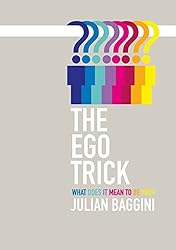
The Ego Trick: In Search of the Self by Julien Baggini
Excerpts from The Ego Trick: In Search of the Self by Julien Baggini
 We all tend to think there’s a connection between the four-year-old child on our first day of school and us now. What makes us the same is we believe we’re the same. Sense of self over time is therefore the story that we tell ourselves that keeps us together. pg 39
The Ego Trick – The remarkable way in which a complicated bundle of mental events, made possible by the brain, creates a singular self, without there being a singlular thing underlying it. pg 123
There is an Ego Trick, but it is not that the self doesn’t exist, only that it is not what we generally assume it to be. pg 151
Consciousness of self emerges from a network of thousands or millions of conscious moments. pg 40
We are constantly rewriting our histories to keep our inner biographies coherent. pg 40
The self is a construction of the mind, one flexible enough to withstand constant renovation, partial demolition and reconstruction. pg 41
We all ignore and do not commit to memory facts and events that conflict with the way we see ourselves and the world. We remember selectively, usually without conscious effort or desire to do so. And yet because we believe memory records facts, objectively, we fail to see that all this means that we are constructing ourselves and the world. pg 49
“I have a belief that dementia actually makes you more like yourself, so rather than rob you of your self, it robs you of all the exterior things that you pile on through life, all the baggage that you carry and the layers. What you’re left with at the end of the day with dementia is the core person, the soul, or whatever term you want to put on it. We’ve described it as an onion. If you peel an onion, from the brown skin outwards, you’ve got lots and lots of layers. When you get right to the centre of the onion you get to a little pearl in the middle and you can’t peel any more off it. It seems to me that is the real essense of the person.” – pg 54
We are nothing but our parts, but we are more than just our parts. pg 69
The self is not a single thing, it is simply what the brain and body system does. pg 83
18th century philosopher David Hume: “For my part, when I enter most intimately into what I call myself, I always stumble on some particular perception or other, of heat or cold, light or shade, love or hatred, pain or pleasure, colour or sound, etc. I never catch myself, distinct from some such perception.”
(Baggini) Our minds are just one perception or thought after another, one piled on another. You, the person, is not separate from these thoughts, the thing having them. Rather you just are the collection of these thoughts.
(Hume again) “nothing but a bundle or collection of different perceptions, which succeed each other with an inconceivable rapidity, and are in a perpetual flux and movement.” pg 119
“non-reductive physicalism” — The self is not a substance or thing, it is a function of what a certain collection of stuff does. In other words, we are made up of nothing more than physical stuff, but to describe our true nature, you need more than just a physical vocabulary. You cannot full describe what it is to be a person in the language of biology; but that does not mean a person has non-biological parts. pg 120-121
“The Buddha’s idea of self therefore is something we create. Your identity, your sense of being a person is formed through your actions, and that is only possible becasue there is not a fixed self. There is no unchanging essence or substance to which those attributes are then attached at all.” — Stephen Batchelor pg 148
“The existence of the self as an independent, eternal and atemporal unifying principle is an illusion.” — Thupten Jinpa pg 148
The self is not an illusion. What is illusory is an idea of self which sees it as an unchanging, immortal essence. pg 148
The self is an illusion, but not just an illusion. But still, I would prefer to do away with talk of illusion altogether. Talk of illusion suggests there is a way of perceiving onself free from that illusion. But there isn’t. pg 150
The solidity of self is an illusion; the self itself is not. pg 152
“We are responsible for our actions not because they are our products but because they are us, because we are what we do.” — Christine Korsgaard pg 168