There’s No Such Thing As A Protest Vote

In 2016, (the U.S. electoral system) will offer 130 million or so voters just three options:
A. I prefer Donald Trump be President, rather than Hillary Clinton.
B. I prefer Hillary Clinton be President, rather than Donald Trump.
C. Whatever everybody else decides is OK with me.

That’s it. Those are the choices. All strategies other than a preference for Trump over Clinton or vice-versa reduce to Option C.

Clay Shirky: There’s No Such Thing As A Protest Vote

Roger Ailes

“He may have wanted to enhance conservatism, but decimated it instead, along with political discourse itself. At 76, he will not have to live much longer with the consequences of his actions, but many of us will. He has made his mark on America, and left the rest of us a lot worse off for it.”

— W. Richard Benash (The Dartmouth)

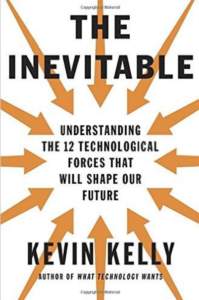
The Inevitable

inevitable“Thousands of years from now, when historians review the past, our ancient time here at the beginning of the third millennium will be seen as an amazing moment. This is the time when inhabitants of this planet first linked themselves together into one very large thing. Later the very large thing would become even larger, but you and I are alive at the moment when it first awoke. Future people will envy us, wishing they could have witnessed the birth we saw.”

“This very large thing (the net) provides a new way of thinking (perfect search, total recall, planetary scope) and a new mind for an old species. It is the Beginning. […] At its core 7 billion humans, soon to be 9 billion, are quickly cloaking themselves with an always-on layer of connectivity that comes close to directly linking their brains to each other. […] By the year 2025 every person alive — that is, 100 percent of the planet’s inhabitants — will have access to this platform via some almost-free device. Everyone will be on it. Or in it. Or, simply, everyone will be it.”

While reading Kevin Kelly’s The Inevitable, I underlined passages so I could post them here for future reference. I do this with each book I read. I’m not going to do that for this book because my highlights filled 11 pages The Inevitable (Kevin Kelly) (PDF)

Evolutionary Argument Against Reality

Interview with Donald D. Hoffman, a professor of cognitive science at the University of California, Irvine. Hoffman has spent the past three decades studying perception, artificial intelligence, evolutionary game theory and the brain, and his conclusion is a dramatic one: The world presented to us by our perceptions is nothing like reality.

“Useful as it is under ordinary circumstances to say that the world exists ‘out there’ independent of us, that view can no longer be upheld.” — Physicist John Wheeler

A finite amount of attention

“Perceptual Load Theory states that we have a finite amount of attention and that once that capacity is maxed out, we cannot process anything else. To test whether paying attention to radio traffic reports can be bad for our driving, Gillian Murphy asked 36 people to drive a route in a full-sized driving simulator while listening to a traffic update on the radio.”

Listening to the radio could impair drivers’ concentration

The Political Power of Social Media

The excerpts below are from an essay by Clay Shirky, Professor of New Media at NYU and author of Cognitive Surplus: Creativity and Generosity in a Connected Age. The essay was published in 2011 but remains as relevant as today’s headlines (okay, more relevant than that).

One complaint about the idea of new media as a political force is that most people simply use these tools for commerce, social life, or self-distraction, but this is common to all forms of media.

The more promising way to think about social media is as long-term tools that can strengthen civil society and the public sphere.

In a famous study of political opinion after the 1948 U.S. presidential election, the sociologists Elihu Katz and Paul Lazarsfeld discovered that mass media alone do not change people’s minds; instead, there is a two-step process. Opinions are first transmitted by the media, and then they get echoed by friends, family members, and colleagues. It is in this second, social step that political opinions are formed. This is the step in which the Internet in general, and social media in particular, can make a difference. As with the printing press, the Internet spreads not just media consumption but media production as well — it allows people to privately and publicly articulate and debate a welter of conflicting views.

Little political change happens without the dissemination and adoption of ideas and opinions in the public sphere. Access to information is far less important, politically, than access to conversation. Moreover, a public sphere is more likely to emerge in a society as a result of people’s dissatisfaction with matters of economics or day-to-day governance than from their embrace of abstract political ideals.

“The conservative dilemma” — The dilemma is created by new media that increase public access to speech or assembly; with the spread of such media, whether photocopiers or Web browsers, a state accustomed to having a monopoly on public speech finds itself called to account for anomalies between its view of events and the public’s. The two responses to the conservative dilemma are censorship and propaganda.

“The cute cat theory of digital activism” — Tools specifically designed for dissident use are politically easy for the state to shut down, whereas tools in broad use become much harder to censor without risking politicizing the larger group of otherwise apolitical actors.

There are, broadly speaking, two arguments against the idea that social media will make a difference in national politics. The first is that the tools are themselves ineffective, and the second is that they produce as much harm to democratization as good, because repressive governments are becoming better at using these tools to suppress dissent.

500 Days (minus 1)

I try to avoid talking about meditation. (Those who know don’t talk. Those who talk don’t know.) I’ve been meditating for years. I started listening to guided meditations but for several years now simply sit (30-45 minutes) each day, “following the breath.” Had something of a streak (371 days) going last year when a bout with pneumonia caused me to miss a day. But that’s okay, the only day that counts is today. Today is 500 consecutive (almost) days on the cushion.

I bring this up for those who might have thought about this practice. It’s the best half hour of my day. Here are a few books (and some quotes) I’ve found helpful.

Books on Meditation

  • Living As a River: Finding Fearlessness in the Face of Change – Bodhipaksa
  • Zen Mind, Beginner’s Mind – Shunryu Suzuki
  • Opening the Hand of Thought: Foundations of Zen Buddhist Practice – Kosho Uchiyama Roshi
  • Meditation Now or Never – Steve Hagen
  • Still the Mind: An Introduction to Meditation – Alan Watts

Quotes

  • Meditation is the only intentional, systematic human activity which at the bottom is about _not_ trying to improve yourself or get anywhere else, but simply to realize where you already are.
  • (We meditate to realize) “…that things are already perfect.”
  • Meditation is about deeply seeing what’s going on within your own mind.
  • At the heart of meditation is the intention to be awake. (To experience) Reality as it is,before goals, ideas, or desires sprout. … Meditation is never a means to an end.
  • Meditation is a matter of zero or 100 percent. Either you’re present or you’re not. There are no in-betweens.
  • Meditation is awareness.
  • The desire of one who is awake is simply to be awake.
  • Meditate just to meditate.
  • Most people who believe they are meditating are merely thinking with their eyes closed. Meditation is a technique for waking up.

The Jackpot

William Gibson defines the Jackpot Years from The Peripheral [ m1k3y on Vimeo.]

“No comets crashing, nothing you could really call a nuclear war. Just everything else, tangled in the changing climate: droughts, water shortages, crop failures, honeybees gone like they almost were now, collapse of other keystone species, every last alpha predator gone, antibiotics doing even less than they already did, diseases that were never quite the one big pandemic but big enough to be historic events in themselves.”

Eternal Now

string

“The days and nights of Brahman are spread out in time in rather the same way as a ball of thread an inch in diameter is unrolled to the length of a hundred yards. Its real state resembles the ball but to be presented to the human mind it has to be unrolled. For our idea of time is spatial; it has length, which is a spatial dimension. But eternity has no length, and the nearest thing to it in our experience is what we call the present moment. It cannot be measured, but it is always here.”

My favorite excerpts from Become What You Are (Alan Watts) (PDF)

The Smartphone is Eating Television

“TV viewership peaked in the 2010 season and has been falling ever since. […] Smartphones are winning and traditional television is losing, especially when it comes to viewers in the most desirable 18 to 34 demographic. […] TV viewing by all age groups peaked in the 2009-2010 season, and has been on the decline ever since. Until that point, the audience for TV had grown every year since 1949.”

The Smartphone is Easting Television (Fortune)