The people who make the streaming playlists

Good piece from last year on the people who curate playlists for streaming music services:

“As streaming has gone mainstream, these curators, many of whom began their professional lives as bloggers and DJs, have amassed unusual influence. Their work, as a rule, is uncredited — the better for services designed to feel like magic — but their reach is increasingly unavoidable. Spotify says 50% of its more than 100 million users globally are listening to its human-curated playlists (not counting those in the popular, algorithmically personalized “Discover Weekly”), which cumulatively generate more than a billion plays per week. According to an industry estimate, 1 out of every 5 plays across all streaming services today happens inside of a playlist. And that number, fueled by prolific experts, is growing steadily.”

“All the signs point to playlists being the dominant mode of discovery in the near future,” says Jay Frank, senior vice president of global streaming marketing for Universal Music Group, the largest of the major label conglomerates. “When it comes to trying to find something exciting and new, more people are going to want to go to trusted playlists.”

I hope these folks always have a job and I sort of think they will. Not convinced an algorithm can do the voodoo they do.
Wikitribune

I’m a big fan of Wikipedia. Whenever Jimmy Wales puts up one of those “we need your support” banners, I pitch in. Tomorrow (?) he’s launching a new project called Wikitribune.

“…a new online publication which will aim to fight fake news by pairing professional journalists with an army of volunteer community contributors. Wikitribune plans to pay for the reporters by raising money from a crowdfunding campaign. Wales intends to cover general issues, such as US and UK politics, through to specialist science and technology.”

Is that ‘through to specialist science and technology’ a typo?

“Those who donate will become supporters, who in turn will have a say in which subjects and story threads the site focuses on. And Wales intends that the community of readers will fact-check and subedit published articles. Like Wikipedia, Wales’s new project will be free to access. The publication is launching on Tuesday 25 April with a crowdfunding campaign pre-selling monthly “support packages” to fund the initial journalists.”

I’m not clear on how this effort will combat ‘fake news’ but don’t much care. People who shriek ‘fake news’ whenever they hear a story they don’t agree with have lost all credibility with me. I’ll be down for a monthly ‘support package.’

The story says journalists will “share full transcripts, video and audio of interviews.” Is there any news organization that routinely does this? If not, I wonder why.

UPDATE (9:20 a.m.) April 25, 2017 — I chose the $120 annually support option. If they don’t reach their goal (enough to hire 10 journalists) in 30 days, I get my money back. As of this writing they had 1,827 supporters, enough to hire one reporter.

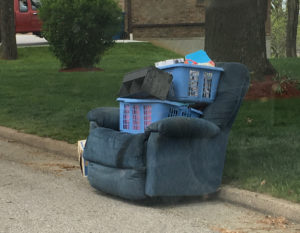
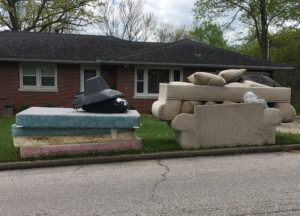
We are our junk

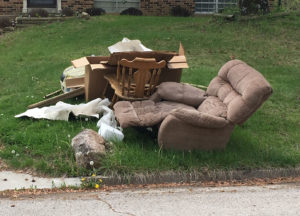
Is there anything more revealing of who we really are than the shit we leave by the curb for the spring trash pick-up?

News is bad for you

“News is bad for you – and giving up reading it will make you happier.” That’s the main idea in an essay by Rolf Dobelli (The Art of Thinking Clearly: Better Thinking, Better Decisions). I’ve had that feeling (in my gut) for a while now and stopped watching TV and cable news a fews months ago. Stopped listening to radio news as well. Gave up Twitter. All I can tell you is, I feel better.

Mr. Dobelli makes some interesting points. A few of my favorites:

News is easy to digest. The media feeds us small bites of trivial matter, tidbits that don’t really concern our lives and don’t require thinking.

Unlike reading books and long magazine articles (which require thinking), we can swallow limitless quantities of news flashes, which are bright-coloured candies for the mind.

Out of the approximately 10,000 news stories you have read in the last 12 months, name one that – because you consumed it – allowed you to make a better decision about a serious matter affecting your life, your career or your business.

The relevant versus the new is the fundamental battle of the current age.

The more “news factoids” you digest, the less of the big picture you will understand.

Thinking requires concentration. Concentration requires uninterrupted time. News pieces are specifically engineered to interrupt you. They are like viruses that steal attention for their own purposes. News makes us shallow thinkers.

Not sure what to make of the fact I found this on The Guardian website. A news organization.

Jimmy Haggett at WSM

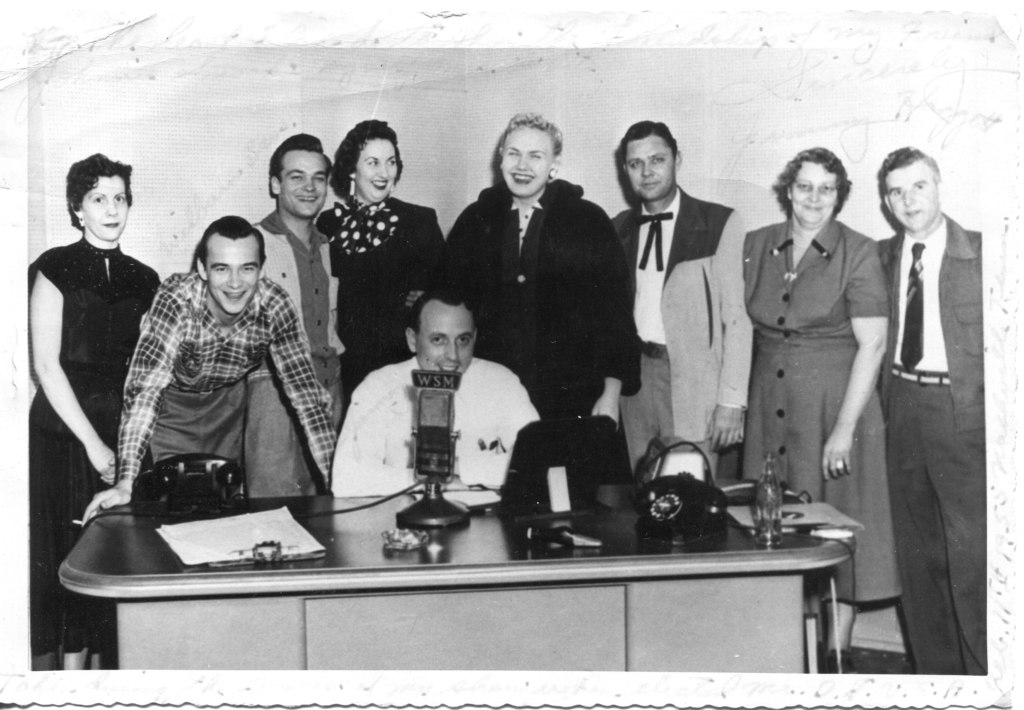
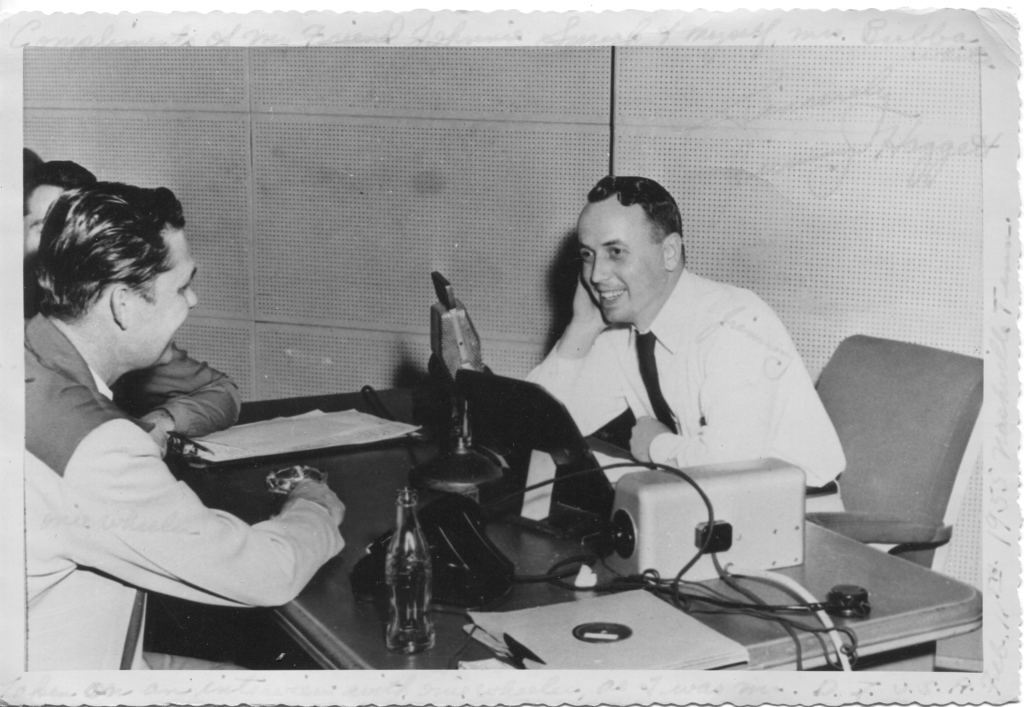
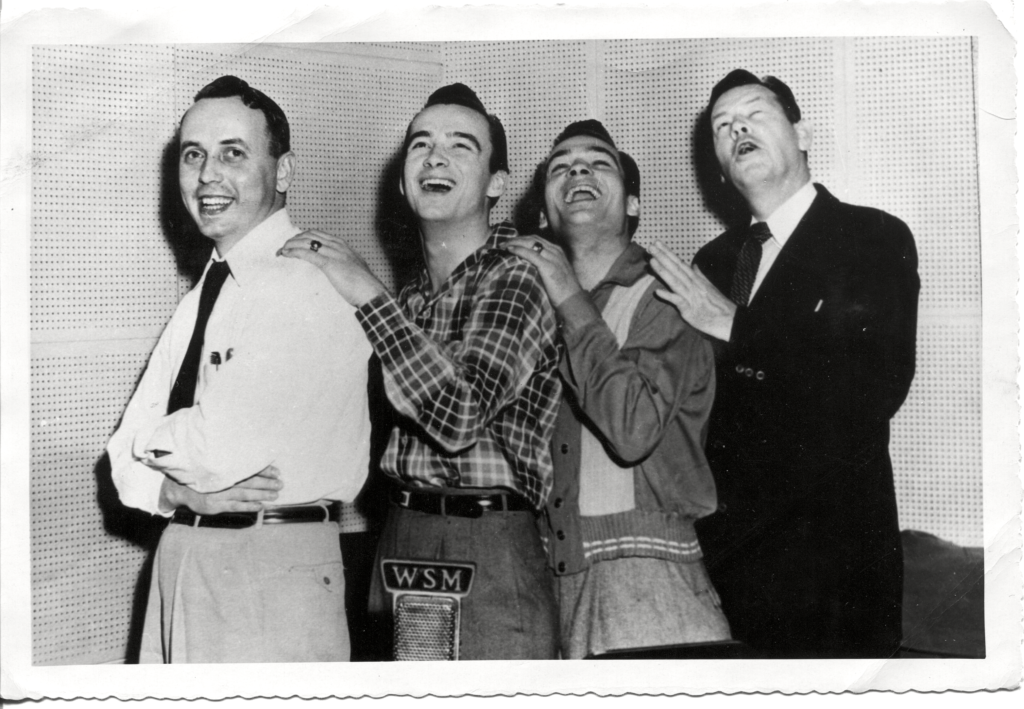
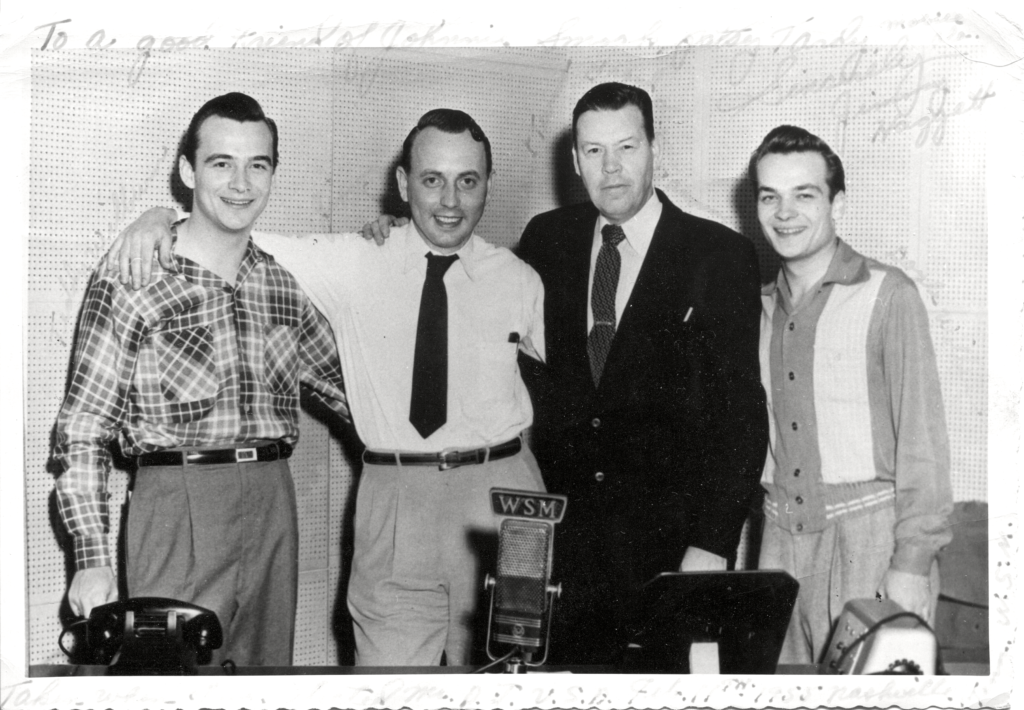
I have a fondness for old photos. Especially photos from the early days of radio. My friend Charles Isbell sent me some good ones this week. They were found in an old house being torn down in Caruth, Missouri. They feature Jimmy Haggett, a musician and DJ who worked northeast Arkansas and southeast Missouri in the 50s. He and my father worked at KBOA at one point. You can find a bio at the link above.

UPDATE from John Carpenter: “(These) Jimmy Haggett PR photos are all from Friday, February 11, 1955 at WSM Radio in Nashville. He’d been chosen “Mr. Disc Jockey, U.S.A.” for that month by the Country Music Disc Jockey Association. The award was noted in the March 1956 issue of “Cowboy Songs” magazine, in their “Disc Jockey Roundup” column: “A member of the CMDJA, Jimmy appeared over WSM, Nashville as ‘Mr. D.J., U.S.A.’ in February 1955, and appeared on Grand Ole Opry the following night.”


L-R: Unknown, Teddy Wilburn,Doyle Wilburn,unknown, Betty Jean and One Wheeler, unknown, unknown

As for the other people in the photos, two of the young men are The Wilburn Brothers (Teddy and Doyle). Looks like the photos were taken at WSM in Nashville, so perhaps some of the others are performers. If you recognize anybody, please leave a comment.

Interviewing Onie Wheeler. “Compliments of my friend Johnnie Smogh & myself, Mrs. Bubba White. Sincerely, Jimmy Haggett.”

Jimmy with Teddy and Doyle in the photos above/below. Would like to know who the other gentleman is. Will work on it.

How was your day, Ian?

In chapter 8 of The Inevitable, Kevin Kelly talks about Remixing. “Unbundling existing products into their most primitive parts and then recombining in all possible ways.” He spends a good bit of time talking about video and the amazing new ways we will find to create and use it.

I will have my AI (we’ll all have one, or more than one) pull all of the available video of Ian Emmerson. He lives in the UK somewhere. Don’t know where. Or what he does for a living. But there’s a bazillion cameras in the UK so there will be no shortage of video.

My AI will edit each day’s video into a montage (of sorts). Ian waiting for one of those big red double-decker buses; Ian trudging into the building where he works; Ian in his cubicle; Ian getting fish and chips from a curb-side truck; Ian (alone) in the pub, having a pint before going back to his ‘flat.’ Pretty much the same stuff every day with an interesting character tossed in from time to time. Or, perhaps, just a character.

Each ‘episode’ will end with one of Ian’s songs, like the one below. I’ll let the AI pick the tune, based on that day’s ‘footage.’ I’ll probably let the AI pick a name for the series but I kind of like, “How was your day, Ian?”

Dan Shelley named RTDNA/F Executive Director

“The Radio Television Digital News Association and Foundation (RTDNA/F) today announced that longtime Association member, former Chairman of the Board and current Foundation Secretary/Treasurer Dan Shelley has been named Incoming Executive Director of the two organizations. Shelley begins work immediately and will assume the role of Executive Director in September.”

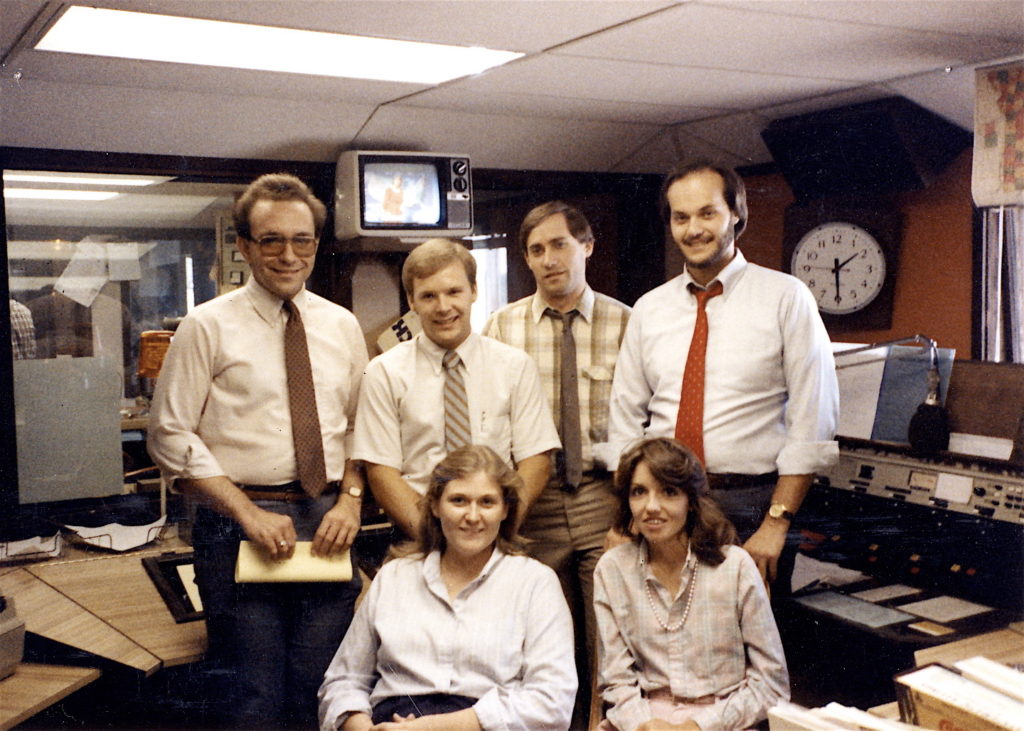
I met Dan in 1984 when he was news director at KTTS in Springfield, Missouri, and I was doing affiliate relations for The Missourinet (Dan’s the guy in the red tie). From Springfield Dan moved up to Milwaukee where he was news director of WTMJ for a few years before moving to New York to take over digital media for WCBS-TV. Then on to Radio One and, in 2015, iHeartMedia.

I interviewed Dan in 2005 when he was elected chairman of what was then RTNDA (Radio Television News Directors Association). They changed the name in 2009 because this digital thing just wasn’t going away. During that interview we talked about blogging, podcasting, satellite radio. For a little context, XM (satellite) Radio did it’s first broadcast in 2001; Facebook launched in 2004; podcasting became a thing that same year; YouTube started 2005; Twitter in 2006; and in January of 2007, Steve Jobs introduced the iPhone. Whew.

Media, journalism and Life As We Know It has undergone some big changes in the last dozen years. According to a 2016 Gallup Poll“Americans’ trust and confidence in the mass media ‘to report the news fully, accurately and fairly’ has dropped to its lowest level in Gallup polling history, with 32% saying they have a great deal or fair amount of trust in the media. This is down eight percentage points from last year.” 

I don’t see how he can possibly find the time but Dan says we’ll talk again. Boy, am I looking forward to that.

This post was updated on April 6, 2017 at 6:50 p.m.