
The power of the hyperlink

Iowa Senator Tom Harkin talked, by phone, with a group of Iowa radio reporters on Thursday morning. One of the reporters asked the Senator for his reaction to Venezuelan president Hugo Chavez’s comments about President Bush at the UN. One of our reporters was on that conference call and posted a story about the senator’s response to our website, RadioIowa.com. (“Harkin defends Venezuelan President’s UN speech against Bush”)

Radio Iowa News Director Kay Henderson blogged the entire story but the short version is The Drudge Report linked to the story…a shit storm rained down on Senator Harkin…his people try to get Kay to change the headline of our story on the web… a long, stressful day for everyone.

This is just one more small example of how the web has changed things. The stations the other radio reporters (on the conference call) work for probably all have websites but I don’t think they post news stories. So, in all likelihood, our little story was the only one online, at least initially.

BTW (Before the Web), one or all of those reporters might have aired the story on a couple of newscasts and people in Des Moines or Sioux City might have been pissed at the senator. And even if the wire services picked it up, it would have taken a little time to ripple out, and the reaction would have been diluted.

It’s now Saturday morning and I googled “Tom Harkin.” The top search result is: “Hearing Is Believing” on what appears to be a blog called Power Line.

“Harkin must have taken some heat for his comments on the radio, because he put a completely different statement on his web site, after the fact. To see what he really thinks, listen to the audio below.”

Power Line didn’t bother to link to our story or mention our network by name. And they stole our audio and posted the MP3 file to their site. But no matter. You get the idea.

Media was once an orderly thing:
Local radio station(s) – Local newspaper
Handful of larger city newspapers, TV stations & radio stations
Statewide radio network
Associated Press
National media

You could manage these. If you were clever, you could spin and control them a little. No more. We’re all breathing the same media air.

If Senator Harkin does the radio reporter conference call again, I sure would like to listen in.
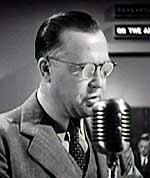
Interview: Dan Shelley, WCBS-TV

In July, my old friend Dan Shelley left WTMJ in Milwaukee and moved to New York as Executive Editor of Digital Media for WCBS-TV. I spoke with him this morning about digital media, journalism, blogging, radio, life in NY and riding in the elevator with Andy Rooney. Dan is pumped about his new job and living in Manhattan.

AUDIO: Interview with Dan Shelley

Dan offered this warning to broadcasters: “If you don’t do more than just stick your toe in the water, if you don’t plunge head-first and totally immerse yourself in the digital media future, and do it now, you will die.”

For those that might have missed it, I interviewed Dan in May, 2005, right after he took over as chairman of the Radio and Television News Director’s Association. He talked the “digital talk,” and now he’s “walking the digital walk.”

9/11 and the Dawn of Video Citizen Journalism

I made a conscious –or unconscious– effort to not think about the attack on the World Trade Center Towers. I didn’t think I could stand to watch the video again. This evening I stumbled across never-before-seen video shot from 500 yards away and 36 floors up. I can’t think of any words to describe this video. I could not look away. It was somehow more horrible and more compelling without the mindless chatter of news goofs telling us what we are seeing.

Steve Rubel (I found this on his blog) says we should watch this that we never forget. There will be no forgetting the anguish in the voice of the woman shooting the video when the first building collapsed. I can understand why the couple never released the video. And why they finally did.

Forget all the news specials, docu-dramas and made-for-TV movies. This amazing account will sear your brain and break your heart. It’s a long download but, as Steve says, something you should see.

References available upon request

My buddy Morris left the radio news game this spring. After 30+ years. Tried his hand at the newspaper business but that didn’t work out. He says he wants to try something online. Blogging, podcasting, etc. I think he knows it will be a tough row to hoe (as momma used to say) but he sounds very positive. In his latest email he observed there just weren’t that many “serious news operations” (he was referring to radio, I believe) in Missouri.

News GuyMorris’ situation raises a good question. If you’re a radio news reporter, and you had to go out and find another job tomorrow, where would you look? Another radio station? Group ownership has reduced the competition (and need?) for your services. The local newspaper? They’ve got their own problems. A traditional fall-back has been PR for some company/association/department. But I always wondered if that wasn’t based on the notion that you could get all of your radio news buddies to run your press releases. On the other hand, I was in a room full of PR folks back in January so the jobs seem to be there.

Radio reporters have what seem to be some very marketable skills. They can do interviews. They can write stories. They can read well aloud. So, where do they go when it’s time to go?

Best tool for the job (Example #2)

Radio Iowa News Dirctor Kay Henderson covered the Iowa GOP and Democratic State Conventions today in Des Moines and her “tool of choice” was her blog.

Kay is not double-jointed (as far as I know) but she has a knack or skill (super power?)…she can type blazing fast. Her posts from the conventions are not verbatim but they’re damned close.

As I read them, I was reminded of an earlier post here at smays.com where I pondered the best tool for covering a live event. I guesss a live video or audio feed of these speeches would have been cool but I think I can make a case for Kay’s posts being “better.” I mean, Jesus, the speeches are on line before the applause dies down.

This is what happens when you equip a really good reporter with a blog.