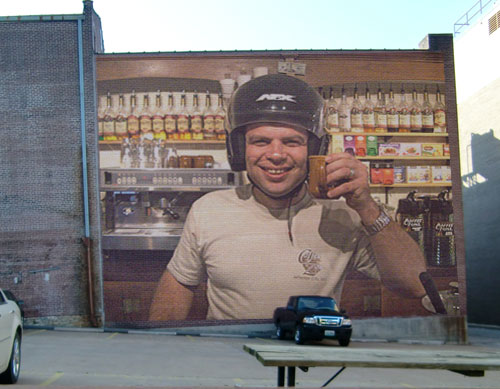
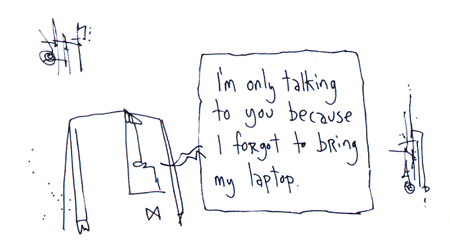
“Ward, June, Beaver and Wally have all moved away to live with Timmy and Lassie.”

Letter to realtor from man shopping for a home in just the right neighborhood:

“One of the most important things I’m looking for is the quality of the neighbors and the neighborhood as much as I am a house. According to your map on the internet, I felt that perhaps these homes were in neighborhoods that are clean, wholesome and safe; with honest christian neighbors with sincere and humble christian values who would be pleasant to live among.

Being retired I wish to live where their is respect, and civility and kindness among the resident population. I wish for the neighborhood to have a refinement and elegance to it, with stable households of quality and good taste.  I don’t want to move into a blighted or deteriorating area, nor do I wish to live in an area filled with transient student population where in the neighbors are changing every semeter.  I want it to be family oriented that when one might sit on their front porch people go for walks with their families and wave and are ginuinely neighborly.”

Response to realtor from a seller:

“Ask him if he has any other requests. Would he like his neighbors to be of a specific gender or race? What kind of pets would be to his liking, and what about climate? Would occasional rain be acceptable or would he rather it be dry, but with humidity readings in the low 40’s?

Tell him Ward, June, Beaver and Wally have all moved away to live with Timmy and Lassie.”

No, you can’ t make this shit up. Wouldn’t you just love to live next door to this guy?

TED Talk: Clay Shirky: How cellphones, Twitter, Facebook can make history

From the TED Blog: “NYU professor Clay Shirky gave a fantastic talk on new media during our TED@State event earlier this month. He revealed how cellphones, the web, Facebook and Twitter had changed the rules of the game, allowing ordinary citizens extraordinary new powers to impact real-world events.” [via @greatdismal]

Marco Brambilla’s Civilization

The vision behind Marco Brambilla’s Civilization was to take “hundreds of stock footage, movie footage and original clips and combining them to create a moving landscape depicting the ascension from hell to heaven.

Alrighty then. And where will we watch this video?

“The idea was this, when you go up in the elevator the content goes down and when you go down it goes up. Not unlike a ride film this project was designed to be synced to the moving environment of the hotel elevators in New York. We wanted to synchronize the footage to the movement of the elevator as best as we could.”

You really need to watch the video to get the idea. I found the link on William Gibson’s blog where he observes: “Stuff’s finally starting to look like the 21st Century. Next, your shower curtain.”

“How Twitter Will Change the Way We Live”

That’s the title of an article by Steven Johnson in this week’s Time Magazine. Here are a few snippets:

  • “This is what the naysayers fail to understand: it’s just as easy to use Twitter to spread the word about a brilliant 10,000-word New Yorker article as it is to spread the word about your Lucky Charms habit.”
  • “Instead of being built by some kind of artificially intelligent software algorithm, a customized newspaper will be compiled from all the articles being read that morning by your social network.”
  • “It used to be that you compulsively checked your BlackBerry to see if anything new had happened in your personal life or career: e-mail from the boss, a reply from last night’s date. Now you’re compulsively checking your BlackBerry for news from other people’s lives.”

But the real money-shot of the piece (at least for me) is Johnson’s prediction (is it still a prediction if it’s already happening?) on Twitter’s influence on advertising.

“Today the language of advertising is dominated by the notion of impressions: how many times an advertiser can get its brand in front of a potential customer’s eyeballs, whether on a billboard, a Web page or a NASCAR hood. But impressions are fleeting things, especially compared with the enduring relationships of followers. Successful businesses will have millions of Twitter followers (and will pay good money to attract them), and a whole new language of tweet-based customer interaction will evolve to keep those followers engaged: early access to new products or deals, live customer service, customer involvement in brainstorming for new products.”

This is the best thing I’ve read on Twitter to date.

Concrete Man (Director’s Cut)

Clarence Lee Sherrill and Crista Meyer sell concrete lawn ornaments. Their business is called Concrete Castings and they’re located on I-55 just north of Cape Girardeau, MO. I have a strange fascination with “yard art” and decided to scratch the itch on a recent trip down south.

Clarence and Crista work in a small, cluttered room heated by a big wood stove and covered in cement dust. Gazing in a large window was a magnificent peacock. I didn’t see Miss C, the camel that’s usually in a pen out front, and Clarence explained she was “visiting her boyfriend” but would return in a few days. Gotta be tough to breed camels in this country.

On a technical note, I shot the video with the Casio Exilim FC100, but the battery went dead on me. So I recorded a few minutes of audio on the iPhone and dropped in some stills. You’ll notice the change in audio quality.

Oh my. It appears we need ANOTHER ending

Young woman (college age) scours flea markets looking for digital cameras and the occasional memory card. She uses the more interesting photos in her art projects. She finds a little point and shoot and buys it, even though she can’t seem to call up any photos.

Later that afternoon she gets the camera to turn on and finds just two photos. One is an amazingly realistic image of the World Trade Center Towers in mid-collapse. The date and time (the following morning) appear in the lower right-hand corner.

Gruesome, but damned good Photo Shop work. She emails it to an art school friend who is equally impressed. Can’t see how it’s done and he can ALWAYS see how it’s done. Really bugs him.

The next morning the world changes forever. She goes back to her apartment and calls up the image on her laptop. The same image she see from her apartment window. Whoa.

The phone rings and it’s her friend from art school.

“What the fuck!? Where did you get that picture? Where did you get a fucking picture of something before it happened.

[later at friends apartment]

Young Woman wants to take the photo to the police. Hold on, says Friend. How can you explain having that photo. No way, have to think this through. Was that the only photo on the camera, asks Friend?

Young Woman pulls up the other image. It’s a store front with a selection of cameras displayed. One is circled in red. But nothing to indicate where the shop might be.

[We’ll fast-forward a bit and assume they see a street sign or address in the reflection or something like that]

They buy the camera and jump back in the car to take a look. Again, two photos. One a disaster (make it as big and as bad as you like) with date and time stamp for a week from that day.

They have to figure out where the disaster is going to take place and how to stop it. I’ll bet real screenwriters have a name for this kind keep-the-plot-moving writing. This sequence repeats a few times with the girls preventing some and not others.

The final camera only has one photo. Of the Friend shooting Young Woman in the head with a large handgun.

Regular readers know that this is where I stall out. No ending. No way to wrap things up. That, class is your assignment. To the comments!

PS: This is only a little like a story idea I posted a couple of years ago.