Internet advertising closing in on radio

The Internet will receive a greater share of global advertising spending this year than do outdoor outlets such as billboards, and it is set to overtake radio soon. That’s one of the findings in a report by ZenithOptimedia, a media planning and buying firm. The growth is being driven by smaller brands, which are turning to the Internet because it is relatively cheap and can target their markets effectively. (see The Long Tail) The company said it expected the spending share gap between the Internet and radio to narrow from 3.9 percentage points in 2005 to 0.7 in 2008. (Yahoo! News/Reuters)

If you understand how to market and sell online, this is not necessarily a bad thing. If you don’t… then pray that these are new dollars that won’t impact your sales.

Podcasting candidate endorsements

Just listened to the latest podcast from the Missouri State Teachers Association. They call it The Pulse. Co-hosts Todd Fuller Gail McCray broke a little digital ground (I’m guessing) by using the podcast to announce the canidates the MSTA is endorsing in the November election. They spent the first part of the podcast explaining how their endorsement process works. Then they mentioned a few specific endorsements and pointed the listener back to their website for the full list of candidates.

Why do I think this is worth a post? As I listened to Todd and Gail explain this process, I kept thinking they would NEVER get airtime (radio or TV) for that kind of “deep dive.” But it’s important to their audience (teachers, candidates). And by using their podcast to make the announcement, it raises awareness of their podcast. (You now know about it because you read this blog which has nothing to do with education or politics.)

If you want to see/hear how to do an “association podcast,” check out MSTA’s The Pulse.

Blogging for president

I’m sorry, but radio and TV has completely fucked up the way we elect the leaders of our country. Think about it. We elect presidents and senators and governors and damned near everybody based on:

* :30 TV spots
* Debates that aren’t
* Speeches the candidate didn’t write
* Yard signs (that’s a small town thing but it’s universal. The guy with the most yard signs wins)

Do any of these reveal anything about the ideas or intelligence of the candidate. No way. You know what would? A blog. A blog written 100% by the candidate (not sure how you could keep the bastards from cheating and you know they’d try).

Make every candidate blog during the year leading up to the election. They can post as often as they like… about any topic they like.

This has the added benefit of requiring the American voter to get more involved than watching some mindless network television salted with attack ads.

“Wait a minute, smays. Leadership requires courage and values (like mine) and a bunch of other qualities that have nothing to do with how well you express your ideas in writing.”

Horse shit. If you can’t think… you can’t lead. At least not well. And I want to measure the quality of your ideas. Not the ideas of your campaign manager, or your PR firm… your ideas.

If you’re hung up on the writing thing… let’s throw a podcast into the mix. Every candidate produces a weekly, fifteen minute podcast. Any topic, any format. But the candidate must produce it him or herself (they go into a glass walled studio, put it together and upload it).

Imagine reading blogs written by George W. Bush; Bill Clinton (or Hillary Clinton); Al Gore; John Kerry; John McCain; Al Sharpton; Dick Cheney; Ralph Nader… you get the idea. Can you honestly say you wouldn’t have a better feel for who these people are and what they really believe? Of course they’d try to scam and bullshit you. But it would be so much harder to do.

I can fool you for 30 seconds at a time. Especially if you’ re not paying much attention. But if you’re reading what I say every day, for a year… you’re gonna learn some things about me. Good and bad.

And here’s the proof of this pot of pudding: Regular readers of smays.com have NO doubt that I would make a really bad (fill in the elective office).


Feedback: LeAnn says the tone of this post lacks “the same effervescent, entertaining qualities of your other posts. I am concerned someone pissed you way the “f” off on Thursday.” Nope, Thursday was a very nice day. But the post does read “angry,” doesn’t it. I should really stay away from politics.

I had to look up the definition of “effervescent” (vivacious; gay; lively; sparkling). I think I can sparkle but vivacious will be a stretch.

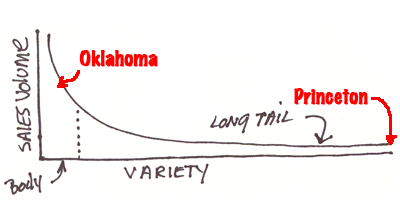
Ivy League Long Tail

The company I work for owns (leases?) the multi-media marketing rights for some of the largest collegiate athletic programs in the country. So this story in USA TODAY about smaller colleges and conferences turning to the web to to deliver football and other sports, jumped out at me.

“Northern Arizona offered webcasts of home football games last year. Using the four cameras already set up to provide replays on the stadium scoreboard, the school added audio from their radio broadcasts along with continually updated statistics. Fans will be able to choose which team’s audio feed to which to listen. Games will be archived and can be downloaded to portable devices like Apple Computer’s iPod.

This fall, ESPN’s new online channel, ESPN 360, will show 30 football games, 10 of them, involving teams such as Virginia Tech, Purdue, Miami and Minnesota exclusively on that website. The site, available to about 6 million homes, will also have such features as chat rooms, statistics and online polls.

The schools don’t see the Web replacing television. Major conferences make millions of dollars from their football and basketball television contracts, but many also plan to webcast other sports, such as volleyball or swimming.


The Big Ten Conference announced plans this summer create its own cable channel for minor sports. The Big Ten Channel also will be available through the Internet, iPods, cellphones and other technologies.”


Note to Learfield Senior Management: Read The Long Tail to understand why and how this is happening and what it might mean for those of us at the “head.”

Podcast monetization

From Podcasting News:

“About.com, a New York Times property, has launched a sponsored medical podcast about heartburn and acid reflux. Each podcast will be approximately three to five minutes long and will be introduced monthly. The series –the first of its kind on About.com– is sponsored by AstraZeneca, a pharmaceutical company that makes Prilosec and Nexium heartburn and acid reflux medications.”The podcasts allow us to provide educational information to patients in a unique and creative way,” said Dana Settembrino, brand communications manager, AstraZeneca.

Topics to be covered include: What Causes Heartburn; Acid Reflux and Your Diet; How to Talk to Your Doctor about Acid Reflux; Exercising with Acid Reflux; and How Stress Affects Your Acid Reflux.

According to Marjorie Martin, general manager, ABOUT Health, “Podcasts provide an exciting new format for delivering trusted health information. Users can now choose to listen online or take the information with them. This series on heartburn and acid reflux disease should provide the millions of sufferers with the tools to better manage their condition.”

Dr. Mona Khanna, M.D., M.P.H. is the program’s host. “Dr. Mona” is a quadruple board-certified practicing physician and Emmy award-winning medical correspondent.”

We covered heartburn on the Living Healthy Podcast back in February.

I find Henry’s conversational style more to my taste than Dr. Mona’s scripted read, but I’m hardly objective. Would love to know what AsstraZeneca is paying for this and their expectations. But one can assume they think this makes more sense than 30’s and 60’s. About.com seems like a good fit. You go looking for info on heartburn…and find a podcast on the subject.

But how sustainable is this? I think sponsoring something with broader topic scope might make more sense.