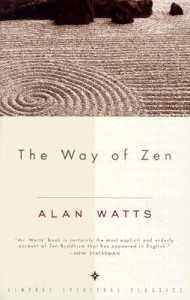
The Way of Zen by Alan Watts

The Way of Zen

Excerpts from The Way of Zen


I have no other self than the totality of things of which I am aware.

I have somehow become the empty space in which everything is happening.

TAO

The vague, void-seeming, and indefinable Tao is the intelligence which shapes the world with a skill beyond our understanding. … Whereas God produces the world by making, the Tao produces it by “not-making” (growing).

The Tao’s principle is spontaneity. But spontaneity is not by any means a blind, disorderly urge, a mere power of caprice. … A philosophy restricted to the alternatives of conventional language has no way of conceiving an intelligence which does not work according to plan, according to a (one-at-a-time) order of thought.

Hsuan – A metaphorical darkness; the sheer inconceivability which confronts the mind when it tries to remember a time before birth, or to penetrate its own depths.

If the ordinary man is one who has to walk by lifting his legs with his hands, the Taoist is one who has learned to let the legs walk by themselves.

The eye’s sensitivity to color is impaired by the fixed idea that there are just five true colors.

BUDDHISM

Reasonable men will always be capable of compromise, but men who have dehumanized themselves by becoming the blind worshipers of an idea or an ideal are fanatics whose devotion to abstractions make them enemies of life.

The value of emptiness lies in the the movements it permits or in the substance which it mediates and contains. But the emptiness must come first. This is why Indian philosophy concentrates on negation, on liberating the mind from concepts of Truth.

The basic reality of my life is not any conceivable object.

Maya: Things, facts, and events are delineated, not by nature, but by human description, and the way in which we describe (or divide) them is relative to our varying points of view.
–
The formal world becomes the real world in the moment when it is no longer clutched, in the moment when its changed fluidity is no longer resisted.

It is precisely (the) realization of the total elusiveness of the world which lies at the root of Buddhism.

SELF

Any attempt to conceive the Self, believe in the Self, or seek for the Self immediately thrusts it away.

It is fundamental to every school of Buddhism that there is no ego, no enduring entity which is the constant subject of our changing experiences. For the ego exists in an abstract sense alone, being an abstraction from memory. The past from which our ego is abstracted has entirely disappeared.

To one who has self-knowledge, there is no duality between himself and the external world.

(Zen on the Round of birth-and-death) The process of rebirth is from moment to moment, so that one is being reborn so long as one identifies himself with a continuing ego which reincarnates itself at each moment in time.

Nirvana can only arise unintentionally, spontaneously, when the impossibility of self-grasping has been thoroughly perceived.

Buddhism does not share the Western view that there is a moral law, enjoined by God or nature, which is man’s duty to obey.

Smriti (recollectedness) is a constant awareness or watching of one’s sensations, feelings, and thoughts – without purpose or comment. It is a total clarity and presence of mind, actively passive, wherein events come and go like reflections in a mirror: nothing is reflected except what is.

Through such awareness it is seen that the separation of the thinker from the thought, the knower from the known, the subject from the object, is purely abstract. There is not the mind on the one hand and its experiences on the other: there is just a process of experiencing in which there is nothing to be grasped, as an object, and no one, as a subject, to grasp it.

The object itself is just thought. A thought cannot see itself.

Dharmadhatu – The proper harmony of the universe is realized when each “thing-event” is allowed to be freely and spontaneously itself, without interference.

Logic and meaning, with its inherent duality, is a property of thought and language but not of the actual world.

As the sound “water” is not actually water, the classified world is not the real world.

Instead of trying to purify or empty the mind, one must simply let go of the mind – because the mind is nothing to be grasped. Letting go of the mind is also equivalent to letting go of the series of thoughts and impressions which come and go “in” the mind, neither repressing them, holding them, nor interfering with them.

PRINCIPLES AND PRACTICE

The fondest illusion of the human mind: in the course of time everything may be made better and better.

The power of thought enables us to construct symbols of things apart from the things themselves. This includes the ability to make a symbol, an idea of ourselves apart from ourselves. We learn to identify ourselves with our idea of ourselves.

All ideas of self-improvement and of becoming or getting something in the future relate solely to our abstract image of ourselves.

In Taoist and Buddhist thought there is no conception of a God who deliberately and consciously governs the universe. [The Tao, without doing anything leaves nothing undone]

It is part of the very genius of the human mind that it can, as it were, stand aside from life and reflect upon it, that it can be aware of its own existence, and that it can criticize its own processes.

When human beings think too carefully and minutely about an action to be taken, they cannot make up their minds in time to act.

From (such) memories, reflections, and symbols the mind constructs its idea of itself. … The identification of the mind with its own image is paralyzing because the image is fixed — it is past and finished.

The attempt to act and think about (an) action simultaneously is precisely the identification of the mind with its idea of itself.

Whatever we do, and whatever “happens” to us, is ultimately “right.”

To act “without second thought,” without double-mindedness, is by no means a mere precept of our imitation. For we cannot realize this kind of action until it is clear beyond any shadow of doubt that it is actually impossible to do anything else.

There is no necessity for the mind to try to let go of itself, or to try not to try.

“Brushing off thoughts which arise is just like washing off blood with blood.” – Japanese master Bankei

Social conditioning fosters the identification of the mind with a fixed idea of itself as the means of self-control, and as a result man thinks of himself as “I” – the ego. Thereupon the mental center of gravity shifts from the spontaneous or original mind to the ego image. Once this has happened, the very center of our psychic life is identified with the self-controlling mechanism.

As soon as I recognize that my voluntary and purposeful action happens spontaneously “by itself,” just like breathing, hearing, and feeling, I am no longer caught in the contradiction of trying to be spontaneous. There is no real contradiction, since “trying” is “spontaneity.”

One stops trying to be spontaneous by seeing that it is unnecessary to try, and then and there it can happen. … One does not realize the spontaneous life by depending on the repetition of thoughts or affirmation. One realizes it by seeing that no such devices are necessary.

Zen lies beyond the ethical standpoint, whose sanctions must be found, not in reality itself, but in the mutual agreement of human beings.

Zen does not confuse spirituality with thinking about God while one is peeling potatoes. Zen spirituality is just to peel the potatoes.

Zen is neither self nor Buddha to which one can cling, no good to gain and no evil to be avoided, no thoughts to be eradicated and no mind to be purified, nobody to perish and no soul to be saved.

The practice of Zen is not the true practice so long as it has an end in view, and when it has no end in view it is awakening — the aimless, self-sufficient life of the “eternal now.”

As muddy water is best cleared by leaving it alone, it could be argued that those who sit quietly and do nothing are making one of the best possible contributions to a world in turmoil.

To see the world as it is concretely, undivided by categories and abstractions, one must certainly look at it with a mind which is not thinking — which is to say, forming symbols about it. … A quiet awareness, without comment, of whatever happens to be here and now. This awareness is attended by the most vivid sensation of “nondifference” between oneself and the external world, between the mind and its contents — the various sounds, sights, and other impressions of the surrounding environment. … It just comes by itself when one is sitting and watching without any purpose in mind — even the purpose of getting rid of purpose.

The basic position of Zen is that it has nothing to say, nothing to teach. The truth of Buddhism is so self-evident, so obvious that it is, if anything, concealed by explaining it.

Awakening almost necessarily involves a sense of relief because it brings to an end the habitual psychological cramp of trying to grasp the mind with the mind, which in turn generates the ego with all its conflicts and defenses.

What we are, most substantially and fundamentally, will never be a distinct object of knowledge. Whatever we can know — life and death, light and darkness, solid and empty — will be the relative aspects of something as inconceivable as the color of space.

Awakening is to know what reality is not.

So long as one thinks about listening, one cannot hear clearly, and so long as one thinks about trying or not trying to let go of oneself, one cannot let go. Yet whether one thinks about listening or not, the ears are hearing just the same, and nothing can stop the sound from reaching them.

Because the world is not going anywhere there is no hurry. Hurry, and all that it involves, is fatal. For there is no goal to be attained.

The purposeful life has no content, no point. It hurries on and on, and misses everything. It is only when there is no goal and no rush that the human senses are fully open to receive the world. People in a hurry cannot feel.

Making an effort to concentrate on the instantaneous moment implies at once that there are other moments.
Why Does the World Exist?

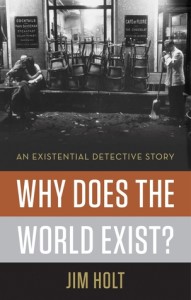
whydoestheworldexistI’m not losing any sleep over this question, unless you count some late nights reading books like Jim Holt’s Why Does the World Exist? Holt is an American philosopher, author and essayist. Mr. Holt tells his “existential detective story” by talking with “philosophers, theologians, particle physicists, cosmologists, mystics and one very great American novelist.”
This is one of those books I found myself rewinding every few pages in an effort to simply understand the words, the sentences. So I can’t review it but here’s what the NYT had to say.

I do manage to come away with something from books like this. First, an appreciation for how long really smart people have been thinking about questions like why-something-not-nothing. Second, how little I really know and understand about… everything. Okay, here’s a third thing: nothing that happens in our (humans) blink-of-an-eye existence is of much consequence when viewed against the backdrop of a 14 billion year old universe. Global warming; Rush Limbaugh; a nuclear Iran. Specs of dust. A few excerpts:


“For the vast majority of Americans there is no such thing as the “mystery of existence.” If you ask them why the universe exists, they’ll say it exists because God made it. If you then ask them why God exists, the answer you get will depend on how technologically sophisticated they are. They might say that God is self-caused, that He is the ground of His own being, that His existence is contained in His essence. Or they might tell you that people who ask such impious questions will burn in hell.”

The life of the universe, like each of our lives, may be a mere interlude between two nothings.

Perhaps we see too little of reality to be aware of the reason behind it, or because any such reason must lie beyond the intellectual limits of humans.

Nothing is popularly held to be better than a dry martini, but worse than sand in the bedsheets. A poor man has it, a rich man needs it, and if you it for a long time, it’ll kill you. On occasion, nothing could be further from the truth, but it is not clear how much further.

Nothingness – A possibility reality, a conceivable state of affairs: that in which nothing exists.

In the thirteenth century, the Catholic Church declared it to be an article of faith that the world had a beginning in time.

The entities making up the physical world are like the pieces in a game of chess: what counts is the role defined for each piece by a system of rules that say how it can move, not the stuff the piece is made of.

“Words like ‘theism’ and ‘atheism’ and ‘God,’ they’ve moved around so much that they’re practically meaningless. Who really cares? I do consider myself a Spinozist, however, for two reasons. First, I think Spinoza was right that we’re all tiny regions in an infinite mind. And I agree with him that the material world, the world described by science, is pattern of divine thought.” — Cosmologist John Leslie

Rebirth

starry-sky-washington_25309_990x742

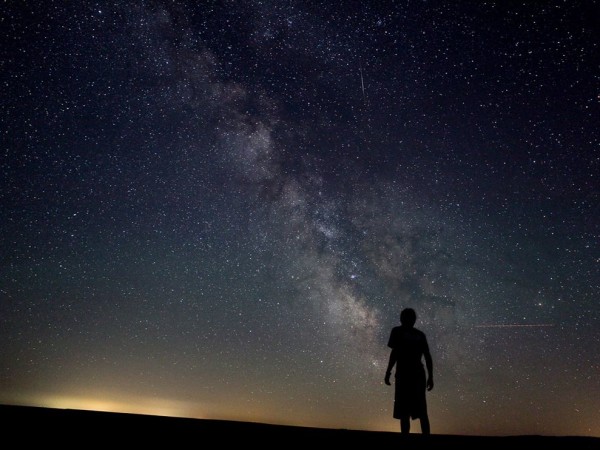
“You are lounging on a magnificent balcony open to the starry sky, divine music is playing with such exquisite perfection you can hardly stand it, when all of a sudden something terrible occurs: the magical sounds break up into an obscene cacophony. What is happening? Are you dying? You could put it that way. That awful noise is the first scream of an infant: you. You have been born into a human body hardwired with each and every transgression from the last time around, and now you must spend the next seventy years clawing your way back to the music. No wonder we cry.”

— Bangkok Tattoo by John Burdett

Immortality

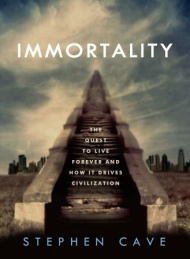
book-coverThe Quest to Live Forever and How It Drives Civilization, by Stephen Cave (Amazon)

“The Mortality Paradox – On the one hand, our powerful intellects come inexorably to the conclusion that we, like all other living things around us, must one day die. Yet on the other, the one thing that these minds cannot imagine is that very state of nonexistence; it is literally inconceivable. Death therefore presents itself as both inevitable and impossible.”

“The Terror Management Theory – We must live in the knowledge that the worst thing that can possibly happen to us one day surely will. […] We have created institutions, philosophies and religions to protect us from this terror by denying or at least distracting us from the finality of death.”

“Immortality is not for the weak and foolish.”

“”Longevity Escape velocity” – living long enough to live forever”

“”Computational Resurrection” – the rerunning of software that is your mind on a new piece of hardware so that you might live again.”

“The Soul – the most influential single idea in the history of Western civilization”

“Whether or not we literally believe we have a soul that will go to heaven, the cosmic significance we ascribe to ourselves as unique individuals reassures us that we transcend mere biology. […] We are creating a myth of immunity to extinction.”

“Buddhists do believe in some essential part of you that survives the body in order to be reincarnated in accordance with the laws of karma. This is pure consciousness, stripped of all memories and convictions and the rest of the accumulated baggage of a lifetime. The Dali Lama describes it as a “continuum of awareness.””

“In Hinduism and Buddhism there is an undercurrent of recognition that the individual mind cannot continue without the body. Beyond the theory of reincarnation, which requires a soul robust enough to be punished for its past sins, there are hints of something more radical. Nirvana, for example, literally means “extinguishing” or “blowing out.” But what is it that is being “blown out” like a candle? Some Buddhists say worldly desires. Others, however, go further and believe it is the self that is extinguished. For some in the ascetic tradition, the source of worldly suffering is not just being in the world–it is being at all. Liberation therefore means to cease to be an individual altogether, or as the Hindus put it, to become one with the all, the Brahman.”

“We have already concluded you have no soul — no unchanging essence or immutable inner core. We could go further and say that there is, in fact, nothing that is the “real you.” You are just a collection of disparate thoughts, memories, sense impressions and the like, all bundled up together in a package we conveniently label a person. What is more, all these disparate parts are continually changing,as some things are forgotten and others learned, opinions changed and new memories formed. The question is, then, if you are such an ever-changing bundle, what does it mean for “you” to survive?”

“Psychologist Roy Baumeister has estimated the length of time for which most of us can expect to be remembered as seventy years. He points out that not many people can even *name* their great-grandparents.”

“People in modern cities long ago lost the ability to survive independently—we are utterly reliant on a complex higher level system for clean water, food, clothing, shelter, medicine, security and energy. Like the specialized cells of our bodies, which have given up their independence for the greater strength and security offered by life as part of a macro-organism, we have each given up our independence to be part of strong and secure superorganisms.”

“Individual humans are merely temporary forms taken by the single, shifting web of life on earth. If humans are not really separate things, then their births and deaths are also not real, but simply one way of seeing the rhythms of life.”

“The great social-reform movements of the last centuries — emancipation of slaves, equality between sexes and races, social welfare and son on — arose only when the preoccupation with the next world began to lose its grip on Western society. […] If this life here on earth is regarded merely as a series of tests for a place in another life, then it is necessarily devalued.”

“There are as I see it two sets of problems: on the one hand, the boredom and apathy that would result from having done and seen everything there is to do— that is, from having already lived a very long time—and on the other hand, the paralysis that would result from having an infinite future in which to do any further things. Both these problems, the backward looking and the forward-looking, threaten to suck the meaning out of life and leave one wishing for a terminal deadline.”

“Death is the source of all our deadlines.”

“Life as we know it may be too short to watch daytime TV, but eternity wouldn’t be.[…] Given infinity, time would lose its worth. And once time is worthless, it becomes impossible to make rational decisions about how to spend it. […] If civilization exists to aid our preparation into the future, then if that perpetuation were guaranteed, civilization would be redundant. […] Civilization exists to give us immortality, but if it ever succeeded it would fall apart.”

“We do not “see” or experience death; death is the end of all experience. […] Neither you nor I can ever literally *be* dead. Living things cannot be dead things. To talk of someone “being dead” is just a shorthand for saying they have ceased to exist. […] We can never be aware of (life) having an end — we can never know anything but life.”

“If you are happy now, then you are happy always, as there is only now.”

Manufactured Normalcy Field

I wouldn’t know how to begin to describe this piece, so I’ll just share a few nuggets. If you have any interest in things like past and present and reality, the full post is worth a read.

we live in a continuous state of manufactured normalcy. There are mechanisms that operate — a mix of natural, emergent and designed — that work to prevent us from realizing that the future is actually happening as we speak. To really understand the world and how it is evolving, you need to break through this manufactured normalcy field. Unfortunately, that leads, as we will see, to a kind of existential nausea.

What is interesting is how this psychological pre-disposition to believe in an unchanging, normal present doesn’t kill us.

How, as a species, are we able to prepare for, create, and deal with, the future, while managing to effectively deny that it is happening at all?

a typical air traveler never experiences anything that one of our ancestors could not experience on a fast chariot or a boat.

even though air travel is now a hundred years old, it hasn’t actually “arrived” psychologically. A full appreciation of what air travel is has been kept from the general population through manufactured normalcy.

we are all living, in user-experience terms, in some thoroughly mangled, overloaded, stretched and precarious version of the 15th century that is just good enough to withstand casual scrutiny.

Instead of a newspaper feeding us daily doses of a shared Field, we get a nauseating mix of news from forgotten classmates, slogan-placards about issues trivial and grave, revisionist histories coming at us via a million political voices, the future as a patchwork quilt of incoherent glimpses, all mixed in with pictures of cats doing improbable things.

We aren’t being hit by Future Shock. We are going to be hit by Future Nausea. You’re not going to be knocked out cold. You’re just going to throw up in some existential sense of the word.