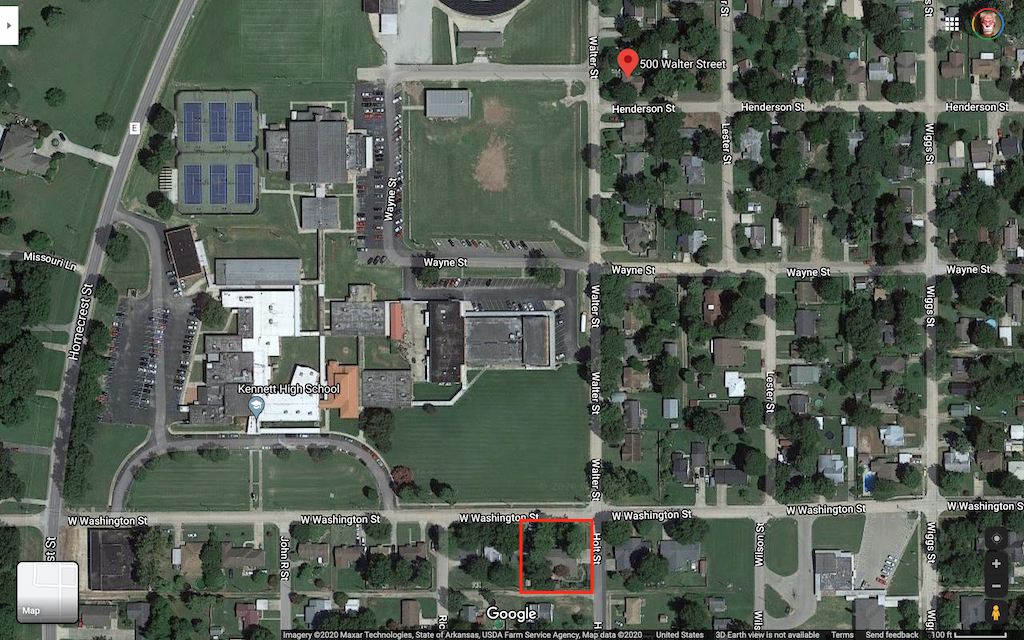
If Kennett, Missouri, (my home town) has a claim to fame it’s Sheryl Crow. Says so on the “Welcome to Kennett” signs on each end of town. I’m 14 years older than Ms. Crow so we weren’t in school at the same time. I was more familiar with her folks. They lived just down the street (rectangle) from where I grew up.
If you liked her before, you’ll love her even more after touring her home.
Tag Archives: kennett
“How many more people have to die?”
What a closed rural hospital tells us about US healthcare
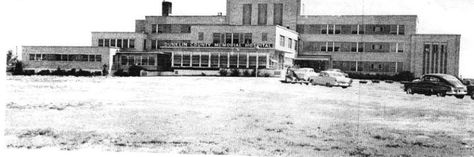
When I was growing up in Kennett, Missouri, in the ’50s and ’60s, the Dunklin County Memorial Hospital was… an institution. That’s where I had my tonsils removed and that’s where everybody went if you needed to be in the hospital. If you needed some kind of special treatment or care you probably went to one of the hospitals in Memphis, 100 miles away. The hospital closed last year, pushing the little town that much closer to… I’m not sure what.
“We’re having probably three to five more deaths a month without having the hospital here,” he said. “I had a 35-year-old patient who started having chest pain. He needed to get to an emergency room but died on the way to the hospital. There are multiple deaths due to not having emergency services, mostly from heart attacks and accidents. There’s nowhere to stabilise them. If they’re having a heart attack, they’re dying before they get to the hospital. Plus the infant mortality rate has increased since the hospital closed.”
It’s happening all over rural America. This article tells the story. As does RP.
UPDATE (5/15/20): Company announces plans to re-open hospital in Missouri’s poorest region. “Nine of the state’s ten poorest counties are in southeast Missouri, and the Bootheel is the state’s poorest region.”
Kennett, Missouri 1961
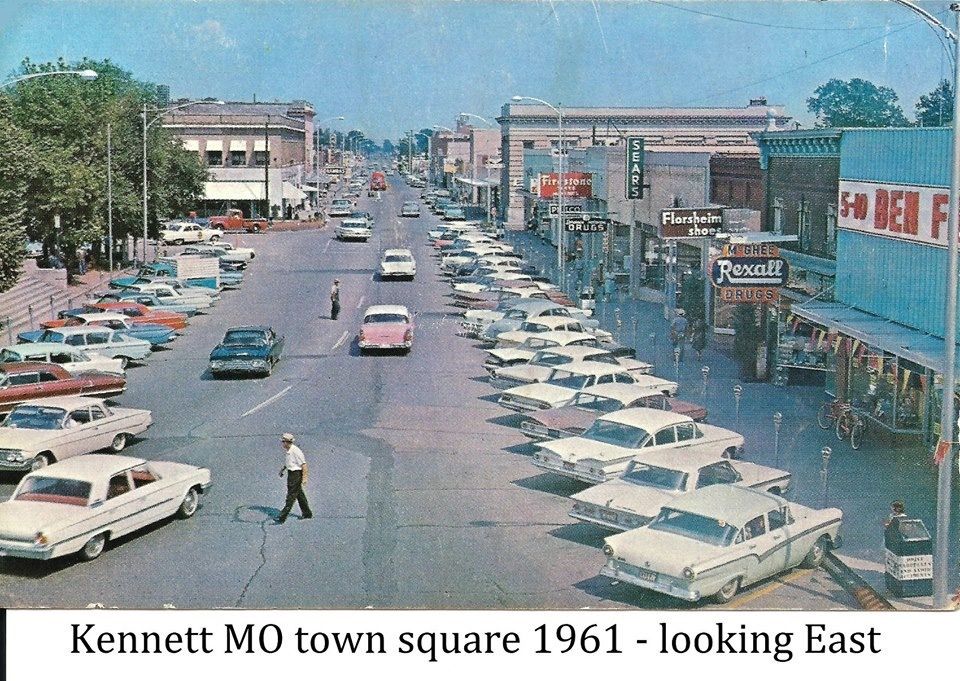
I was 13 years old in 1961. Eighth grade? Kennett was a real-life Mayberry in the 50’s and 60’s. A great place to grow up.
Richard Peck (1948-2019)
 Richard was a poet, performance artist, sculptor, philosopher, film maker, handy-man and life-long friend.
“Picture a very swift torrent, a river rushing down between rocky walls. There is a long, shallow bar of sand and gravel that runs right down the middle of the river. It is under water. You are born and you have to stand on that narrow, submerged bar, where everyone stands. The ones born before you, the ones older than you, are upriver from you. The younger one stand braced on the bar downriver. And the whole long bar is slowly moving down that river of time, washing away at the upstream end and building up downstream.
Your time, the time of all your contemporaries, schoolmates, your loves and your adversaries, is that part of the shifting bar on which you stand. And it is crowded at first. You can see the way it thins out, upstream from you. The old ones are washed away and their bodies go swiftly buy, like logs in the current. Downstream where the younger ones stand thick, you can see them flounder, lose footing, wash away. Always there is more room where you stand, but always the swift water grows deeper, and you feel the shift of the sand and the gravel under your feet as the river wears it away. Someone looking for a safer place to stand can nudge you off balance, and you are gone. Someone who has stood beside you for a long time gives a forlorn cry and you reach to catch their hand, but the fingertips slide away and they are gone. There are the sounds in the rocky gorge, the roar of the water, the shifting, gritty sound of the sand and the gravel underfoot, the forlorn cries of despair as the nearby ones, and the ones upstream, are taken by the current. Some old ones who stand on a good place, well braced, understanding currents and balance, last a long time. Far downstream from you are the thin, startled cries of the ones who never got planted, never got set, never quite understood the message of the torrent.”
–From John D. MacDonald’s Pale Gray for Guilt
UPDATE 6/16/19: Said goodbye to RP yesterday. His remains were cremated and placed in a .50 caliber ammo box (complete with small Confederate battle flag sticker) along with assorted mementos (a two dollar bill; some Risk pieces; etc). The ammo box was placed in the back of a new Cadillac hearse and transported to Piggott, AR for burial (a compromise with Rebecca). At the conclusion of the graveside service the minister reached down and blessed the ammo box. The End.
Professional wrestling is returning to Kennett
In the hierarchy of professional sports, professional wrestling is just below shooting rats at the town dump. But for some reason it was extremely popular where/when I grew up in the 50’s. Live coverage every Saturday morning by one of the Memphis TV stations. And these guys would take the show on the road, performing before packed houses. (I wrote about this ten years ago) And they’re back!
“Professional wrestling is returning to Kennett. Fall Brawl presented by American Hostile Championship Wrestling is slated to take place at the American Legion Building in Kennett Oct. 6. American Hostile Championship Wrestling owner Mark Manley said wrestlers scheduled to be on the six-fight card include: WWE Hall of Famer Koko B. Ware, Memphis Wrestling icon Superstar Bill Dundee, young up-comer Marko Stunt, the Missouri Bad Boys, Austin Lane, Meklakov, Naughty by Nature Rude and Kennett native J.T. Ice.”
Please note that Bill Dundee is now 74 years old.
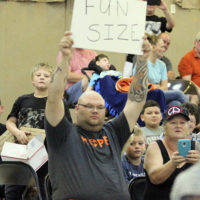
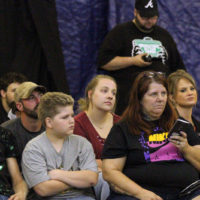
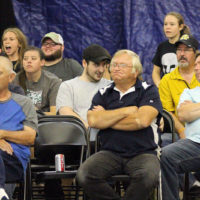
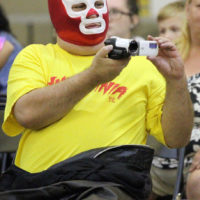
UPDATE 10/9/18: Here’s the follow-up story on the “Fall Brawl” with accompanying photos. And just who are these small town fans of professional wrestling?