
A blogging case study, close to home

I’m always on the lookout for good (or bad) blogging stories. I found one in our own back yard during the last few days. The story isn’t complicated but I think our corporate blog tells it better than I can. Just read the original post and the comments. It’s all there.

I’m really proud of how our company and our CEO has used the blog to explain a difficult decision, and allow interested parties to tell us how they feel about it. I’ve been thinking about how this would have been handled pre-blog.

We might or might not have put out a news release. This had to do with an unpleasant decision. If the public wanted to tell us how they felt about it, they could write a letter or send an email, to which we might or might not have responded.

Whatever communication took place, it would have been slow and not very public. With a well-established corporate blog, our CEO just put it out there. The reasons for the action we took… comments… and his response to some of those comments.

Not everybody is happy with the outcome but nobody can say we haven’t been open about it. As an employee –and blogger– I’m proud of how this was handled.

Full disclosure: My wife works for a law firm that represents one of the companies mentioned in the post and comments.
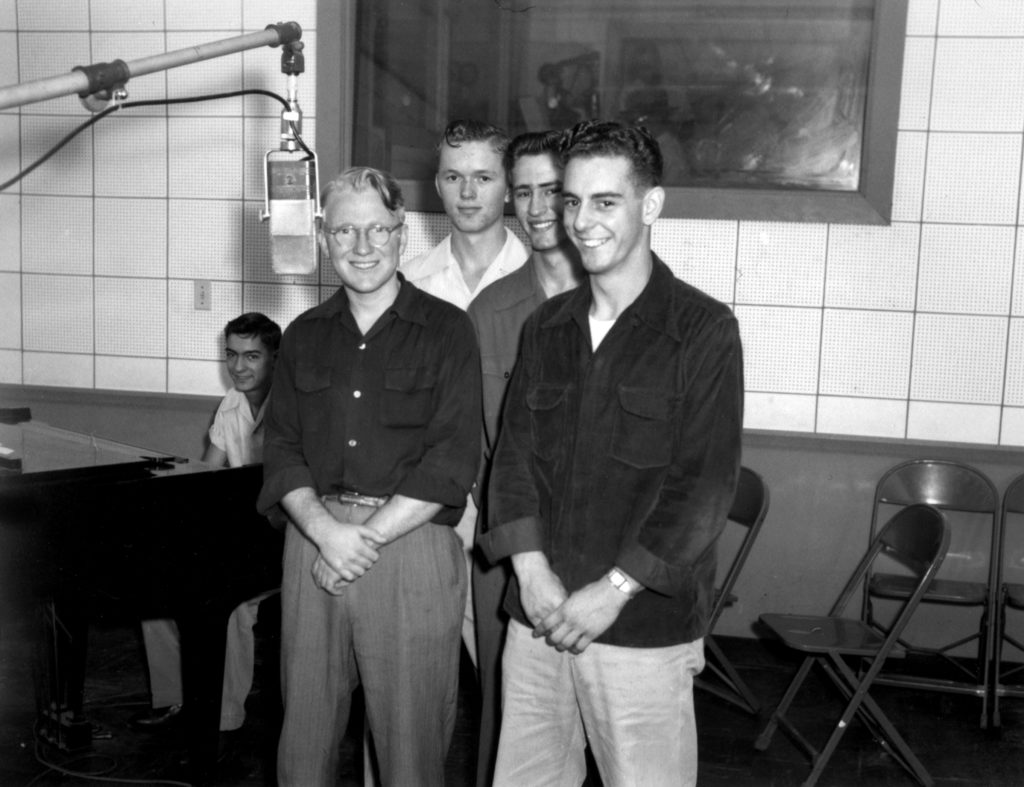
The Senath Lions Quartet

One of the best parts of having a blog is connecting with people. You could argue it’s the only part. One of the first sites I created was a tribute to KBOA, the radio station where my father worked for many years and where I spent a dozen years. The site is packed with great photos, most of which were taken by the late Johnny “Mack” Reeder.


I captioned one of those photos  “Unknown Hillbilly Band” because I had no idea who they were. Now I do, thanks to an email from one of the men in the photo, Charley Crawford:

“The name of the group is “The Senath Lions Quartet” and this was in 1951. We started the quarter in Senath High School. The members are left to right front, Charley Crawford, Jimmy Milligan, behind Jim, right to left are Charles “Tod” Horner, James Allan and David Adams at the piano.  We were on the radio every Saturday morning at 10:30 a.m., sponsored by the Senath Merchants.”

Charlie was also a member of The Foggy Mountain Boys Hillbilly Band in 1948.

CORRECTION: I assumed –incorrectly– Charlie was referring to The Foggy Mountain Boys featuring Flatt and Scruggs. Charlie and friends were in a local band of the same name.

The Foggy Mountain Boys was an influential bluegrass band that performed and recorded during the 1940s, 1950s, and 1960s.

How long to lose your blog readers?

The J-Walk Blog is very popular. For all the usual reasons. He writes well about interesting stuff and he posts every day. Usually several times a day. John Walkenbach (Mr. J-Walk) was called away to a meeting and didn’t post for a week. Upon his return, he checked his stats and did a little trending to determine he would lose all of his many readers in 17 days if he stopped posting altogether. One assumes it would take less time for blogs with fewer readers. I wonder how long –if at all- it would take for visitors to return. And why would they?

In search of radio’s romance, longing and connection

From a speech by NAB President-CEO David Rehr at the National Association of Broadcasters Conference:

“Rehr then turned to radio, first talking about a widely reported BusinessWeek column by Jon Fine, headed “Requiem for Old-Time Radio.” Though Fine believes radio isn’t well-suited to moving its business model online, he wrote that he remembers radio with “ridiculous fondness” and recalled “huddling with it long past bedtime, the volume set low, hoping to hear something I loved.”

“Rehr said, “Ladies and gentlemen, that is romance, that’s longing, that is a connection. Listeners still want what they’ve always wanted. Technology hasn’t changed that — it has just changed the devices of delivery.”

According to Mr. Fine, Mr. Rehr missed the point of his article:

“You don’t need to huddle with a radio long after dark to hear new music; you can form that romance or connection with a hundred other things.”

Fallout shelter radio ads

I remember well the back-yard fallout shelter craze (mania?). The family that lived behind us had one. It was clearly large enough for just one family but it was considered uncool to talk about who would live and who would die. And we lived in the landing approach path to the Strategic Air Command base in Blytheville, AR. Generally considered a prime target for a Russki ICBM.

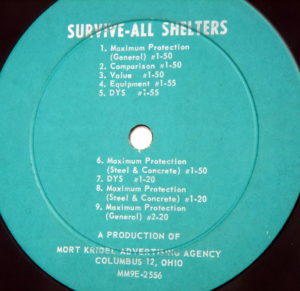
The nice folks at DinosaurGardens.com have posted some creative radio spots for Survive-All Fallout Shelters. (“Civil defense approved, FHA approved, no money down, five years to pay!”)

  1. Maximum Protection (General)
  2. Comparison
  3. Value
  4. Equipment
  5. DYS
  6. Maximum Protection (Steel and Concrete)
  7. DYS (short)
  8. Maximum Protection (Steel and Concrete) (short)
  9. Maximum Protection (General) (short)

Poor Man’s Steadicam – Take 3

My friend Jamie seems to be getting much better results from the Poor Man’s Steadicam, so I have to conclude I haven’t mastered the tool yet. In the short video above, notice how smoothly they come down the stairs and even when Jamie starts jogging, the shot remains very steady. Well done, Jamie and Anonymous Cameraman.

Twitter growing on me

It started working for me when I stopped thinking about what I was doing and turned my attention to what my friends are doing. I’m only “following” a few people so far (Jamie, David, Andy, Kevin, Jackie, George). For me, this works a little like the Buddy List in iChat. Knowing that George is attending a conference in California or that Kevin is looking for interns, is useful or –at the very least– interesting.

I’m still getting the hang of Twitter but if you are a Twitter-er, let me know so I can “follow” you. Trust me, it’s not as dip-shitty as it sounds.

Internet helps doctor get back to basics

A week ago I posted about doing an iChat consultation with my new doc. Tonight I found this story about a doctor in Washington who has taken his entire practice online:

Dr. Howard Stark’s office is quiet. Very quiet. No patients sit in his waiting room. No receptionist answers the telephone. Stark does not have a receptionist. Instead, he and his assistant Michele Norris-Bell check e-mail alerts on handheld devices and — between seeing patients in person — on a desktop computer.

Stark has moved most of his practice, based in Washington, onto the Internet and he couldn’t be happier. Since he started his Web-based service two years ago, he has received 14,000 e-mails. And yet, he feels more like an old-fashioned family doctor in a small town than a modern, harried physician.

‘ "That’s 14,000 phone calls that we did not have to answer and that patients did not have to make," ‘ Stark said.

He does not charge for answering an e-mail. "You have to come in one time a year for an annual exam," Stark said.

The idea –which makes more sense if you read the full story–  came to him while booking a flight.

"I was sitting here and making a seat assignment to go to Miami. And I said, ‘why is it I can make a seat assignment four months in advance and my patients can’t book a half-hour appointment? I started thinking of other things that could be done online."

For instance, written instructions on how to prepare for a colonoscopy, general health tips, or information on Lyme disease.

Which reminded me of the Living Healthy Podcast.

I really think we’ll be seeing more of this.

Grokking new iMovie

My first brush with the new iMovie was bumpy. I’m looking forward to taking another run at it, after watching the first of a two-part tutorial from from ScreenCasts Online.

ScreenCastsOnline is a weekly video podcast of computer based video tutorials. The video tutorials cover many different topics from week to week but predominantly cover mac related subjects. The video tutorials are in the form of "screencasts" which are basically videos of screen captures demonstrating a particular application or service, with a spoken commentary explaining what is happening on screen.

Don McAllister’s easy-to-follow demo/tour was just what I needed. I’ll still use iMovie HD (the previous version) for a lot of stuff, but when I need to throw something together quickly…

I can’t recommend ScreenCastsOnline highly enough. It’s a free podcasts but I recommend the Extra! membership ($50 a year).

Game Day 09.01.07

One floor below my office is the Learfield Sports Operations Center. On Saturday, the place was hopping for the opening weekend of the college football season. Our guys produce 19 college sports broadcasts here (and some more off-site).

The play-by-play audio comes back to Jeff City where our producers and board operators mush it all together and send it back out –via satellite– to about 800 radio stations from coast to coast. Think shuttle launch but more people will be pissed if something goes wrong.

They start back in May and then work their asses off for the next four months. I won’t even try to mention everyone by name. And this short (6 min) video doesn’t begin to capture the energy (and sometimes tension) of “game day.” But Broadcast Operations Manager Tom Boman does a nice job of summarizing some of what it takes to get all these games out to stations.

Once again, shot with the Casio EX-S770 and edited in iMovie.