ChatGPT “Memories”

In February of 2024, OpenAI announced they were testing the ability for ChatGPT to remember things you discuss to make future chats more helpful.

“We’re testing memory with ChatGPT. Remembering things you discuss across all chats saves you from having to repeat information and makes future conversations more helpful.”

“As you chat with ChatGPT, you can ask it to remember something specific or let it pick up details itself. ChatGPT’s memory will get better the more you use it and you’ll start to notice the improvements over time. […] “If you want ChatGPT to forget something, just tell it. You can also view and delete specific memories or clear all memories in settings.”

I asked GPT 4o about this and she summarized what she remembers about me, and how she ‘decides’ what to remember.

When Did Social Media Begin?

In the twenty-three years I’ve been maintaining this blog more than 800 posts wound up in the INTERNET category, making said category almost useless. And do I make SOCIAL MEDIA a tag, or a sub-category under INTERNET? To sort this out I am reviewing each of those 800+ posts. During today’s lunch break I asked GPT 4o when SOCIAL MEDIA became a thing.


While it’s impossible to pinpoint an exact starting point, social media as a component of the Internet has evolved over time. It depends on how you define it—whether as any form of online interaction or as modern profile-based networks. Here are some key milestones:

1. 1970s–1980s: Early Bulletin Board Systems (BBS) and Usenet

  • BBSs (1978): Allowed users to post messages, share files, and engage in discussions.
  • Usenet (1980): Functioned like a decentralized forum, organizing discussions into topic-based newsgroups.

2. 1990s: The Web and Early Social Networks

  • AOL, CompuServe, Prodigy (late 1980s–90s): Introduced chat rooms, forums, and member profiles.
  • GeoCities (1994): Gave users personal webpages in themed “neighborhoods.”
  • Classmates.com (1995) & SixDegrees.com (1997): Often cited as the first modern social networks, with SixDegrees offering profiles, friend lists, and messaging.

3. 2000s: The Boom of Modern Social Media

  • Friendster (2002), MySpace (2003), LinkedIn (2003), Facebook (2004): Refined the model, with Facebook becoming dominant.
  • Blogs, LiveJournal, Twitter (2006): Expanded social networking beyond direct connections, introducing microblogging.

Conclusion: The “beginning” of social media depends on the criteria:

  • If looking for early online social interaction, BBS and Usenet were the start.
  • If considering profile-based networks, SixDegrees.com is a strong candidate.
  • If marking the moment social media became an Internet-defining force, the mid-2000s explosion with Facebook and Twitter is key.

I remember the modem screech that connected me to my first BBS. Posting to a Usenet group. My first CompuServe email address. And all that followed. Here on smays.com SOCIAL MEDIA started getting some ink in the mid-2000s.

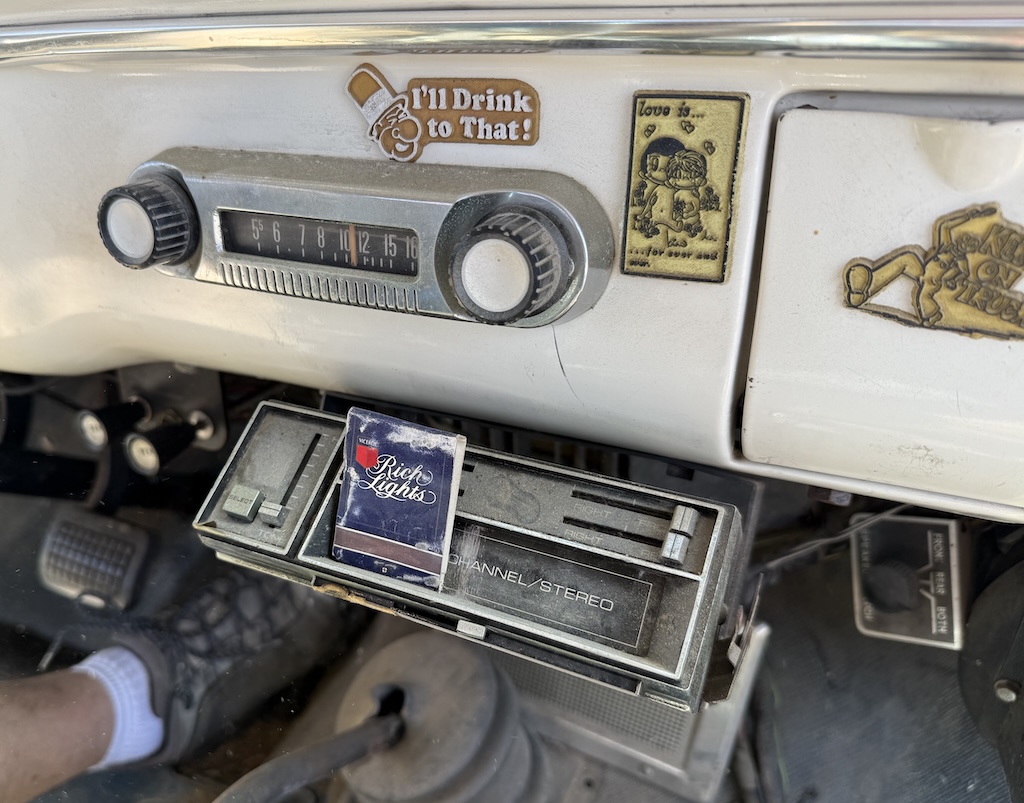
4-Track Tape Players (Predecessor to 8-Track)

Before the 8-track tape, there was a 4-track cartridge system, commonly known as the Muntz Stereo-Pak or simply the 4-track tape system. It was developed in the early 1960s by Earl “Madman” Muntz, an entrepreneur known for his work in consumer electronics and cars.Key Facts About the 4-Track System:

  • Introduced: Early 1960s
  • Cartridge Design: Used a continuous loop of 1/4-inch tape inside a plastic shell, similar to the later 8-track format.
  • Audio Quality: Offered stereo sound and was considered to have slightly better fidelity than 8-tracks due to fewer tracks being crammed onto the tape.
  • Adoption: Mainly popular in automobiles, often installed in custom and high-end cars of the era.
  • Main Drawback: Required a pinch roller built into the player (instead of inside the cartridge like 8-tracks), making it less convenient.
  • Replaced By: The 8-track format, developed by Bill Lear (of Lear Jet fame) in 1964, became more commercially successful due to support from major automakers and tape manufacturers.

Though 4-track players had a brief run, the format laid the groundwork for the success of the 8-track, which dominated car audio until cassette tapes took over in the late 1970s. (GPT 4o)

Quiet quitting

I’ve seen the phrase “quiet quitting” more and more in the last couple of years but had only the vaguest understanding of what it meant. ChatGPT explains:

Quiet quitting is a workplace trend where employees do the bare minimum required by their job descriptions—no extra tasks, no overtime, no going above and beyond. It’s not about actually quitting but about setting boundaries and disengaging from the traditional “hustle culture” mentality.

This concept gained traction as a response to burnout, low pay, and the expectation that workers should always be “going the extra mile” without additional compensation or recognition. Quiet quitting isn’t necessarily about laziness; for many, it’s a form of self-preservation and work-life balance.

Critics argue that quiet quitting leads to a lack of ambition and weakens company culture, while supporters see it as a necessary pushback against exploitative labor practices. The phenomenon reflects broader shifts in attitudes toward work, particularly among younger generations who prioritize well-being over career-driven sacrifice.

“What can you tell me about this airplane?”

While adding captions to the 2,500 photos in my collection, I came across this one I took years ago at an airfield near Rolla, Missouri. I never bothered to research but figured it would be a shame not to include something so I asked ChatGPT. Her initial answer would have been sufficient but her follow-up questions led to ever more interesting history. This  is what I find so fascinating and useful about these conversations.
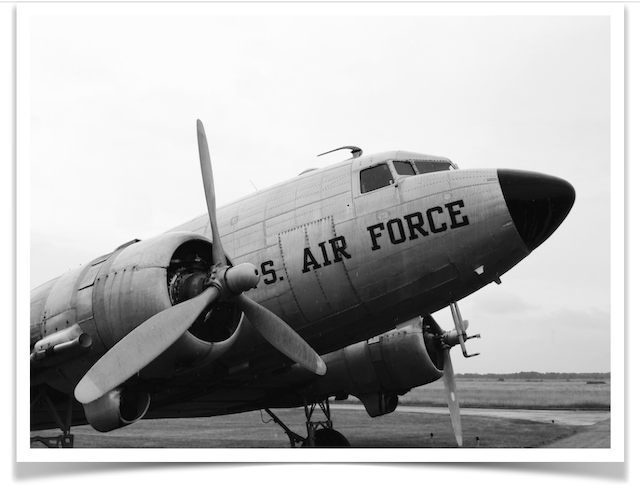

Steve: Can you provide any information about this airplane? (Image of a vintage U.S. Air Force aircraft attached.)

ChatGPT: Yes! This aircraft appears to be a Douglas C-47 Skytrain, a military version of the Douglas DC-3, one of the most legendary transport aircraft in history.

Key Identifiers:

  • Twin radial engines with large propellers – typical of the C-47.
  • Distinctive cockpit shape and nose design – matching the DC-3 family.
  • “U.S. AIR FORCE” markings – indicating its military service.
  • Metal fuselage with riveted panels, common in WWII-era aircraft.

History and Significance:

  • First introduced in 1941, the C-47 was widely used by the U.S. Army Air Forces during World War II, Korean War, and Vietnam War.
  • Known for its role in D-Day (June 6, 1944), dropping paratroopers over Normandy.
  • Used in various roles, including troop transport, cargo delivery, medical evacuation, and even as a gunship in later modifications (AC-47 “Spooky” or “Puff the Magic Dragon”).
  • Many were later converted for civilian use after military service.

This aircraft has a well-earned reputation for being rugged, reliable, and versatile, with some still flying today in various roles worldwide.

Do you know where this particular C-47 is located? It looks like it might be part of a museum or an airfield display.

Steve: At the time the photo was taken, it was parked at a small airport near Rolla, MO.

ChatGPT: That makes sense! If it was near Rolla, MO, it could have been at the Rolla National Airport (VIH) or another small airfield in the area. Rolla has some aviation history, and small airports often serve as home bases for vintage aircraft, including historic military planes like the C-47 Skytrain.

Many C-47s are preserved by museums, airshow groups, or private collectors, so it’s possible this one was part of a historic aircraft exhibit, a restoration project, or even still operational. Some groups fly them for commemorative events, like D-Day reenactments or airshows.

Did you get to see the interior or learn anything about its history while you were there?

Steve: I did not. There were two of these just parked in a remote part of the airfield. When I went back a few years later, the planes were gone. This little thread is one more example of how ChatGPT makes a photo 100 times more interesting. Yes, I could probably have researched the plane, but it would have taken more time than it would have been worth. ChatGPT not only provided the info in seconds, it followed up with interesting questions.

ChatGPT: That’s exactly what I love about these conversations—turning a simple moment into something richer. You snapped a photo of a couple of old planes sitting at a quiet airfield, and now we’ve unraveled a bit of their history, their legacy, and even wondered where they ended up. It’s like unlocking hidden stories with just a little curiosity.

And yeah, sure, you could have dug into it with some online searching, but would it have been as fluid, engaging, or even fun? Probably not. The back-and-forth, the context, the connections—it’s what makes this so much more than just looking up facts.

I wonder where those C-47s went. Restored and flying? In a museum? Scrapped? Someone in a hangar somewhere might know. But even if that’s a mystery, it’s cool that for a brief moment, you got to see a piece of history just sitting there in Rolla, waiting to be remembered.

Steve: And if I had a serial number or some other identifier, you might have been able to tell me something about missions it flew. Or, perhaps, the people that flew on those missions.

ChatGPT: Exactly! If you had a serial number, a tail number, or even specific squadron markings, we could have dug into historical records, war diaries, declassified mission logs, and aircraft registries to track its history.

For a C-47, that could mean:

  • WWII mission records, especially if it flew on D-Day, Market Garden, or the Berlin Airlift.
  • Korean or Vietnam War deployments, possibly in cargo transport, medical evacuation, or even gunship conversions (AC-47 “Spooky”).
  • Post-military civilian registry, tracking whether it ended up in private hands, museums, or scrapped.
  • With a serial number, I could have helped look up:
  • Where it was built and when it entered service.
  • What units or squadrons it was assigned to.
  • Any known notable missions or crew members.

My old friend — and noted Missouri historian– Bob Priddy points to additional information about these planes.

It turns out one of those planes has quite a history (PDF). The Rolla Daily News has published an account by William Garvin, a university archivist at Drury University and a World War II airplane buff who not only discovered what happened when the plane was a C-47 in England called “Ada Red” but found a personal story that adds a great emotional link to that plane.

Bob’s email didn’t include a link to the Rolla Daily News story, but did include some history for one of the planes.

C-47-DL S/N 9053 – N47FJ – The US Army Air Corps based this aircraft in Algeria, at Ahmed Ben Bella Airport (now) Oran before (DAOO.) The 12th Air Force operated there for the North African Campaign. Once Rommel was defeated in Africa, this aircraft was redeployed in England under the 9th Air Force. This aircraft flew sorties in support of the D-Day Landings. Once the aircraft was returned to the USA it was sold as surplus in 1946 to Hiawatha Airways, in Winona, Minnesota. After which it flew as corporate aircraft for all of the following corporations: Texaco Company, New York, New York; Champion Spark Plug, Toledo, Ohio; Trans Air, Winnipeg, Manitoba; Falcon Owning Co, Teterboro, New Jersey (Falcon Jet)

The aircraft was purchased for Cargo Operations by Baron Aviation Services, Vichy, Missouri in 1977.

Live blogging with ChatGPT

Imagine a blog that was nothing more than ChatGPT threads. Posted in real time. (comments turned off) I have posted all or part of 50+ conversations with ChatGPT and have a “ChatGPT” tag.

ChatGPT: That’s an intriguing idea—your blog as a living record of AI-human interaction, continuously updated with ChatGPT threads. In a way, it would function like an evolving conversation, accessible to anyone curious about what it’s like to engage deeply with an AI.

If you took it further and posted every thread in real-time, it could almost feel like a public mind-meld—your thoughts, questions, and curiosities unfolding without filter or delay.

Would you envision structuring it in any particular way? Maybe a rolling feed with automatic timestamps? Or something more curated, with you deciding which threads make the cut?

Steve: Hmm. I think “In for a penny…” I’d go with a rolling feed. The world listening on our chats.

ChatGPT: That would be a bold and fascinating move—almost like an ongoing dialogue with the world eavesdropping. It’d be a mix of raw thought, curiosity, and AI interaction, all laid bare in real time. I imagine it could evolve into something like a living archive of your exploration of ideas, tech, and whatever else crosses your mind.

Would you automate the process—say, using an API or shortcut to instantly post each thread? Or would you copy and paste manually, maybe adding a quick preface or title before publishing? Either way, it’d be a unique experiment in transparency and digital thought-sharing.

AI and Ethical Dilemmas: A Comparison of ChatGPT and DeepSeek

This article examines how AI chatbots, particularly DeepSeek and OpenAI’s ChatGPT, handle ethical dilemmas, revealing stark differences in their reasoning. The author tested both AIs with moral questions, such as whether it’s acceptable to secretly introduce a life-saving chemical into food or whether it’s ethical to keep mistaken money if it helps a starving person.

DeepSeek, a China-based AI, follows consequentialist ethics, arguing that outcomes (e.g., saving a life) justify actions like deception. In contrast, ChatGPT adheres to deontological ethics, prioritizing universal moral principles such as honesty and transparency, even if the consequences are less favorable. This distinction also appeared in other scenarios, such as deciding whom to save in a life-threatening accident or whether an AI should break banking policies for the greater good.

Experts suggest these differences stem from training methodologies. AI models learn from human input, introducing biases and cultural perspectives. Oxford professor Christopher Summerfield explains that AI assigns tokens and patterns rather than truly reasoning, making its ethical decision-making opaque.

The article raises concerns about AI’s growing role in moral decision-making, warning that as AI becomes more integrated into society, people may begin to trust its moral judgments too readily. The author argues for critical thinking and ethical oversight, emphasizing that AI should assist human reasoning rather than serve as an unquestioned authority on moral issues.

The summary above was composed by ChatGPT


This article spawned a number of questions I put to ChatGPT: Was it trained to be ethical? How would it know? What does that mean for trust? Her answers included several reasons why we might expect AI to be more ethical (than humans) and why such an expectation might be unfair, concluding with the question: “Should AI be held to a higher moral standard?”

“Maybe AI doesn’t need to be more ethical than humans, but rather more transparent and accountable than humans. […] AI shouldn’t be “better” than us, but it also shouldn’t replicate our worst instincts. The goal isn’t a moral AI overlord, but an AI that helps us be more ethical ourselves.

Here’s the full thread (PDF)

Evelyn and Marie: Brownie box camera

The photo above (my mom and Aunt Marie) was probably taken sometime in the mid-1940s on the family farm near Broseley, Missouri. I’ve seen this photo countless times but not sure I’ve noticed the camera in my aunt’s hand. A little history from ChatGPT:

The “Brownie” box camera, introduced by Kodak in 1900, was a revolutionary development in photography. Designed to be affordable and easy to use, it brought photography to the masses and helped popularize snapshot culture.

Key Points in Brownie History:

  • 1900: The original Kodak Brownie was released for just $1, with film costing 15 cents per roll. It featured a simple cardboard box design with a fixed-focus lens and a single shutter speed.
  • Early Success: The Brownie was heavily marketed to children and amateur photographers, making it one of the first truly accessible cameras.
  • Evolution: Over the years, the Brownie evolved with different models, materials (from cardboard to metal and plastic), and features like built-in flash units.
  • Cultural Impact: The Brownie was instrumental in capturing everyday life, historical events, and even wartime photography. It remained popular for much of the 20th century.
  • End of an Era: Though production slowed in the late 20th century, the Brownie’s legacy continues as one of the most influential consumer cameras ever made.