What did we do before computers?

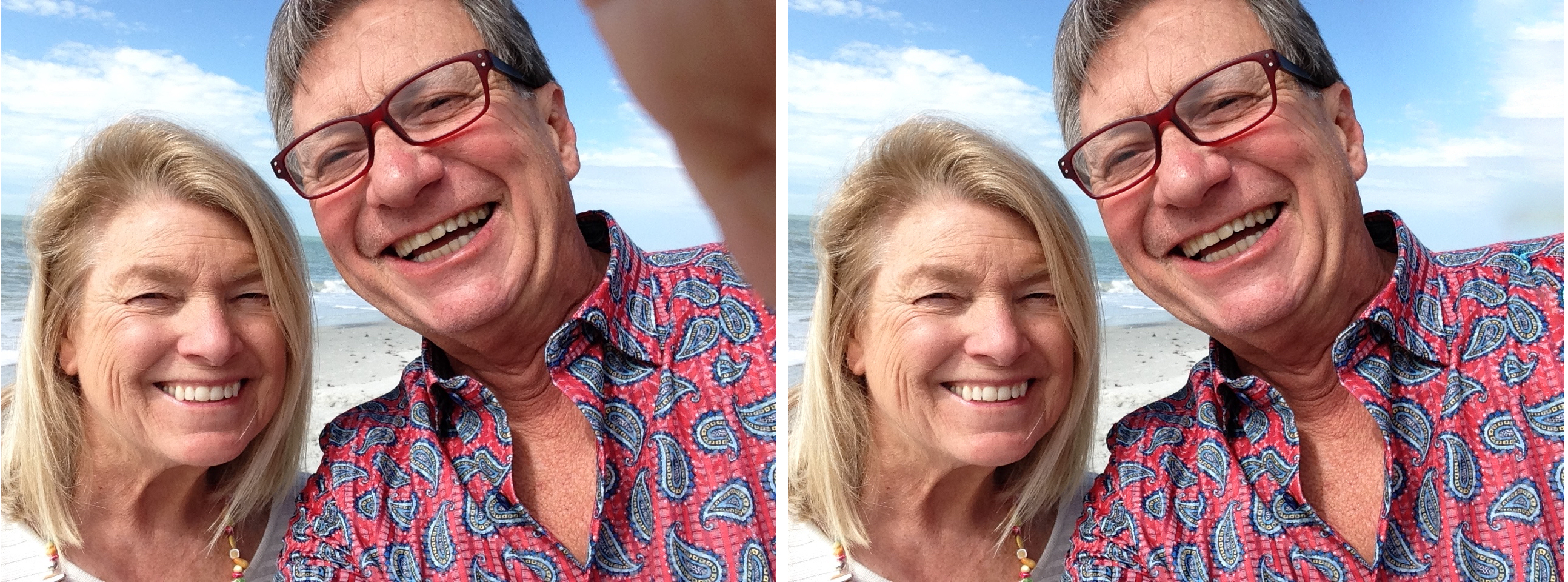
It’s a question I silently ask myself from time to time, so I thought I’d try to reconstruct how I (and others) did my job when I first came to Learfield in 1984. (This photo was taken in 1985 and I’m including it with this post as a memory aid. Annotated version.)

It might be easier to to start with what we didn’t have. I’m going to say no computers even though there was a Lisa II (?) running VisiCalc. No fax machine. No mobile phones.

The bulk of my job was dealing with affiliate radio stations and there was only three ways to do that:

1. Call them on the phone
2. Send them a letter in the mail
3. Get in the car and go see them in person

Each week we would send stations a “log” showing which commercials would be airing in each of the news or farm programs we sent them via satellite. One of the secretaries had drawn a table (6 columns for M-Sa and 13 rows for the number of shows) using a ruler. This was copied (we had a copier) each week and the blank table was rolled into an IMB Selectric typewriter and the names of the sponsors typed in.

This had to be completed by Wednesday of each week in order to get them mailed and to the stations in time for their “traffic” person to insert those commercials into THEIR log for the coming week. And delay and the system fell apart.

The photo above reminds me I used a manual typewriter often enough to keep it close. The computer in the photos is a Zenith and I was the only person in the company with his own personal computer.

We also had a big IBM Displaywriter that allowed us to do mail-merge documents. Amazing tech for the time.

Next to my phone is a Rolodex with all of my contacts, each typed on the big Royal but continuously updated with scratch-throughs and margin notes. If you got fired, you wanted to have a copy of your Rolodex.

If –god forbid– we needed to get information to every network affiliate “fast,” someone had to call each station, one at at time.

One of the tools I relied upon most was my big map. You can’t see them but there is a pin showing the location of each radio station on the network. It was a thrill to add a new pin and agony to remove one.

Long before Google Docs, there was the bulletin board for all the important lists. (this was not portable)

Years later we got our first fax machines, even though most of our stations didn’t have them. We knew they would. Someone stood at the machine and keyed in the name and phone number of every radio station (or advertiser). When you wanted to blast a fax out to a “list,” you fed the document in and it called each number, transmitted the facsimile; printed a “receipt” and then called the next number on the list. It was wonderful. We didn’t have to wait 3 or 4 days for the USPS.

And it got better. As we got more computers and modems, programs like WinFax could do the job of a fax machine but with far less effort and with much greater speed. We could keep a station’s fax machine humming all day and all night, burning up expensive rolls of thermal paper. The term “spam” was years in the future.

Now we post information to our websites and stations download at their leisure. We communicate with them on Facebook and Twitter and all the rest. Email is instantaneous.

Will it get faster/better/easier still? Hard to imagine how but I assume it will

Learfield videographers

When I started messing around with putting video online, I was one of the few in our company doing so. Oh, there were lots of folks who knew more about video than I, but the crude tools and results in those days wasn’t worth the effort to most folks. Today, we have lots of talented young men and women doing video. I’m discovering more every day.

Here’s a nice one by Allison Blood, one of the new reporters in or Missourinet newsroom.

Slightly revised Gadekunst from Allison Blood on Vimeo.

It would be a sad thing if, after 15+ years of Internet, I was the go-to guy for putting a video clip on line. Which was the case for a while. But no more. I think I’ll use this post to link to the work of these talented men and women.

Revisiting Picassa

I’m a long-time flickr fan. Have a couple of thousand photos in my photostream. Shoot, I’m paid up until 2013. It’s a great service. And yesterday I downloaded (copied) all of those photos and posted them to my Picassa account.

The geek-o-sphere is buzzing (wait, no good)… is all atwitter (uh, that won’t work)… talking about Google+, the new social initiative from Google. If you haven’t followed this, it’s not important, except to explain why I’m exploring another place to put my photos online.

I’m a big fan of most Google services (Gmail, Reader, YouTube, Calendar, Maps, etc etc) and all of these will –eventually– be tightly integrated with Google+. It dawned on me that photos was about the only thing I was not using Google for.

No one knows if Google+ will be a success but I’m hoping that it is and decided it made sense to bring my pix under the Google tent.

And if you have an invite…

Teflon mind

“The awakened mind is free flowing, natural and well rounded. It’s like Teflon — nothing sticks. On the other hand, the unawakened, ordinary mind is rigid, limited, and sticky like flypaper; the ordinary mind has corners and sharp jagged edges on which ideas get caught, hanging us up. Dualistic thinking is like Velcro; it takes two to tangle. Unitary vision is more like a crystal through which all forms of light can pass unimpeded.”

— Awakening the Buddha Within

The End of Demographics

In small market radio we were thrilled to have research that told us how many men listened to our station compared to how many women. And, of course, the demos: 12+, 18-24, 35-54… I think I missed one but that’s not the point. From 8 or 10 “diaries” in a county we were supposed to extrapolate useful information for out programmers and advertisers. Uh huh.

This article illustrates how much things are changing.

“The rise of mass-produced consumer goods also brought the rise of mass-market advertising. In the 1950s and 1960s, the goal of television was to aggregate the most possible eyeballs for advertisers. In order to convince consumers that an advertising message was relevant to them, consumers had to buy the idea that they were just like everyone else. The year that someone was born will not tell you how likely he is to buy your product.”


Speak when spoken to

I am clearly incapable of remaining silent for 24 hours. I fantisize about this from time to time but can’t summon the will to try it. So I’m wondering if I could go for a day only speaking in response to a direct question. No follow-up queston, I remain mute. I could puss out by allowing me to ask a direct question.

I’d really like to see a transcript of everything said to me and by me for a full day. I’d go through it line by line, deleting stuff that didn’t need to be said. You know there wouldn’t be much left.

Somewhere in the archives there’s a post in which I speculate a word rationing plan. I get 1,000 words alloted for every 24 hours. My iPhone app counts my words and gives me updates on remaining. Once gone, can’t talk. Have to rely on 100 pre-recorded phrases to interact with others. Would the quality of my discourse go up given such a limitation?

Stay tuned.

“Threads of advertising-sponsored content”

“Advertising is becoming content, not message. Or, more specifically, the message is knit into the content.  Under that scenario there is no 30-second spot per se, there are simply threads of advertising-sponsored content.

Creating “content that people choose to watch (and share)” (and listen to) is the job of every company that calls itself “media.”  This goes to the heart of radio’s revenue model because it is clearly out of step with the direction of clients and their agencies.

This is why the structure of so much of radio is outdated.  We have sellers who move spots and programmers who mix music. What we need amongst these are content creators who match consumers with clients in the presence of our brands by bringing compelling ideas to life.”

— Mark Ramsey Media

Shortmail

Shortmail.com is designed to create a digestible inbox. By limiting messages to 500 characters, Shortmail is “stressing conciseness.” Like Twitter, Shortmail features a character counter which tracks each letter typed–reach the max, and Shortmail will not allow you to send the message. The same restriction applies to messages received. — More at FastCompany

You can Shortmail me at: smaysdotcom@shortmail.com