
“Thousands of special operatives, sent back in time from the future, are tasked with preventing the collapse of society. These operatives, known as “travelers”, take over the body of a 21st century individual via a “transfer of consciousness”; to minimize impact on the timeline, it is performed moments before the person’s “recorded time of death”. The transfer requires the exact location of the target; smartphones and GPS have made this possible only from the early 21st century onward. Prepared using social media and public records concerning their targets, small teams of travelers must maintain their hosts’ pre-existing lives as cover while carrying out missions, dictated by their “Director” in the future, aimed at saving the world from a series of catastrophic events. The Director communicates with travelers via pre-pubescent children used as “messengers”; unlike adults, any child can safely be taken over for a few minutes and then released from control. The show focuses on one team of five travelers, starting from their transfers of consciousness. As the series progresses, changes in the present make significantly unanticipated changes in the future.” (Wikipedia)
Will demand for oil plummet?
It would be like a game of Risk that’s been going on for three days and your three-year-old comes in and gleefully turns the board over. [CNBC]
RethinkX co-founder and Stanford University economist and professor Tony Seba told CNBC’s Street Signs that the rise of self-drive cars will see oil demand plummet, the price of oil drop to $25 a barrel, and oil producers left without the political or financial capital they have today.
“He says we are not going to stop driving altogether, just switch to self-drive electric vehicles, which will become a much larger part of the sharing economy. And these electric vehicles are going to cost less to both buy and run. […] There will be no more petrol or diesel cars, buses and trucks sold anywhere in the world within 8 years. Which also means no more car dealers by 2024.”
“China wants to get electric, plug-in hybrids and fuel cell cars to account for 20 per cent of all auto sales by 2025, while India aims to electrify all vehicles in the country by 2032.”
Atomic Blonde Trailer
The best thing about Alien: Covenant was the preview for Atomic Blonde. Ridley Scott gave us a scifi classic with Alien. James Cameron delivered a darn good follow-up. That would have been the place to stop. Very disappointed in Ridley Scott.
Older people and technology
“By 2050, 22% of Americans will be 65 and older, according to U.S. Census Bureau projections. […] Around four-in-ten (42%) adults ages 65 and older now report owning smartphones, up from just 18% in 2013. Internet use and home broadband adoption among this group have also risen substantially. Today, 67% of seniors use the internet – a 55-percentage-point increase in just under two decades. And for the first time, half of older Americans now have broadband at home. […] Smartphone ownership among seniors whose annual household income is $75,000 or more increased by 39 percentage points since 2013 – 15 points higher than the growth reported among seniors overall.”
Concierge Buyer
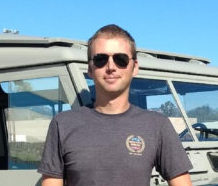 Things have been moving quickly on the Land Rover front. As impressed as I was with the folks at Arkonik, I decided I couldn’t wait 13 months. And the Universe seems to be cooperating with me at every turn. A friend put me in touch a “concierge buyer.” He’s an expert when it comes to vintage vehicles in general and Land Rovers in particular. Let’s call him Mr. Wolf.
“I intentionally keep as small a footprint as possible. I have zero social media, I keep my face off of the internet, etc… I’m one of “those guys” I guess, ha! I don’t mind if you mention me by name, or put up pictures of my vehicles or whatever, but no links to me, please. However, if someone asks (and they don’t seem like a complete toolshed) I would be happy to help other folks.”
“All of my car work comes from word of mouth, friends recommending friends, which works beautifully because it tends to weed out the jerks, and keeps it fun for everyone involved. At the end of the day, I don’t do the car stuff as a real business, I do it because I get to play with all kinds of interesting cars, and I get a huge hobby shop to play in. I am completely, hopelessly in love with vehicles of all sorts. I love researching, repairing, and modifying cars, but mostly I want to use them the way they were intended to be used. If it has four wheel drive, I will find new trails to explore. If it is a sports car, I will get it sideways every chance I get, take it on road trips, and then take it to the race track and wring its neck.”
“Somehow I find a way to incorporate cars or motorcycles into everything I do. Rent a Nissan March to explore the twisty roads outside Tokyo? Yes! Buy shitty Russian motorcycles and ride them through Vietnam, Laos, Thailand, and Cambodia? What could go wrong? Drive a notoriously unreliable Range Rover Classic through Baja with no backup plan? You know it. Heck, nobody died the first time, let’s do it twice! Drive a leaky Alfa Romeo 1,000 miles in the middle of winter to look for fun roads through the redwoods? I think you get the idea…”
“Really what I want is to be an enabler. Put people in the vehicle they have always dreamed of, but never bought, because where do you get the fuel injection tuned on a Morgan Plus 8, anyway?”
I’ll share some of his work in future posts. Before this is all said and done, I plan to jet out to The Coast and meet Mr. Wolf. He promised to take me off-roading.
Roger Ailes Was One of the Worst Americans Ever
From Matt Taibbi’s beautiful tribute to the founder of Fox news.
“Ailes made this the hate-filled, moronic country it is today. We are a paranoid, untrusting, book-dumb and bilious people whose chief source of recreation is slinging insults and threats at each other online, and we’re that way in large part because of the hyper-divisive media environment he discovered.”
TMZ: “Ailes fell at his Florida home 8 days ago and hit his head. We’re told Ailes fell unconscious and his condition went downhill. Our sources say he was put into an induced coma and died Thursday morning.”
When every conversation is recorded
You might have seen a story about an embarrassing recording from 2016:
“There’s two people I think Putin pays: Rohrabacher and Trump,” McCarthy (R-Calif.) said, according to a recording of the June 15, 2016, exchange, which was listened to and verified by The Washington Post.
I don’t care much about the exchange but I would like to know more about how the recording was made. Surreptitiously, one would think. Perhaps a smartphone in a jacket or shirt pocket? Doesn’t sound like the sort of gab-fest reporters would be invited to so it was one of The Boys. Did he know something embarrassing would be discussed? Did he record every such discussion… just in case? And if one guy is doing this, doesn’t it follow others would as well? Every question spawns three more.
Are there meetings where the Alpha Dog demands everyone put their phones in a basket which is placed in another room? Does everyone get a pat-down?
I started the recording app on my iPhone and put it in my pocket (mic up), to see what kind of audio quality I could get. Not bad. Good enough to end a career.
Let’s say I turn on a small jamming device that prevents recording within a 10 foot radius. Could someone on the other side of the room capture so
Arkonik Custom Land Rover Defender
This morning I heard about Arkonik, a company in the UK that does custom restorations of vintage Land Rovers. I submitted my name and email address on their website and within 5 minutes got a call from Tom Maxwell who might just be the best phone salesman I’ve ever encountered. He talked for half an hour but it was all good stuff. A full-on core dump. Where I could get no information from the Cool & Vintage guys, I got more from Tom than I could process. (D90 below is just a sample image from their website)
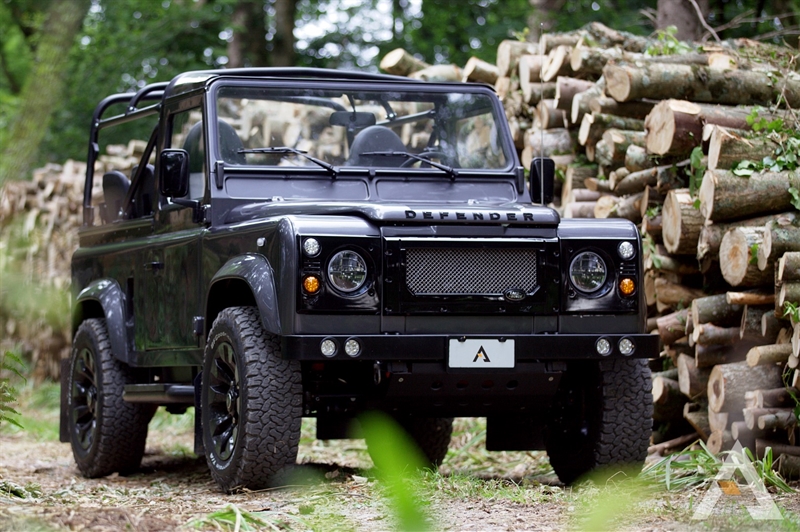
It’s becoming clear I’m gonna drop a bundle if I want to own a Land Rover D90. Did I mention the 12 month wait? This is clearly a seller’s market. Much more like buying/investing in fine art than driving a new Prelude off the lot. Or a bespoke suit on Savile Row. Deep water for a small town boy like me. But I’m hooked. Unless I get unhooked. From the jump Tom (and others) have stressed how much are and attention a 25 year old vehicle demands. It’s really more like buying a Golden Retriever than a truck. So why the hell is the Defender worth so much?
“I’ll tell you why: because it’s so damn cool. Yes, it’s loud, and rough, and slow, and unreliable. Yes, the Jeep Wrangler is better than the Defender in every objective way. But that’s the point of the Defender: it’s unique. It’s special. It’s unusual. The Jeep Wrangler is for people who leave their dealership license plate frame on. For people who drive past six gas stations to get to a Texaco two miles from their house because gas there is three cents cheaper.” (Jalopnik)
Stay tuned.
Apple’s New Campus
A few of my favorite excerpts from Steven Levy’s tour of Apple’s new campus.
“Jobs discussed the walls he had in mind for the offices: “He knew exactly what timber he wanted, but not just ‘I like oak’ or ‘I like maple.’ He knew it had to be quarter-cut. It had to be cut in the winter, ideally in January, to have the least amount of sap and sugar content. We were all sitting there, architects with gray hair, going, ‘Holy shit!’”
“At first, we had no idea what Steve was actually talking about with these pods. But he had it all mapped out: a space where you could concentrate one minute and then bump into another group of people in the next,” Behling says.”
“To withstand earthquakes, the Ring is mounted on huge steel base isolators that ensure the building can move up to 4.5 feet in any direction without losing its vital services.”
“The very toughest challenge came from constructing the giant glass sliding doors for the café—they had to extend from the ground to the roof, a full four stories. Each door leaf is about 85 feet by 54 feet. “The only doors I know of in the world that size are on an airplane hangar,” Diller says.”
“It’s not like we’re asking people to be uncomfortable at work,” she says. “We’re asking them to recognize that part of being connected to the outside is knowing what temperature it is. We don’t want you to feel like you’re in a casino. We want you to know what time of day it is, what temperature it is outside. Is the wind really blowing? That was Steve’s original intention, to sort of blur that line between the inside and outside. It sort of wakes up your senses.”
Try to play the hits

I came of age in the era of push-button radios (in cars). If a station played a song I didn’t care for… (chunk!) I hit the button for another station. Commercials or news? (chunk!) If going through my presets didn’t get me a song, I’d keep punching. When I got a job as a DJ an awareness of that ever-so-brief window was hard-wired. You only had a listener until you aired something they didn’t like. Which was inevitable, of course, especially in a small market like ours. But you tried to play the good stuff and keep the tune-outs to a minimum.
I’ve always (instinctively?) approached online with this in mind. Blogging in the early days and social media later. Will my share ‘hold’ the reader… or tune them out? After all, few of my ‘followers’ know who I am (or care). They’re waiting for the next nugget and if it doesn’t come (often enough) why would they hang around.
I have a theory that most on social media imagine a relationship that doesn’t exist. “They follow me because they care about what’s happening in my life, even the most trivial thought or event.” Maybe. I’m gonna keep playing the hits (or try to).