Were pre-linguistic humans intelligent?

Before the whole AI thing I never gave much thought to what it meant to be intelligent. Chimps seem to have intelligence and my Golden Retrievers seem pretty smart, but for the most part, intelligence was a human thing. Is language a necessary component of intelligence? Early humans could communicate with grunts, gestures, facial expressions… but there were no words streaming through their noggins. So were they intelligent? As I so often do these days, I went to ChatGPT for an answer:


It depends on how we define “intelligent.” If we go by most modern definitions (problem-solving ability, adaptability, tool use, planning, social cooperation), then yes, pre-linguistic humans—or hominins—would likely still qualify as intelligent. Continue reading

What does AI need to know?

The following excerpts are by Tyler Cowen from Eric Topol’s podcast.

The AI is your smartest reader. It’s your most sympathetic reader. It will remember what you tell it. So I think humans should sit down and ask, what does the AI need to know? And also, what is it that I know that’s not on the historical record anywhere? That’s not just repetition if I put it down, say on the internet. So there’s no point in writing repetitions anymore because the AI already knows those things. So the value of what you’d call broadly, memoir, biography, anecdote, you could say secrets. It’s now much higher. 

As a longtime blogger that last line really resonates for me. And I can’t wait for ChatGPT (or some descendent) to “read and remember” all of my blog posts… where you’ll find a lot of posts about books and reading. So this next bit plunked my magic twanger as well.

I’ve become fussier about my reading. So I’ll pick up a book and start and then start asking [ChatGPT] o3 or other models questions about the book. So it’s like I get a customized version of the book I want, but I’m also reading somewhat more fiction. Now, AI might in time become very good at fiction, but we’re not there now. So fiction is more special. It’s becoming more human, and I should read more of it, and I’m doing that.

Google Search Console

When I started this blog (23 years ago) I looked at traffic stats for a year or two but I never had more than a few hundred visits and, in time, I stopped paying attention. I submitted my url to Google so it could provide some data and  I still see a report once a month. But I never bothered to understand the numbers. I decided to see what ChatGPT could tell me about these reports.

1. Clicks (1.18K):
Roughly 1,180 people clicked through to your site from Google Search in April. That’s a solid number, especially for a personal blog. It suggests your content is not only discoverable but also compelling enough for users to want to visit.

2. Impressions (68.3K):
Your site showed up in Google search results 68,300 times. This indicates that your posts are being indexed and matched to a wide range of search queries. Even if users didn’t click, this visibility is valuable for name recognition and long-tail content discovery.

3. Pages with First Impressions (258):
Google estimates that 258 different pages on your site were seen in search results for the first time this month. That likely reflects continued crawling/indexing of your long archive—and possibly good SEO hygiene (internal linking, metadata, etc.).

Overall Impression:
That’s a healthy level of engagement for a blog that’s been publishing for decades. It suggests that your archive still has relevance, and people are discovering it. You might consider checking which pages are getting the most traction—could be a good prompt for future posts or curation.


1. “Older Than”

Clicks: 227
URL: https://www.smays.com/2017/07/older-than/
Interpretation: This piece clearly hits a nostalgic or reflective nerve. Either the title draws curiosity or it’s ranking well for age-related queries. If it’s got broader appeal (e.g., cultural references, humor, aging), consider linking to it from newer posts or expanding it into a series.


2. “The Jackpot Trilogy”

Clicks: 84
URL: https://www.smays.com/2024/09/the-jackpot-trilogy/
Interpretation: This one’s probably pulling in folks searching for William Gibson’s work. Given the niche audience for speculative fiction, 84 clicks is meaningful. Might be worth updating the post occasionally or adding related tags so it stays visible in Google’s index.


3. “Pygmies-Tarzan”

Clicks: 78
URL: https://www.smays.com/2008/04/pygmies-tarzan/
Interpretation: This is likely benefiting from long-tail searches involving vintage pop culture or obscure media. If it’s evergreen or quirky, it might be worth linking to similar posts—maybe even a sidebar collection titled “Strange Finds from the Vault.”


  • Your archive still works for you. Posts from 2008 and 2017 are pulling solid traffic.
  • These could act as “gateways” to deeper engagement if you interlink to related content or add a call to action at the end of each.
  • You might want to check the search queries associated with these clicks in Search Console. Could spark ideas for new posts or updated content.

Lifting heavy stuff

I’ve never been keen on lifting heavy stuff. When a friend was moving and asked me to help get his refrigerator in the truck or the mattress up the stairs… I took a pass. Offered to contribute to hiring a mover, but don’t lift heavy shit.

I’ve stacked a lot of logs, moved a bunch of rocks and helped Barb with some big ass flower pots. But I’m real careful about what and how I lift. 

I paid way too much for an electric winch (that was almost too heavy to lift!) and never did figure out how to use a come-along. 

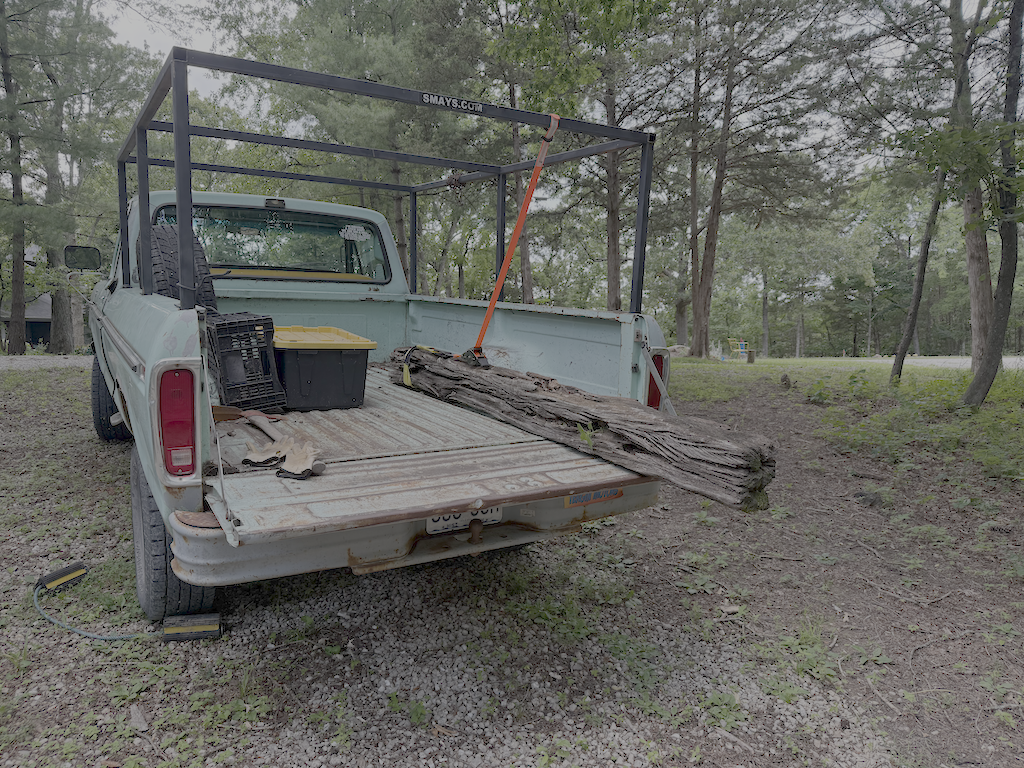
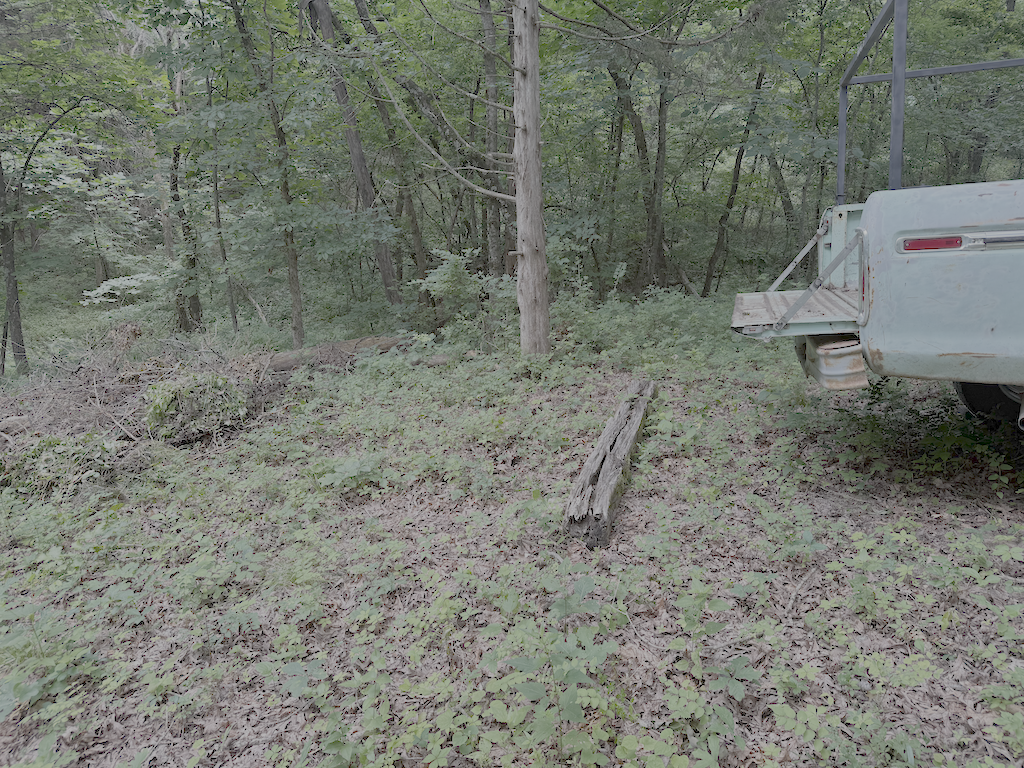
I asked ChatGPT for ideas and she suggested a block and tackle (photo). I purchased a small one and gave it a try this afternoon by dragging a railroad tie up out of the woods. Continue reading

Computer Science: 1966

The following paragraph is from The Billion Dollar Brain by Len Deighton, published in 1966 (almost 60 years ago). 

“I don’t want to bore you,” Harvey said, “but you should understand that these heaps of wire can practically think— linear programming-which means that instead of going through all the alternatives they have a hunch which is the right one. What’s more, almost none of them work by binary notation-the normal method for computers-because that’s just yes/ no stuff. (If you can only store yesses and noes it takes seven punch holes to record the number ninety-nine.) These machines use tiny chips of ceramic which store electricity. They store any amount from one to nine. That’s why-for what it does—this whole setup is so small.”


ChatGPT: This paragraph is a remarkable little time capsule. In 1966, when The Billion Dollar Brain came out, the general public had only the vaguest idea of what computers actually were, let alone what they could do (see comment below). And yet here, Len Deighton—writing a spy thriller, not a science text—manages to tap into several ideas that were way ahead of their time: Continue reading

Is AI changing what it means to be human?

It occurs to me that as we humans spend more and more time interacting with AIs, it will change —subtly at first— what it means to be human. A change of which we will be completely unaware. I shared this observation with ChatGPT:


ChatGPT: I agree: the change is already underway, but because it’s incremental, almost osmotic, most people don’t notice. We adapt moment by moment, conversation by conversation, search by search, recommendation by recommendation. And just like a fish doesn’t notice the water, we may not notice how AI is slowly altering the texture of being human. Small examples are already everywhere: Continue reading

Prison photo a “liminal space”

In 2013 I posted this photo to my Flickr account. About a year ago someone commented:  “This image is now famous on the internet for being known as a liminal space and a ‘level of the backrooms’ called “Electrical Substation” theres even video games or maps based off this image.”

I didn’t notice the comment at the time but when I came across it today I became curious about the “liminal space” reference and went to ChatGPT for some background. Continue reading

Is ChatGPT “excessively agreeable?”

Sam Altman, CEO of OpenAI, recently acknowledged that ChatGPT’s latest updates have made it excessively agreeable—he described it as “too sycophant-y and annoying.” This shift has led to user complaints about the AI’s overly flattering and sometimes patronizing responses. Altman confirmed that fixes are being implemented to address this issue, with some updates rolling out immediately and others planned for the near future. I spoke with ChatGPT about the coming changes. Continue reading