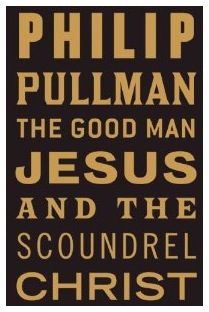
 Last week I read The Good Man Jesus and the Scoundrel Christ by Philip Pullman. I’ve been sorting out my thoughts about the book but I’m not there yet. I think it’s going to take a while. But I want to get something down here while the story (and my impressions) are still fresh in my mind. So, this will be one of those stream-of-consciousness posts (not a real review of the book).
GMJ&TSC is fiction. It is the story (a story) about the life and death of Jesus and his twin brother Christ (hardly a spoiler since it’s the title).
I found the style of the book very different from Pullman’s His Dark Materials trilogy. The book read very quickly. The chapters are very short with little or no character development.
To me it felt as though Pullman was trying to condense the stories most Christians grew up with to the bare “facts” (The Childhood of Jesus, Jesus Scandalises the Scribes, The Death of John, etc). Now that I think about it, each chapter read like a Cliffs Note.
Here’s how Pullman describes the book on the back of the dust cover:
“The story I tell comes out of the tension within the dual nature of Jesus Christ, but what I do with it is my responsibility alone. Parts of it read like a novel, parts like a history, and parts like a fairy tale; I wanted it to be like that because it is, among other things, a story about how stories become stories.”
TRUTH and HISTORY –and the relationship between the two– is a common theme throughout GMJ&TSC:
“If the way to the Kingdom of God is to be opened, we who know must be prepared to make history the handmaid of posterity and not its governor. What should have been is a better servant of the Kingdom than what was.” (pg 99)
Deeply “religious” people are often offended when someone takes liberties with their story. (Jesus Christ Superstar, the Dutch cartoonist’s depiction of Mohammed, etc) And if you happen to believe that every word of the King James Bible is literally true and an exact account of the life and death of Jesus, you probably won’t find this book a good read.
If on the other hand, you aren’t ready to stop thinking about such things, you might. I know that I did. Here are some questions it raised for me:
- If you wanted to start a religion that would last thousands of years, how would you go about it?
- How would Jesus feel about the religion that is based on his life and death?
- Could Christianity have taken hold if Jesus had lived at any other time or place?
- If the story of Jesus’ life/death –as we have known it for 2,000 years– was shown to be inaccurate, would it be better to know the truth, or to allow Christianity to continue to be based on events that never happened?
Continue reading →