
“My head is in the cloud”

Dave Pell (“Tweetage Wasteland”) describes a condition in which more of us are finding ourselves:

“My phone tells me numbers, Facebook reminds me of birthdays, my nav system gives me directions, Google tells me how to spell, my bookmarks remind me of what I’ve read, my inbox tells me who I’m having a conversation with – my mind has been distributed across several devices and services.

My head is in the cloud.

Now, after a few years of this, I realize that when I look up from the screen I know almost nothing. And maybe that would be fine if the absent phone numbers and upcoming dates were freeing space for deeper and more introspective thought. But I sense that my addiction to the realtime stream is only making room for the consumption of a faster stream.”

Yeah, I think about that, too. But I’m not sure I would have remembered all of that stuff without the cloud and my connections to it.

On a somewhat related note… my Facebook “cancellation” takes effect on Sunday. I canceled my account a few weeks ago. FB gave me the option of “deactivation” but I said, no,  please delete my account. Seems FB makes you wait a few weeks, in hopes you will come to your senses.

I wouldn’t normally give such a decision a second thought but Facebook has become The Place (for the time being) and I should probably be there. But I’m not. And don’t expect to be. But I’ve come up with a rationalization:

We have a finite amount of time and attention. It’s impossible to be in every social space. Assuming that everyone on the planet is –or soon will be– on Facebook, taking a pass will protect the little attention I have left.
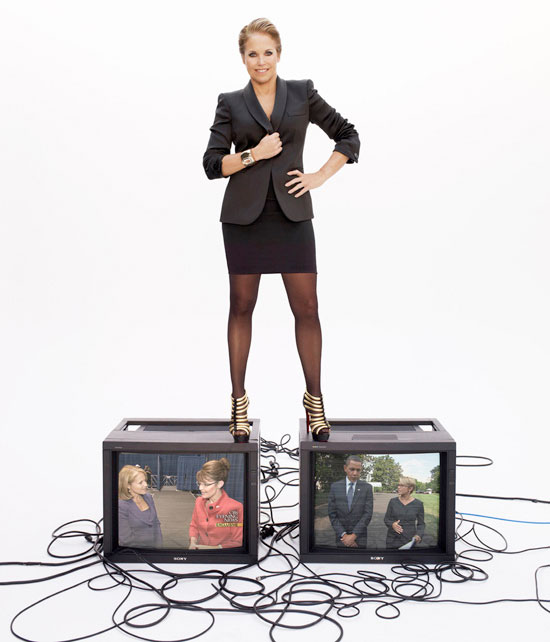
What does “Being Local” mean, anyway?

“I think the term “local” dates to a time when communities could only be served by media which originated within them – the local newspaper, TV, or radio. Today, communities continue to have local pride, interest, and concern, but their means of expressing and sharing in those things are no longer limited to the media which so happen to be around the corner.”

“There is no longer any such thing as “local” as we traditionally use the term. The definition of “local” is both expanding (interests are broader than geographies) and shrinking (I am the ultimate “local”) at the same time.”

“If the Internet makes the world “local,” then what’s is your (radio) advantage?”

— Mark Ramsey at Hear 2.0

April Winchell has a better music collection than you

Paul Winchell was a well known ventriloquist in the mid-1960s, the voice of Jerry Mahoney and Knucklehead Smiff. His daughter is April Winchell has her own accomplishments, including a website where you can find some great music.

There’s a collection of cover versions of Stairway to Heaven, including

AUDIO: The Dixie Power Treo (tuba and banjo)
AUDIO: Dolly Parton.

But my favorite section was Terrifying Christian Recordings.

Then I Start to Yodel by Princess Ramona

Jogging for Jesus

Amazing Grace (Tim Gibson as Donald Duck)

AUDIO: Then I Start to Yodel by Princess Ramona
AUDIO: Jogging for Jesus;
AUDIO: Amazing Grace (Tim Gibson as Donald Duck)


BONUS: Collection (PDF( of Terrifying Christian Recordings

The Tower of Power

This week I ran into a long-time broadcaster I called on back in my affiliate relations days. We chatted for a few minutes and the subject of towers came up (I have no idea). He mentioned that he had tried to sell his AM tower but got no takers. Then he tried to give it away. Nope. Now he’s paying someone to take it down and haul it off. As far as I know, that is nothing unusual. But it struck me as somehow… foreboding?

A radio station tower is …iconic. Usually the tallest structure in small towns throughout America. You didn’t need much of a studio but you had to have that transmitter and a tower. The bigger the better.

Every radio guy I know has at least one tower story.

Like the DJ who pulled his UHaul truck into the parking lot of the station where he was to start working the next day. In the downpour, he didn’t realize he’d snagged the truck’s trailer hitch on a guy wire and pulled the tower down. And he didn’t get fired.

Or a story about the insane guys who did tower maintenance, climbing four or five-hundred feet to paint or change a bulb.

[Momentary aside: If someone drops a wrench from 400 feet above you, is it better to remain still or to run? Discuss]

What once took studios filled with control boards and tape decks and cart machines… can now be done with a couple of laptops.

The equation once was:

Good programming (content) + big transmitter + big tower + good frequency = big audience

Now it’s:

Good programming (content) + big transmitter + big tower + good frequency = big audience

I’m sorry I never interviewed one of those tower guys.

“Information is not a scarcity”

A few ideas from today’s post Jeff Jarvis’ BuzzMachine blog:

“If you are selling a scarcity — an inventory — of any nonphysical goods today, stop, turn around, and start selling value — outcomes — instead. Or you’re screwed. Apply this rule to many enterprises: advertising, media, content, information, education, consultation, and to some extent, performance.”

“Relationships. That’s what the business of media must become. In our New Business Models for News, we began — just began — to project the value of the relationship a new media service can have in its community: creating events; educating; gathering and selling data; selling goods directly (as the Telegraph does, quite successfully); running networks to help others succeed; saving money by collaborating.”

“Information is not a scarcity, or at least it isn’t scarce for long. Yes, when I don’t know something, then the answer is scarce. But now it’s much easier to get that answer; Google will have it in .3 seconds and if it doesn’t and if enough of us ask it, then someone at Demand Media will write it for me and the rest of the world for $20. When news is new, its value is scarce (as Thomson Reuters Tom Glocer says, his information has its highest value in its first 3 milliseconds); but then that value deflates.”

Alrighty then.

BandMaker.com

I think we can all agree that the hardest part of having a successful rock band is coming up with a good name. You can always find a drummer or a lead singer but a good band name… very difficult. Fortunately, there are no shortages of websites to help with this critical task. At BandMaker.com you plug in some words and get some recommendations. I think you can do the same thing at WORDLAB but I got distracted browsing their list of 4,000+ names for rock bands. A few of my favorites:

  • Adjustable Waistbands
  • Viral Bunny
  • Twinkie Spore
  • Turd Cribbage
  • Tim Tation and the Quagmire
  • Stool Patrol
  • Sandy Muff
  • Rock Paper Sisters
  • Nuclear Winter Squash

I wanted to try my hand at some names but came up dry. So I pulled a few from my tag cloud (sidebar)

  • Anonymous Audio
  • Blackberry Brush with Near Greatness
  • Coffee Zone Consciousness
  • PowerPoint Prison Santa
  • Smoking Spam Tattoos

Let me know if you decide to use one of these.

Stagger Lee

This morning my friend Bob gave me a copy of the death certificate of Lee Shelton, who died in the prison here in Jefferson City, MO, of tuberculosis in 1912. Shelton was an African American cab driver and pimp convicted of murdering William “Billy” Lyons on Christmas Eve, 1895 in St. Louis, Missouri. [More on Shelton at Wikipedia]

The crime was immortalized in a popular song that has been recorded by numerous artists. Here are just a few:

  • Grateful Dead
  • Tom Jones
  • Pat Boone
  • James Brown
  • Neil Diamond
  • Fats Domino
  • Dr. John
  • Bob Dylan
  • Duke Ellington
  • Woody Guthrie
  • Bill Haley & His Comets
  • The Isley Brothers
  • Huey Lewis and the News
  • Taj Mahal
  • Wilson Pickett
  • Sam the Sham
  • Ike and Tina Turner

You might need a Blip.fm account to listen to the two versions I’ve linked above.