
Sheryl Crow Rock and Roll Hall of Fame induction

“I don’t feel like I’ve been doing this that long. It’s gone so fast. I really didn’t see this coming”

On November 3rd (2023) hometown girl Sheryl Crow will be inducted into the Rock and Roll Hall of Fame alongside George Michael, Missy Elliott, Rage Against The Machine, Willie Nelson, the Spinners, Kate Bush, Chaka Khan, DJ Kool Herc, Al Kooper, Bernie Taupin, and Don Cornelius. From the Rolling Stone interview:

I could not have predicted it if I tried, especially in the early days of my career, coming from a town with three stoplights. Having grown up listening to Willie on my radio station, I just couldn’t have predicted it. There’s no way.

First and foremost, Willie Nelson is my favorite person to sing with in the universe. But if I get to stand and sing with Chaka Khan, I’m afraid I will lose my shit. [Laughs] She’s one of the greatest singers of all time and just a badass.

When the Rock and Roll Hall of Fame and Museum opened up in Cleveland in 1995 with a massive stadium concert featuring Bob Dylan, Chuck Berry, Johnny Cash, Bruce Springsteen, Jerry Lee Lewis, and countless other rock veterans, Sheryl Crow was one of the youngest artists on the bill.
Jeep promotional videos

YouTube: Willys, the “World’s Largest Manufacturer of Utility Vehicles,” presents the “Jeep Family of 4-Wheel Drive Vehicles and Special Equipment,” a circa 1954 black-and-white film promoting Jeeps produced for civilian use. (“One man with a Jeep can do the work of 100 men with shovels”)

Because this video runs a tad over 20 minutes, I’m guessing it ran in theaters before feature films. I recall seeing newsreels like this as a child in the 1950s. Jeeps like mine (CJ2A) were aimed at the agriculture market and this video show one handy attachment after another.

The narrator pronounces Willys: WILL us … rather than WILL eez so I’m confident that is the correct way to say it.

YouTube titles the video below: Autobiography of a Jeep and the narrator is the “voice” of a Jeep during its development and the early years of WWII. The delivery is that Pete Smith Specialty style from the 40s and early 50s (you had to be there). A little corny but some excellent Jeep footage.

YouTube description: “A small company in Pennsylvania, Bantam, invented the Jeep, but the military needed more than Bantam could produce. So they turned to Willys and Ford and had these auto titans build Jeeps. Edsel Ford joins other Ford Motor Company officials as they demonstrate their vehicles for the military.” (this video has no sound)

Okay, one more. 1940 Ford Pilot Model GP-No. 1 Pygmy

Hitler’s final memo

One more from Antony Beevor’s great history, The Fall of Berlin 1945:

“Hitler took Traudl Junge (one of his secretaries) away to another room (in the bunker), where he dictated his political and personal testaments. She sat there in nervous excitement, expecting to hear at last a profound explanation of the great sacrifice’s true purpose. But instead a stream of political clichés, delusions and recriminations poured forth. He had never wanted war. It had been forced on him by international Jewish interests. The war, ‘in spite of all setbacks,’ he claimed, will one day go down in history as the most glorious and heroic manifestation of a people’s will to live’” (emphasis mine)

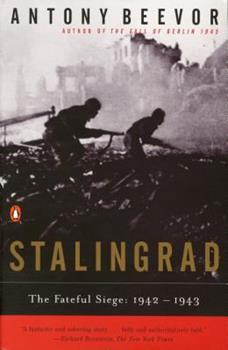
STALINGRAD The Fateful Siege: 1942-1943

I’ve only read a handful of history books (crime fiction is my passion) but they’ve all be great reads. A Distant Mirror: The Calamitous 14th Century; Battle Cry of Freedom: The Civ89l War Era; Nothing Like It In the World: The Men Who Built the Transcontinental Railroad 1863-1869; and Wires West: The Story of the Talking Wires. I’m currently reading STALINGRAD The Fateful Siege: 1942-1943 by Antony Beevor.

(Wikipedia) “Stalingrad is a narrative history written by Antony Beevor of the battle fought in and around the city of Stalingrad during World War II, as well as the events leading up to it. The book starts with Operation Barbarossa, the German invasion of the Soviet Union in June 1941 and the subsequent drive into the Soviet Union. Its main focus is the Battle of Stalingrad, in particular the period from the initial German attack to Operation Uranus and the Soviet victory.” Continue reading