What Technology Wants by Kevin Kelly (TED Talk)

I finished Kevin Kelly’s What Technology Wants (PDF) this weekend. I rank this book up there with Ray Kurzweil’s The Singularity is Near in terms of importance. I won’t attempt to review the book, since I’m still try to absorb some of the mind-bending ideas. Like the evolution of technology:

Here are a few ideas that got some highlighter:

Technology and life must share some fundamental essence. … However you define life, its essence does not reside in material forms like DNA, tissue, or flesh, but in the intangible organization of the energy and information contained in those material forms. Both life and technology seem to be based on immaterial flows of information.” – pg 10

Technium – The greater, global, massively interconnected system of technology vibrating around us. – pg 11

How many neurons do you need to have a mind? – pg 13

We can think of technology as our extended body. – pg 44

Ideas fly in flocks. To hold one idea in mind means to hold a cloud of them. – pg 45

Even the tiniest disposable item with a bar code shares a thin sliver of our collective mind. – pg 48

For most humans, for most of time, real change was rarely experienced. – pg 73

“What was impossible billions of years ago becomes increasingly inevitable.” — Simon Conway pg 126

There is only one life. All life today is descended along an unbroken line of duplication from one ancient molecule that worked inside one primeval cell that worked. – pg 127

Continue reading →

The Social Network

A movie is going to be made about an important part of your life. Your only imput is to choose from the following:

  • A great director and screenwriter tell a a really interesting story that has people glued to their seats for 90 minutes, but bends or breaks the the truth whenever necessary to make the story interesting. And millions go to see it.
  • A so-so writer and a second-rate director make an exactly-as-it-happened movie that puts the audience to sleep and it hits cable in week 4.

Maybe it’s just the film buff in me but I’d much rather the be subject of a compelling bit of fiction, even if I came off looking like an asshole.

I really enjoyed The Social Network. I never saw an episode of The West Wing so this was my first (?) exposure to the Mr. Sorkin’s snappy diaglogue and it was sharp as a mouse turd.

I read David Kirkpatrick’s The Facebook Effect this summer (not the boook upon which the movies was based) and it showed Mark Zuckerberg in a more flattering light.

As I watched the story unfold, I found myself hoping Zuckerberg did some of the sleazy things alleged in the movie. It would be pretty shitty to have this really well-made film floating around for the rest of my life portraying stuff I didn’t do.

If Zuckerberg did get the idea for FB from the Winklevoss twins, well, they should have had a lawyer. If he screwed over his friend Eduardo… that’s a weight he’ll have to carry. But all those people on Facebook will never know or care.

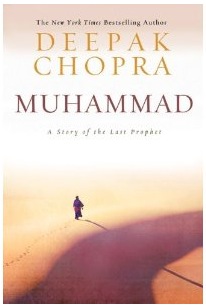
Muhammad: A Story of the last Prophet

I finished the novel Muhammad yesterday and have been pondering what to say about it. I found the story interesting and well-told. I’ve read a number of other books by Deepak Chopra and like the way he writes.

I think I’ll let smarter, more knowledgable folks review the book. No shortage there. So, what can I say about the novel?

If you were a kid, or have a kid, or you’ve been to a kid’s party, you’ve seen those guys that make balloon animals. Before blowing up those long skinny balloons they twist and shape into giraffes and stuff, they usually stretch the balloon. And as they inflate the balloon, they sometimes bend and turn it.

That’s what much of my reading has been like in the last few years. My thinking gets stetched and expanded, often to the breaking point.

One guy makes a hat, the next a horse. I enjoy them all and try to remember it’s all the same air inside the different colored balloons.

I knew almost nothing about the Prophet Muhammad. Now I know more. And maybe a little about the people who follow his teachings.

I fear many of those who would discuss this with me a) haven’t read the book and b) would be intent on explaining why Islam is wrong. (In their world, there is only one balloon and it’s blue and round.)

For that reason, I’ll limit comments to those who have read the book. So be prepared with a specific page reference.

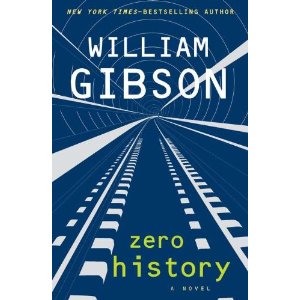
zero history

zero history is the final novel in William Gibson’s trilogy that started with Pattern Recognition. Hollis Henry is back from book two, Spook Country. I wouldn’t presume to review the work of Mr. Gibson. Here are a few of his words that got some highlighter:

“It was like being on the bottom of a Coney Island grab-it game, one in which the eclectically ungrabbed had been accumulating for decades. He looked up, imagining a giant three-pronged claw, agent of stark removal.” – pg 9

“His attempted smile felt like something froced from a flexible squeeze-toy.” – pg 10

“An overly wealthy, dangerously curious fiddler with the world’s hidden architectures.” – pg 18

“We do brand vision transmission, trend forecasting, vendor management, youth market recon, strategic planning in general.” – pg 21

“Addictions (start) out like magical pets, pocket monsters.” – pg 53

Continue reading →

On the nightstand

The Grand Design – Stephen Hawking & Leonard Mlodinow. From Amazon: “The three central questions of philosophy and science: Why is there something rather than nothing? Why do we exist? Why this particular set of laws and not some other? No one can make a discussion of such matters as compulsively readable as the celebrated University of Cambridge cosmologist Hawking (A Brief History of Time).”

How to Disappear: Erase Your Digital Footprint, Leave False Trails, and Vanish without a Trace . From Amazon: “Written by the world’s leading experts on finding people and helping people avoid being found, How to Disappear covers everything from tools for disappearing to discovering and eliminating the nearly invisible tracks and clues we tend to leave wherever we go. Learn the three keys to disappearing, all about your electronic footprints, the dangers and opportunities of social networking sites, and how to disappear from a stalker.”

I Live in the Future and Here’s How It Works – Nick Bilton. From Amazon: “I Live in the Future & Here’s How It Works captures the zeitgeist of an emerging age, providing the understanding of how a radically changed media world is influencing human behavior.”