“Being negative also helps you appear smart”

Following thoughts from an article (Chicken Littles Are Ruining America) by David Brooks in The Atlantic. (No link because it’s behind a paywall). He warns “doomsaying can become a self-fulfilling prophecy)

Being negative also helps you appear smart. In a classic 1983 study by the psychologist Teresa Amabile, authors of scathingly negative book reviews were perceived as more intelligent than the authors of positive reviews. Intellectually insecure people tend to be negative because they think it displays their brain power.

Believing in vicious conspiracy theories can also boost your self-esteem: You are the superior mind who sees beneath the surface into the hidden realms where evil cabals really run the world. You have true knowledge of how the world works, which the masses are too naive to see. Conspiracy theories put you in the role of the truth-telling hero. Paranoia is the opiate of those who fear they may be insignificant.

 

Joshua Smith miniatures

“Working at 1:20 scale, artist Joshua Smith builds in-depth works that capture the layered existences of urban environments in cities such as Hong Kong, Sydney, and Los Angeles. His miniature buildings showcase the details and detritus left by the diverse population of each city, bringing in elements of the city’s workers, inhabitants, and street artists.” (more»)


History Report

From a brilliant essay in The New Yorker by Simon Rich:

“They met in College, which is a place people used to go to after high school to drink alcohol. […] Instead of matching with someone through a dating app and sending a series of nude photos to each other before eventually meeting up for sex, you would meet them in person, before doing anything else. This meant that when my Great-Grandparents went out for the first time, they had no idea what each other looked like naked.”

A note about the link above. Many (most) of my favorite magazines –New York Magazine, The Atlantic, Rolling Stone, The New Yorker– are behind paywalls. So I finally gave in and subscribed to Apple News which gives me access to 300 publications for $13 a month. If you are a subscriber the link above will take you to the essay. If not? There’s no free ride. Sorry.

Pinzgauer

You’d have to look long and hard to find someone more knowledgable about exotic vehicles than Grayson Wolf. It was March of 2017 when Grayson started searching for what was to be my Land Rover. We’ve become friends in the the ensuing years and he is easily one of the most interesting people I have ever met. And a really good guy. Which brings us to the Pinzgauer project. I had never heard of a Pinzgauer.
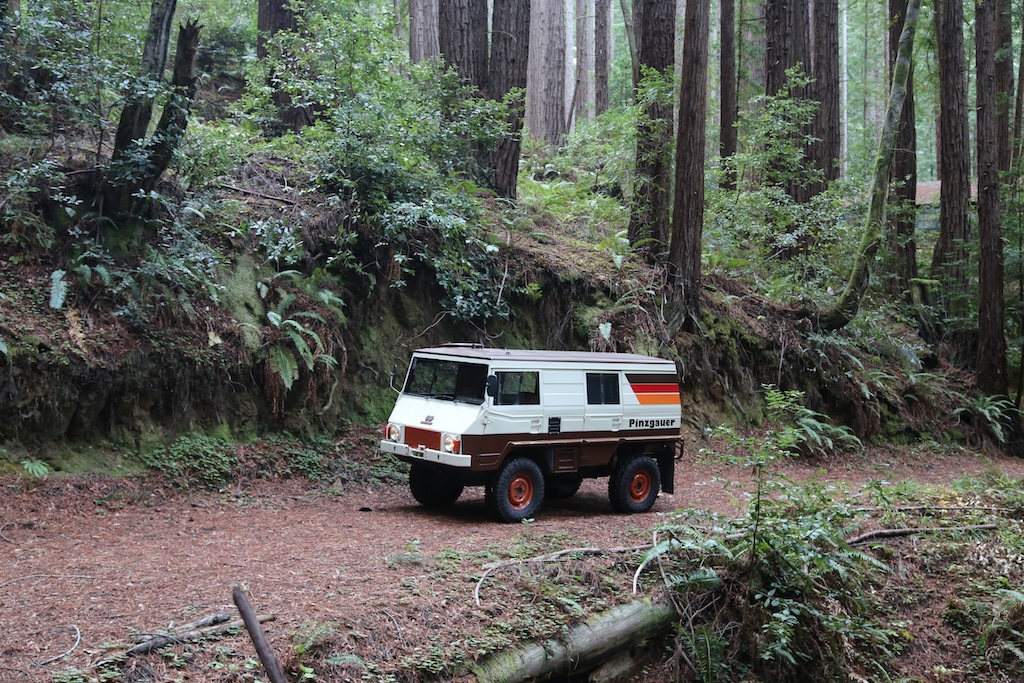
(Wikipedia) “The Pinzgauer is a family of high-mobility all-terrain 4WD (4×4) and 6WD (6×6) military utility vehicles. The vehicle was originally developed in the late 1960s and manufactured by Steyr-Daimler-Puch of Graz, Austria, and was named after the Pinzgauer, an Austrian breed of cattle. They were most recently manufactured at Guildford in Surrey, England by BAE Systems Land & Armaments. It was popular amongst military buyers, and continued in production there throughout the rest of the century.”

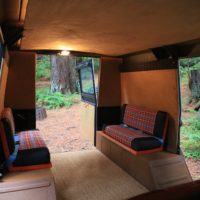
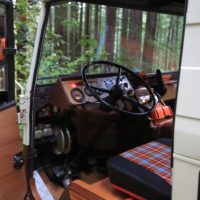
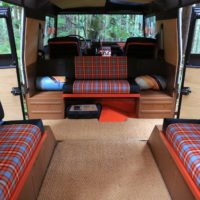
As you can see from the photos below, Grayson has converted this one for comfy off-roading.

His next project sounds even more interesting: Designing an off-road obstacle course for a customer.

A big ranch in Tomales Bay. Trying to design something fun, with great views, and some perceived risk (make the truck lean, teeter on three wheels, etc) without any actual risk of rolling or damaging the vehicle. (While I’ve never done one of these) I love all of the individual ingredients – operating heavy equipment, chainsaws, 4×4-ing, design work, and, most importantly, rolling trucks over while off roading – so I feel qualified :)

Hypercars

“One definition of a hypercar is a vehicle that nobody needs.”

While my tastes run toward beat-up older vehicles, I was fascinated by this article in The New Yorker. (“The World’s Fastest Cars — and the People Who Drive Them”). The term “hypercar” entered the lexicon in the two-thousands, when other carmakers (began) producing absurdly powerful, and prohibitively expensive, limited-edition models. Most have theoretical top speeds approaching or exceeding 300 m.p.h. And they get there quickly:

(The Rimac Nevera) accelerates faster than any road car ever made: zero to 60 m.p.h. in 1.74 seconds, and zero to a hundred in 3.21 seconds.

Think about that. You’re at a standing stop…you pin the accelerator and… one thousand one, one thousand… and you’re going sixty miles per hour.