Thriller

I just finished a book (Lexicon by Max Barry) described by Amazon as a “thriller.” The more I thought about it the more I realized I wasn’t sure what that designation meant. What makes a book a “thriller?” And now I know.

Thriller is a broad genre of literature, film and television, having numerous subgenres. Thrillers are characterized and defined by the moods they elicit, giving viewers heightened feelings of suspense, excitement, surprise, anticipation and anxiety. Successful examples of thrillers are the films of Alfred Hitchcock. Thrillers generally keep the audience on the “edge of their seats” as the plot builds towards a climax. The cover-up of important information from the viewer is a common element. Literary devices such as red herrings, plot twists, and cliffhangers are used extensively. A thriller is usually a villain-driven plot, whereby he or she presents obstacles that the protagonist must overcome.

And don’t miss the sub-genres. Whenever Wikipedia asks for some financial support, I kick in.

The worst thing Donald Trump could do

donald

I suspect even the staunchest Trump supporter gets a little twinge in his bowels at the thought of The Donald’s tiny finger on the nuke trigger, but I wonder if he could do almost as much damage to the U.S. by sitting in his bathtub and blowing his brains out. That seems less likely than a Trident missile launch but it would fuck this country up for fifty years. Nobody would ever believe the man wasn’t assassinated. Once this thought popped into my head, I tried to think of any way the man might die that wouldn’t be suspicious (to someone). The best I could come up with was meteor strike (earthquake?) I think the world might survive a Trump presidency but if he jumped from the Trump Tower penthouse, I think he might take our country with him.

Live-streaming body cam video

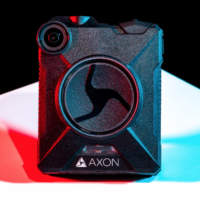
bodycam“Taser plans to roll out live-streaming capabilities in 2017, and he expects facial recognition to become a reality someday so agencies can query police records or social networks in real time. An officer could patrol the Las Vegas Strip with a camera streaming to the cloud, “and there is real-time analysis, and then in my earpiece there is, ‘Hey, that guy you just passed 20 feet ago has an outstanding warrant.’”

Or that the guy you pulled over because he has “a wide nose” has NO outstanding warrants.

“The basic Axon camera must be activated manually, but departments can buy Axon Signal, which activates the device automatically in certain situations, such as when an officer flicks on the light bar on his car. For $10 per officer per month, another Taser service links Evidence.com files with existing dispatch and records software, so officers no longer need to individually tag files for retention or risk having an untagged file automatically deleted.”

Curated music playlists

I’m a big fan of curated playlists (Apple Music for me) and have been curious about how and by whom these lists are created. This longish article is the best look at this I’ve read to date.

“Spotify says 50% of its more than 100 million users globally are listening to its human-curated playlists (not counting those in the popular, algorithmically personalized “Discover Weekly”), which cumulatively generate more than a billion plays per week. According to an industry estimate, 1 out of every 5 plays across all streaming services today happens inside of a playlist.”

“Music fans […] can smell the difference between a service where much of the product is dictated by algorithms or charts and one that is guided by more knowledgeable but equally passionate versions of themselves.”

Secretive as always, “Apple declined to share how many of those users are going to its playlists and how often.”

Racism

[From my series: Broad, Sweeping Generalizations Based On Little or No Knowledge]

The only book I recall reading on the sociology of racism is Black Like Me by John Howard Griffin (1961) but I’ve been thinking about racism and I have some assumptions and some questions.

Assumption: Forming opinions about someone based on the color of their skin is learned behavior. Someone (a parent, other children) has to “teach” a child that black people are lazy or red people are drunks or asians are good a math. (Is there any evidence that racism is hereditary?)

Q: Is racism a disease? (Or disease like) Is it a condition over which the person has no control? Like autism? Treatable but incurable. I don’t recall ever meeting someone who admitted to once having been racists in their thoughts and actions but changed. I would expect the “cure rate” to be on par with ebola. A few people do survive it.

Q: If one lives in a country where a significant number of people hold strong, negative opinions about their fellow countrymen based on the color of their skin, what do you do about that? Education? If you’re talking about educating young people, yeah, sure, that’s a good idea but if they’re getting a constant diet of “nigger” and “spic” from family and friends, I’m not sure education can have much effect. As for educating (re-educating?) adults? I’m skeptical.

Thought experiment: Let’s say someone develops a vaccine for racism. One injection that modifies a few neurons in the medulla whatchamacallit, eliminating the tendency to judge people based on color. Who would take this vaccine? Nobody. Our beliefs define us. A core part of identity. (All Buddhists may leave the room) We don’t want to change how we think and feel about things and people. Because we don’t think there is anything wrong with those thoughts and beliefs. You can keep your vaccine, thanks.

To further belabor my disease analogy, will racism only die when racists die, like a cholera epidemic? In the meantime we inoculate as many as we can?