
This might not be a new feature but I just stumbled upon it today.
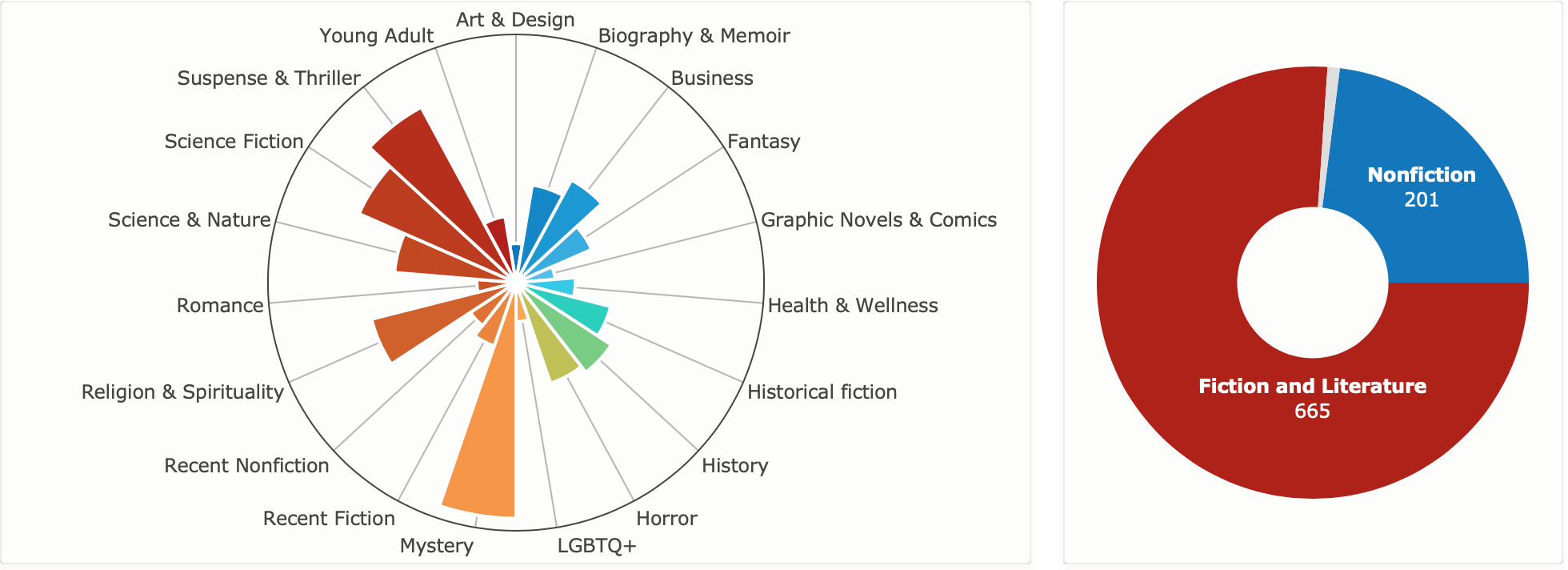
Lots more about my taste in books here.
Author Archives: Steve Mays
One big room for everything
Imagine a big room in your house where you keep the stuff you want to find later. Things you had written; articles from magazines; newspaper clippings; excerpts from books; cassette tapes of recorded music; VHS video cassettes… everything.
To save something you simply opened the door and tossed it into the room. Yes, in time my stuff would accumulate in piles waist high. But I know where everything is. It’s in this room.
To what extent does any such saved item really exist if I can’t find it?
Now imagine said room lined with filing cabinets, each clearly labeled as to contents. In each drawer there are section dividers and folders within. A 3-ring binder hanging on the wall for quick reference to what is in each of the filing cabinets (or banker boxes).
This has been my thinking as my blog has grown to 6,000+ posts in the last twenty years. I’ve been pretty disciplined about putting each post in one or more categories, and tagging for the finer grain. Without that metadata, my blog would be almost useless.
BUT WAIT! you say. You can also search the blogs db? You can, if you can remember what to search for.
PS: Sadly, I can’t think of an appropriate category or tag for this post… so I put it in STUFF.
Live Streaming Star in China
From the New York Times: “Over the past year, as Covid-19 has severely limited our ability to interact with the world beyond our front door, livestreams have helped transport us to places we couldn’t visit, people we couldn’t see and events we couldn’t attend. In China, live streaming services command an audience of nearly 560 million, with streamers broadcasting to devoted followers who tune in every night. Successful live streamers can earn thousands of dollars each month in direct donations from fans, and those at the very top earn millions from brand sponsorships and major contracts. In the short documentary above, we enter two agencies that scout promising newcomers and mold them into high-earning stars. But what’s it like working for a company that engineers every aspect of your life — and then requires you to livestream it all day?”
Not sure which I found more frightening… the lives of the “stars” or their fans.
Topless

I’ve had the Land Rover for three years now and this is the first time I’ve gone completely topless. We’ll put the hard top back on later this month and I decided to remove the mesh top hoop kit early. Really kind of fun driving around with nothing between me and the sky. If I’m out and it starts raining? Everything gets wet.
“War is cruelty and you cannot refine it.”
I recently finished Battle Cry of Freedom by James M. McPherson, considered by many the best single-volume history of the American Civil War. I wouldn’t know where to begin to tell you how much I enjoyed this book. We all know how the story ends, right, but I was on the edge of my seat till the final page. The mark of a truly great story-teller.
We all know about Union general William T. Sherman’s burning of Atlanta and his “march to the sea.” My simplistic Hollywood understanding of that chapter in the war was changed by this book, especially by this excerpt from Sherman’s memoirs.
“War is cruelty and you cannot refine it,” Sherman had told Atlanta’s mayor after ordering the civilian population expelled from the occupied city. But “when peace does come, you may call on me for anything. Then will I share with you the last cracker.” Until then, though, “we are not only fighting hostile armies, but a hostile people, and must make old and young, rich and poor, feel the hard hand of war.” Union armies must destroy the capacity of the southern people to sustain the war. Their factories, railroads, farms—indeed their will to resist—must be devastated. “We cannot change the hearts of those people of the South, but we can make war so terrible . [and] make them ‘so sick of war’ that generations would pass away before they would again appeal to it.”
— Memoirs by William T. Sherman
The passage reminded me of a passage from a novel by Robert K. Tanenbaum:
“Peace is best. You should make every sacrifice to secure peace. When you absolutely must go to war, however, you must try to kill all the enemy you can as quickly as you can, holding nothing back, until they have surrendered or you have been defeated utterly. It is a great fraud to think otherwise and it prolongs the agony. It would be better if people said, if we fight, we are going to boil babies in their own fat and blast the skin off nice old ladies, so they die slowly in great pain, and we are happy to do this, because what we fight for is so important. And if they conclude that it is not as important as that, then they should fight no more.”
— Robert K. Tanenbaum, Act of Revenge