Kovid Karma

(The Denver Post) “Conservative firebrand Bob Enyart, the pastor of the Denver Bible Church and indelible talk show host, has died from COVID-19, his radio co-host announced Monday on Facebook. […] Enyart and his wife refused to get the vaccine due to abortion concerns, he said on his website. In October, Enyart successfully sued the state over mask mandates and capacity limits in churches, a rare legal victory against broad public health mandates instituted during the pandemic.”

“On his old TV show, Bob Enyart Live, the host would “gleefully read obituaries of AIDS sufferers while cranking ‘Another One Bites the Dust’ by Queen.”

Enyart is the sixth conservative/anti-vaccine talk show host to die of COVID in the past six weeks.

Lemmings

Everyone knows about lemmings. Something frightens them and they head for the nearest cliff, plummeting to their death. Each following the guy in front of him because… because that’s what lemmings do. But what about the guy in the middle of the pack who doesn’t want to go over the cliff?

“Hey, everybody! There’s a cliff up ahead. I was there just yesterday and it’s a long drop!

Nobody listens or they don’t believe him.

“Excuse me, coming through. Pardon me… I just need to get to the edge of the herd. Don’t push! This is my stop!

The U.S. response to COVID is a bit like this. A lot of people trying to avoid the cliff but can’t get to safety in time. The rest hurtle off the cliff.

Excuse me, coming through.

Iowa PBS announces new Iowa Press moderator


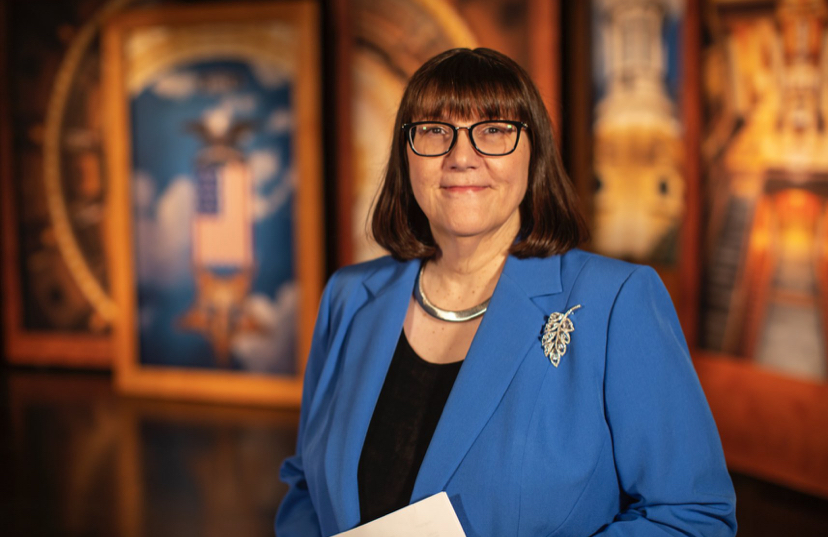
(Press release) Kay Henderson, the dean of the Iowa Capitol press corps and long-time guest panelist on Iowa Press, will be the next host and moderator of the Iowa PBS public affairs program. Henderson replaces David Yepsen, who retires from the Iowa Press desk on September 10, 2021. Her first formal broadcast as host will be Friday, September 17.

“Kay is already a member of the Iowa PBS family,” said Molly Phillips, executive director and general manager of the statewide public television network. “She has capably subbed as host and has been a regular second chair at the Iowa Press desk. She’s participated in countless campaign debates over the last three decades. We couldn’t ask for a stronger, more esteemed and experienced journalist to continue the Iowa Press legacy.”

Henderson first appeared on Iowa Press in October of 1987. For the past 20 years, she has been the national political director for Learfield news networks in Iowa, Missouri, Minnesota and Wisconsin. She has served two terms as president of the National Association of State Radio Networks’ news directors group. Henderson was hired by Learfield in 1987 as a statehouse reporter for Radio Iowa, a statewide news and sports network serving more than 70 commercial radio stations. She’s been that network’s news director since 1994 and will remain in that role alongside her new weekly assignment at Iowa PBS.

“It’s an honor to be invited to take on this new role,” Henderson said. “Watching Iowa Press hosts Dean Borg and David Yepsen guide the program over the past 34 years has given me a glimpse of the responsibilities ahead. I’m humbled by the opportunity and excited about the task of helping Iowa Press move into its fifth decade of service to our viewers.”

Henderson received the Iowa Broadcast News Association’s 2002 Jack Shelley Award, an annual recognition of “outstanding contribution to the cause of professional journalism.” The list of Shelley Award recipients includes the late Dean Borg, who retired as Iowa Press host in 2016, and the late Dan Miller, the long-time Iowa PBS general manager who was an Iowa Press producer early in his 37-year career with the network.

“After three decades of Iowa public affairs coverage on radio and on Iowa Press, Kay Henderson is the backbone of political journalism in this state,” said Andrew Batt, Iowa Press senior producer. “Our viewers have found Kay to be a trusted source for news and information throughout annual legislative sessions and nearly 20 election cycles.”

Henderson’s first salaried job in journalism was a three-month summertime stint as managing editor of the Lenox Time Table, the weekly newspaper in her southwest Iowa hometown. In addition to her work in Iowa broadcasting, Henderson has appeared on the PBS NewsHour, NBC’s “Meet the Press” and ABC’s “This Week” as well CNN, Fox News and MSNBC.

The annual doctor visit

The following excerpts are from a Wall Street Journal piece titled: Tech Advances Put the Annual Doctor Visit on the Critical List. The gist of the article is the yearly check-up with your doctor is in for some big changes.

Mayo Clinic, in Rochester, Minn., has started sending laboratory kits to patients in advance of their physicals. Patients, especially those who live far away, can get blood drawn at a local clinic and send it back for standard lab and genetic analyses and discuss results with their doctors virtually. The future, says Carl Andersen, medical director of the clinic’s executive health program, is “bringing healthcare to patients where they are as opposed to asking them to come in.”

Mayo eventually expects to gather additional patient information remotely via smartphone and smartwatch apps, wearable sensors and blood pressure cuffs that enable monitoring of such health indicators as blood pressure, blood oxygen levels, physical activity, heart rate, heart rhythm, blood sugar and sleep quality. Doctors elsewhere have begun adopting this strategy; some experts believe it is poised to fundamentally change how the physical is done and could prompt patients to engage more proactively in their health.
“When people start using a smartphone to monitor their blood pressure, they become experts at managing it,” says Eric Topol, director of Scripps Research Translational Institute in La Jolla, Calif. Maybe “it’s only a problem on Monday morning when they go back to work.” That finding wouldn’t emerge in a once-a-year visit, but it opens options for a patient other than a prescription for blood pressure pills.

Digital stethoscopes are available that allow doctors to check heart and lung sounds remotely. Dr. Tison and his colleagues at UCSF have developed a technique using a smartphone camera and flashlight that can detect a biomarker of diabetes in patients without a blood draw. Mayo doctors have tested an algorithm that can reveal heart weakness from data obtained in an electrocardiogram long before symptoms of heart failure, heart rhythm irregularities or cardiovascular disease arise.

DNA is poised to become part of the routine physical too. As part of its blood analysis, Mayo will soon offer liquid biopsy tests, which look for evidence of cancer in DNA fragments that even early-stage tumors shed into the bloodstream. The test will search for many more tumor types beyond the screens performed for breast, lung, prostate and colorectal cancers as recommended in current health checkups.

UCSF’s Dr. Tison suggests a more dynamic approach to the physical lies ahead: Doctors will provide, say, monthly electronic reports to patients on metrics such as blood pressure, heart function, blood oxygen levels and weight, based on the data stream from digital devices. Unless an abnormal signal turns up, in-person exams—with the hands-on touch doctors and patients value—could be set for every two or three years.