
The Basement Diaries. Deleted.

“The Basement Summer was 1968. Some of us had been off to college for a year or two but gravitated back to Kennett, Missouri, as young people from small towns often do. This web site is about those people and that time. This would have been a lot easier if I had actually kept a diary or journal thirty years ago. But I didn’t, so the only record I have is a few thousand photographs and a lot of fuzzy memories. The time frame is roughly 1966 -1976. If you were there, no further explanation is necessary… if you were not, none is possible.”
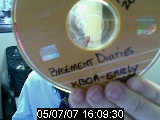
Backup!That was the intro to one of the first websites I created (March, 1998). I say was because this morning I deleted the entire site. How I managed to do this is of no consequence. I believe I have a back-up in our safe deposit box, but can’t find a copy among the countless CD’s and external hard-drives that clutter my home office.

Given the sentimental importance of this site, I’m surprised by how calmly I’m dealing with this. I spent hundreds of hours creating the site but I didn’t know what I was doing in those early days and the tools weren’t very good. And the resulting site looked like what it was, an early effort by an amateur.

And I have all of the images. Digital and prints. I can do a much better job the second time around. I don’t think I could/would recreate the copy. So I’m hoping I have that back-up. And I feel bad for anyone that might have linked to the original site. Those links are dead. If you were among those immortalized in The Basement Diaries, watch this space for updates.

Update: Seems I did have the foresight to tuck a copy away at the bank. I’ll start rebuilding immediately.
This Perfect Day

If you’re familiar with Ira Levin at all, it’s probably through some of the movies based on his novels (Rosemary’s Baby, The Boys from Brazil, The Stepford Wives, Sliver). My favorite Levin novel, This Perfect Day, hasn’t (to my knowledge) made it to the big screen. It describes a scary future:

“Uniformity is the defining feature; there is only one language and all ethnic groups have been eugenically merged into one race called “The Family”. There are only four personal names for men, and four corresponding names for women. Instead of surnames, individuals are distinguished by a nine-character alphanumeric code. Everyone eats “totalcakes”, drinks “cokes” and wears exactly the same thing – every day.

The world is ruled by a central computer called UniComp which has been programmed to keep every single human on the surface of the earth in check. People are continually drugged by means of regular injections so that they can never realize their potential as humans. They are told where to live, when to eat, whom to marry, when to reproduce, and which job they will be trained for. Everyone is assigned a counselor who acts somewhat like a mentor, confessor, and parole agent; violations against ‘brothers’ and ‘sisters’ by themselves and others are expected to be reported at a monthly confession.”

I read This Perfect Day in 1970 (the year it was published). The telecomps used by counselors to remotely connect with UniComp sound remarkably like wi-fi enabled laptops. Fortunately, instead of connecting with a single all-powerful computer, we’re connecting with lots of little ones…and each other.

On a more metaphysical plane, This Perfect Day poses the question: Are we really as “awake” and “conscious” as we think we are? My latest re-read reminds me –once again– trust yourself, don’t trust governments.

Ira Glass on storytelling


Thanks to David for pointing me to this series of interviews (YouTube) with Ira Glass. His weekly program, This American Life, is the best example of what radio can and should be. But that doesn’t sound quite right to me any longer, since I began listening to the program via podcast.

So let’s call it the best example of what storytelling can and should be. “Radio” makes it about the medium. And it never was, not really.

My take-away from the first segment of the interview is that it takes as much time to find a good story, as it does to write and produce the story. He says the TAL team spends about half of their time searching for that good story to tell.

PS: I had never seen Ira Glass and he looks exactly like he sounds.

NBA taps into Second Life

“The NBA has launched an elaborate series of interactive milieus in the popular online virtual world Second Life, including a 3D NBA store, a mock NBA arena and even a press center where Web users can roam and play using video-game-like avatars.

Second Life, which claims close to six million registered users worldwide and is visited by more than a million or so every two months, has increasingly become a testing ground for marketers and media companies. The new NBA Headquarters in Second Life is the first such exploration of the virtual world phenomenon by the league.”

[MediaWeek.com]

NASA intros offbeat video podcast

Podcasting News: “NASA has launched a new video podcast, NASA EDGE, that provides an offbeat look at the nation’s aerospace program. The hosts of NASA EDGE offer an unscripted take on the latest events at NASA.”

How easy it would have been for a big old gov’ment agency like NASA to do a boring, lame-ass video podcast. Real easy. I don’t know if this will catch on but somebody gets it.

Your website: “an entirely separate radio station”

“The best examples of websites for radio stations are generally not on radio stations. The trap in our industry is the budget. Too many stations have volunteer webmasters if they have any at all. Your web effort will soon be as important as on-air programming effort. In fact, I would suggest you picture your website as an entirely separate radio station and budget accordingly. I can easily – easily – foresee your website attracting a larger audience than your radio station.”

Mark Ramsey on radio station websites

Radio Iowa: 20 years on

Off to Des Moines for a couple of days. Can’t remember the last time I was there. Couple of years ago? But I remember the first time. It was early in 1997 1987 and we (Learfield) were starting a statewide radio network. I was managing our news networks in those days and –with help from Roger Gardner– was tasked with hiring staff. We did most of the interviews in the bar and lobby of the Savery Hotel. I clearly remember meeting Kay Henderson and Todd Kimm, two of the original staff who are still with us.

I was also responsible for signing stations to the network. I couldn’t tell you how many times I criss-crossed Iowa in my little Toyota Corolla, but I hit every town with a stick. And broadcasters were very receptive. I think we had 30 affiliates by the time we went live in July.

Seems like yesterday.

Probably can’t make it happen this trip but I’m gonna sit down with Kay and Todd and record a little oral history of the network. Be fun to remember those that worked in our newsroom; the big stories; the funny stories; the affiliates. It might be too hot to share but we’ll keep it someplace safe until we can.

Paul Simon: Old

The first time I heard “Peggy Sue”
I was 12 years old
Russians up in rocket ships
And the war was cold
Now many wars have come and gone
Genocide still goes on
Buddy Holly still goes on
But his catalog was sold

First time I smoked
Guess what – paranoid
First time I heard “Satisfaction”
I was young and unemployed
Down the decades every year
Summer leaves and my birthday’s here
And all my friends stand up and cheer
And say man you’re old
Getting old
Old
Getting old

We celebrate the birth of Jesus on Christmas day
And Buddha found Nirvana along the lotus way
About 1,500 years ago the messenger Mohamed spoke
And his wisdom like a river flowed
Through hills of gold
Wisdom is old
The Koran is old
The bible’s
Greatest story ever told

Disagreements?
Work ’em out

The human race walked the earth for 2.7 million
And we estimate the universe at 13-14 billion
When all these numbers tumble into your imagination
Consider that the lord was there before creation
God is old
We’re not old
God is old
He made the mold

Take your cloths off
Adam and eve

Unexpected uses of iPods

Like all good lists, there are 10 of these but my favorites are:

  • Train Doctors to Save Lives: iPods can double interns’ ability to identify heart sounds
  • Bring Criminals to Justice: using iPods to hold copies of wiretap transmissions in a large drug-conspiracy case.
  • Record Flight data: iPods as flight data recorders in light aircraft.
  • Flashlight:  For about $13, you can purchase Griffin’s iBeam, an attachment that will quickly turn your iPod into a combo flashlight and laser pointer.