flickrvision

flickrvision

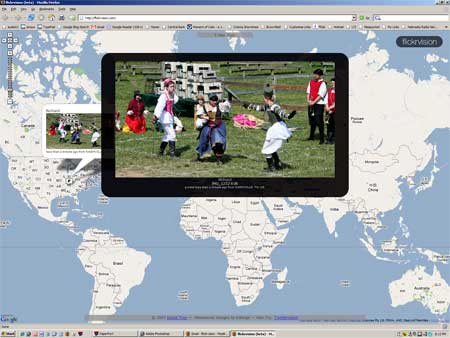
flickervision lets you see photos as they’re uploaded, with geographical location. Hard to stop watching. Like channel surfing but better. And at the risk of getting all “We are the world” on you… it reminded me that there are people just like me in every country, taking pix and putting them up for the rest of the world to see. Thanks to J. T. for the point.

Objective: 1,000 photos on flickr

That’s my goal. And I’m about half-way there. I’m using flickr to host images for the rebuild of The Basement Diaries which should be far enough along for a link by next weekend. A lot of the prints are 40 years old and weren’t great to begin with. But I’m not trying to win a contest, just share some memories with old friends.

And there is something so satisfying about getting these images out the shoe boxes and up on the web where anyone can find them. That means a lot of scanning (I might try one of the services I’ve read about). From now on, if  the image is worth keeping… it goes on flickr.

Journalists: How to feed the blog beast

Amy Gahran (The Right Conversation) offers some useful tips for reporters who are asked or required to blog. The first one is the best one: Don’t use your blog to post stories. Instead, use it to post complementary content around your stories.

Other nuggets from Ms. Gahran:

  • Blog as notepad. If you’re following an issue (maybe a local Superfund site) and you come across an interesting angle or tidbit that is relevant but doesn’t warrant its own story, instead of just jotting yourself a note about it, blog it. If possible, create a category or tag in your blog so interested community members can easily track that issue through your blog. That also makes it easy for you to find that note when you are ready to do a followup story.
  • Distributed reporting. So many meetings, so little time. Let’s say you can’t get to a public meeting about that Superfund site. So you post a blog item to let the community know the meeting’s happening and why you think it might matter. Toss out a couple of questions you’d ask if you were going. Invite your readers to attend the meeting, and maybe pose those questions. Ask them to post their notes — and the answers they received — in the comments. More fodder for you.
  • Community outreach. Pose open questions to your blog audience: What are their top concerns about that Superfund site? Agenda-setting works best when it works both ways.
  • Buzz builder. You’re working on a big investigative feature about that Superfund site. It’ll take you months to pull it together. You can drop hints about how that project is progressing — without giving away the farm or totally blowing it with your competition or sources.
  • Cutting room floor. Did your editor cut a particularly poignant anecdote or pithy observation from your latest story simply for space? Blog it! It’s already written, so why not make it work for you? Make sure you always link to the published story, of course.

Amazon launches podcast network

Amazon.com today officially launched the Amazon Podcasts network, an original podcast offering that features four channels of free content: Amazon BookClips, Music You Should Hear, Significant Seven and
Amazon Wire.

  • Amazon BookClips – A weekly podcast offering customers a free sneak peek at some of the most popular soon-to-be-released audiobooks.
  • Music You Should Hear – A free, weekly MP3 podcast whereby customers receive an MP3 recording featuring complete songs from developing and indie artists, selected by Amazon’s music editors.
  • Significant Seven – A monthly podcast in which book editors from Amazon.com talk about seven of the most exciting upcoming books before they are released.
  • Amazon Wire – An exclusive, biweekly podcast featuring interviews with some of today’s hottest authors, actors, directors and musicians.

All of these sound like something I would listen to regularly. Will the typical podcaster get rich? No. Will companies like Amazon find creative and profitable ways to use podcasting? Wait, wait… I know this one… [via Podcasting News]

How to Write for the Web

From Cory Bergman’s (Lost Remote) Guide for TV Newsrooms. He offers 11 tips that apply equally well to radio newsrooms. My favorite was the one on writing headlines:

“The trick is writing headlines that not only compel people to click, but also show up in search results. It should be simple, straightforward and active. It should emphasize a twist or compelling fact in a story, such as “buried alive” or “gasping for air.” It should contain search keywords. And it should attribute when necessary.”

Flood images: YouTube and Flickr

People in the midwest (Iowa and Missouri) affected by the flooding wasted no time in posting video to YouTube. Here’s some footage from Washington, Missouri.

Missouri Valley, Iowa got 5-7″ of rain in a very short period of time, which resulted in three levee breaks. This clip is part of a series … this guy (I don’t know why I think it’s a guy) decided to go with a rock video treatment … and here’s one from Wyeth Hill in St. Joseph MO. (Across the river, Elwood Kansas was in the process evacuating.)

A Flickr search for “missouri flood” pulled up 490 images. I’m sure I missed some good ones. Go ahead and post them in Comments.

The Basement Diaries Redux

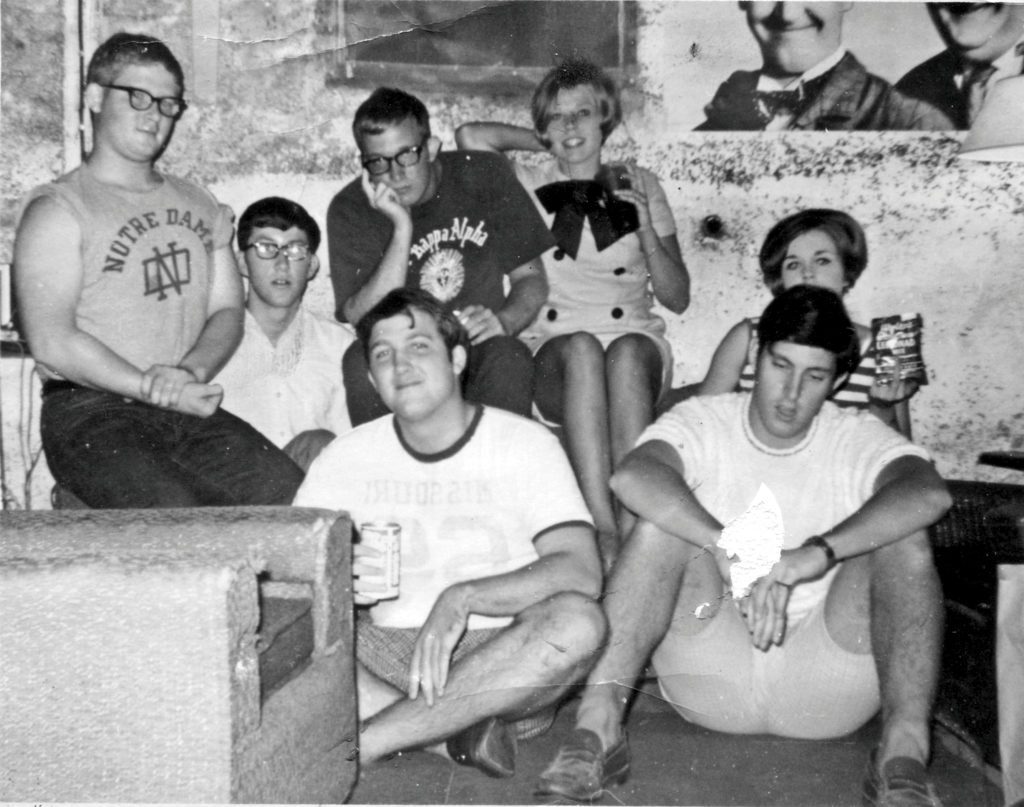
L-R: Richard Peck, Jim Bob Green, John Robison, Charlie Peck (seated), Jane Marshall, Joe Browning (seated), Lynn Strickland

I’m committed to the do-over for The Basement Diaries but I’m quickly discovering it’s going to take a lot longer than I anticipated. I keep discovering pages that had fallen behind the digital chest of drawers. I’m starting with just recreating all of the pages and getting them linked. I don’t want to think about re-scanning hundreds of photos. This is the signature image for The Basement Diaries. Everyone has a snapshot like this, that captured a time and place.

Next summer will be the 40th anniversary of “the basement summer,” so I’ll have to have the site back up before then. Which means even less blog time for smays.com.

NHL Capitals make news by reporting it

The Washington Capitals, a National Hockey League team, plan to send four reporters to Moscow to cover the International Ice Hockey Federation World Championship (underway). The Capitals will partner with Clearspring Technologies to deliver audio, video and text content to their site for Caps fans, as well as to local, national and international media outlets via a specialized widget.

The local medea elected not to cover the event so the Capitals decided the could and would. And share the news with new and traditional media outlets and syndicate it far and wide. [E-Media Tidbits]

My mind reels at the implications of this.

Let’s say the Pooterville Drum and Bugle Corps make it to the national finals in Bangor, Maine. The local radio station can’t afford to send a broadcast crew but the kids could throw up a blog and go crazy posting video, audio, stills, minute-by-minute reports… all brought to you by the Pooterville Sports Boosters Club. Does anyone doubt that a couple of passionate, knowledgeable fans can provide better, more complete coverage than the local radio station? And if the local station wants to air some of their stuff…great.

If I were running the local radio station (or newspaper, or TV station)… I think I might encourage this and provide the tools, training and web-hosting.

What are we going to build?

“A huge portion of our lives (as marketers, as consumers, as voters, as citizens) has been dominated by the fact that there were three or twenty TV networks. That this was a scarce resource. It’s not. Not any more. So, if there’s unlimited real estate, what are we going to build?” – Seth Godin

During my years doing affiliate relations for our news networks, most (all?) of our programming decisions were based on what we thought we could convince radio stations to “clear.” Coming up with an idea that 30 or 40 radio stations (out of 60) might agree was worth putting on the air was daunting. Mr. Godin’s post brought this to mind:

“Why not start the Debate Channel? 20 hours a week of live debate available online. Get a cable network to run three or four hours of highlights every week as an inducement to the candidates, but it will really be about the Net. If a candidate doesn’t show up, the others get more time to talk.”

We still have to program for our affiliates but we are no longer limited by that. So, what are we going to build?

Branding Yourself

“Personal branding is something I get a lot of questions about. People often ask me what they should do in order to get an established name out there and be seen as a major influencer in their industry. The reason they want this is because the second you accomplish this, the opportunities will come your way and you’d be amazed at the kind of business or money that just lands in your lap.” — Neil Patel at Pronet Advertising

I don’t remember hearing much about “personal branding” before blogs and podcasting. But if there is an “smays brand,” you’ll find it here.

I had lunch today with Chuck Zimmerman and it would be hard to find a better example of this concept. He and his wife Cindy work too hard to say the money “just lands in (their) lap,” but they’ve certainly created a unique brand in the world of agriculture marketing. I’d love to share some of Chuck’s amazing success stories but before he pays for lunch, he makes me sign an NDA.

What’s your brand?