Excerpts from The Teachings of Sri Ramana Maharshi (Edited by David Godman)
There is a single immanent reality, directly experienced by everyone, which is simultaneously the source, the substance and the real nature of everything that exists.
The Self is not an experience of individuality but a non-personal, all-inclusive awareness.
Sri Ramana’s God is not a personal God, he is the formless being which ustains the universe. He is not the creator of the univers, the universe is merely a manifestation of his inherent power; he is inseparable from it.
The mind turned inward is the Self; turned outwards, it becomes the ego and all the world.
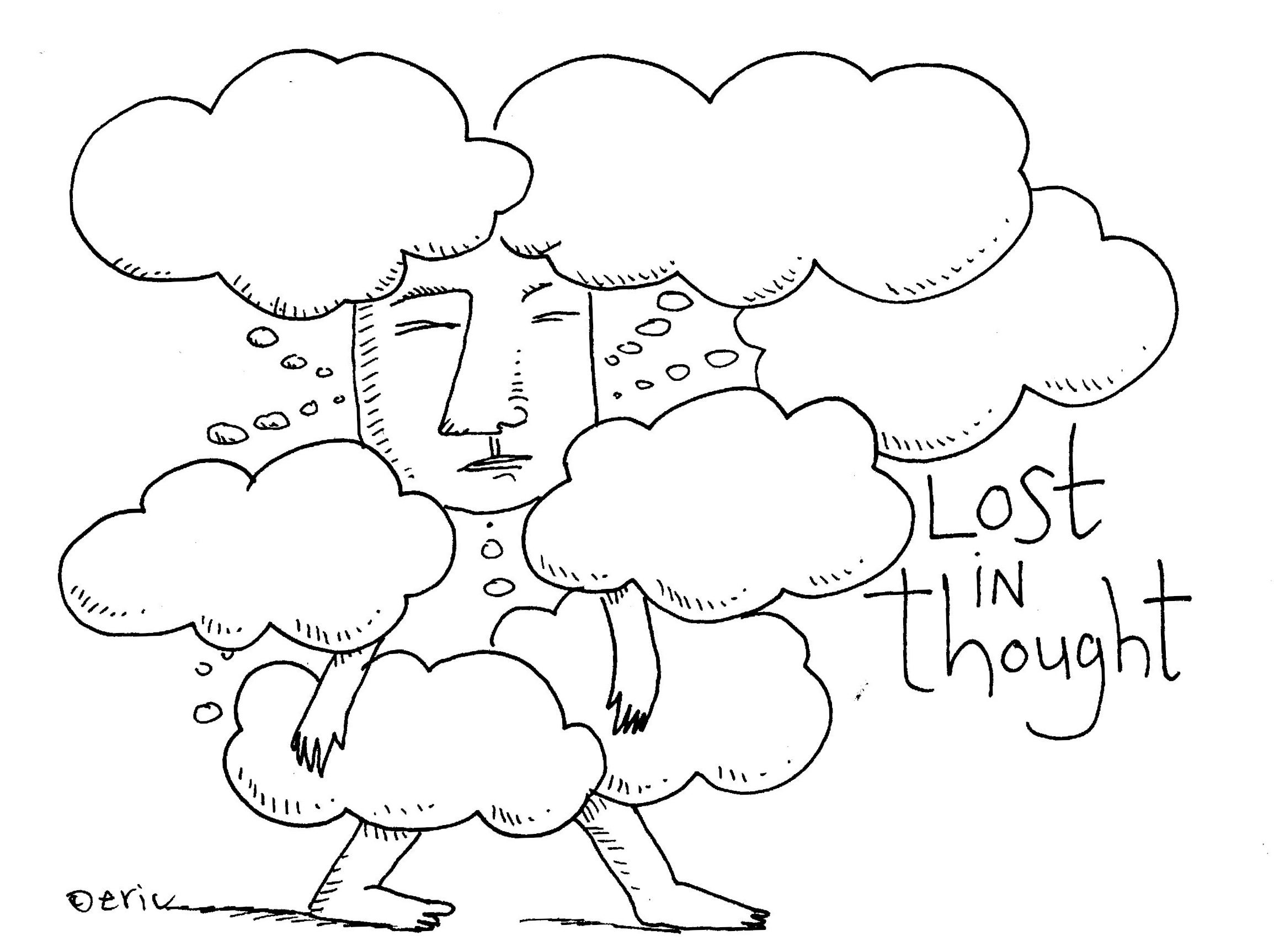
The thoughts are the content of the mind and they shape the universe.
To make room, it is enough that objects be removed. Room is not brought in from elsewhere.
Bliss is not added to your nature, it merely revealed as your true natural state.
Trouble and pleasure are only for the ego.
The state free from thoughts is the only real state.
It is the mind that veils our happiness.
Self-realisation could be brought about merely by giving up the idea that there is an individual self which functions through the body and the mind.
The aim of self-enquiry is to discover, by direct experience, that the mind is non-existent.
The mind and the ego are one and the same.
When the mind unceasingly investigates its own nature, it transpires that there is no such thing as mind. The mind is merely thoughts. The mind is only they thought ‘I’
The ego functions as the knot between the Self which is pure consciousness and the physical body which is inert and insentient.
The essence of mind is only awareness or consciousness. When the ego, however, dominates it, it functions as the reasoning, thinking or sensing faculty.
Realisation is nothing new to be acquired. It is already there, but obstructed by a screen of thoughts.
Reality is simply the loss of ego.
As the practice develops the thought ‘I’ gives way to a subjectively experienced feeling of ‘I’, and when this feeling ceases to connect and identify with thoughts and objects, it completely vanishes. What remains is an experience of being in which the sense of individuality has temporarily ceased to operate.
It is not an exercise in concentration, nor does it aim at suppressing thoughts; it merely invokes awareness of the source from which the mind springs. … From then on it is more a process of being than doing, of effortless being rather than an effort to be. … Ultimately, the Self is not discovered as a result of doing anything, but only by being.
If you are vigilant and make a stern effort to reject every thought when it arises you will soon find that you are going deeper and deeper into your own inner self.
You have to ask yourself question “Who am I?’ This investigation will lead in the end to the discovery of something within you which is behind the mind. Solve that great problem and you will solve all other problems.
One must be completely free of the idea that there is an individual person who is capable of acting independently of God.
(The) final destruction of the ‘I’ takes place only if the self-surrender has been completely motiveless.
If one surrenders oneself there will be no one to ask questions or to be thought of.
You must be satisfied with whatever God gives you and that means having no desires of your own. You can have no likes or dislikes after your surrender.
It is the higher power that does everything, and man is only a tool.
The Self does not move, the world moves in it.
Pleasure or pain are aspects of the mind only. Our essential nature is happiness. But we have forgotten the Self and imagine that the body or the mind is the Self.
So long as there is thought there will be fear. #
The ego is the source of thought. #
Because you identify yourself with the body, you think that work is done by you.
We must play our parts on the stage of life, but we must not identify ourselves with those parts. #
Many a man would be only too glad to be rid of his diseased body and all the problems and inconveniences it creates for him if continued awareness were vouchsafed to him. It is the awareness, the consciousness, and not the body, he fears to lose.
One first creates out of one’s mind and then sees what one’s mind itself has created.
Clearly the world is your thought. Thoughts are your projections. The ‘I’ is first created and then the world. The world is created by the ‘I’ which in its turn rises up from the Self. (We) must admit that the world is (our) own imagination.
The universe is real if perceived as the Self.
You do not know what you were before birth, yet you want to know what you will be after death. Do you know what you are now?
Experience takes place only in the present, and beyond experience nothing exists. Even the present is mere imagination, for the sense of time is purely mental. Space is similarly mental. Therefore birth and rebirth, which take place in time and space, cannot be other than imagination. Real rebirth is dying from the ego into the spirit.
Birth pertains to the ego, which is an illusion of the mind.
God never acts, he just is. He has neither will nor desire. … The totality of all lthings and beings constitutes God.
Whatever this body is to do and whatever experiences it is to pass through was already decided when it came into existance.
As long as individuality lasts there is free will. … Only the ego is bound by destiny and not the Self.
Surrender can never be regarded as complete so long as the devotee wants this or than from the Lord.