
Blogging the Hoosiers

Disclosure/Disclaimer: The company I work is the current multimedia marketing and broadcast rightsholder for Indiana University (and a bunch of other high profile colleges and universities). The views and opinions expressed on this blog are my own and have no connection to Learfield Communiction.

Newspaper BlogsIt was brought to my attention today that a couple of Indianapolis newspapers –The Herald-Times and The Indianapolis Star– were blogging about the Hoosiers. Hoosiers Insider and the Hoosier Scoop are pretty typical for newspaper blogs.

Hoosier Scoop had audio of a post-game press conference and included short video clips from the press conference and students storming the floor following Indiana’s 71-66 win agaisnt No. 2 Wisconsin. And they had someone (an intern?) live-blogging the big game.

“3:38, second half: Indiana 64,Wisconsin 59”

Companies like ours –and there are only a handful– pay a lot of money for exclusive broadcast and marketing rights. But we’ve entered the world of blogs and podcasts and YouTube and camera phones and maintaining “exclusive” control of the sporting events becomes something of a challenge.

And what’s a “broadcast” now? Just radio and TV? And the fans are getting in the act. How do we stop them from putting audio, video and still images on their blogs and in their podcasts? And should we stop them? Should we encourage them?

But back to the Indianapolis blogs. Here’s what I’d do:

Hold a contest to find the best Hoosier blogger in Indiana. To be eligible, you have to have been blogging for at least six months. Fans come to a website to vote on the three finalists. The winner gets a brand new laptop and digital camera…and a seat in the press box for every home game, where they blog the game. What the hell, let’s plut a webcam in the booth so fans can watch the announcers. I’d have our on-site producer pulling play-by-play audio highlights and making them available to post. All of this, of course, would be sponsored.

I’d leverage our broadcasts and access to coaches and such, to out-blog the newspaper guys.

I remember, back in the mid-nineties, the first time we saw a university include webcasting in their bid specs. It seemed almost… cute. A novelty. I can’t wait to see what the next ten years bring.
Improve your swing with video iPod

Baseball players are using their iPods to do their pregame video studies. According to a story by Jayson Stark at ESPN.com, Astros pitcher Jason Jennings thinks his iPod turned his whole season around. Stark predicts: “One of these days you’ll see a pitcher take a walk behind the mound during a key at-bat, pull out his iPod and take a quick video-refresher course before launching the big pitch of the night. Heck, if NFL quarterbacks can get plays radioed right into their helmets, why not?” [Thanks, Barb]

Unrelated sports note: I’m guessing I might be one of the few people on the planet that has NO idea which two teams are playing in Sunday’s Super Bowl.

Rose Bowl announcer talking about bloggers?

TV on in the background. Last couple of minutes of the Rose Bowl. I thought I heard the announcers say something about “the bloggers will be out” if Michigan loses. Did I hear that correctly?

I have no doubt there are a shit-load of fan blogs for every college and pro team, so I’m not sure why I would be surprised the subject would be mentioned in the broadcast. Can any of you sports fans enlighten me on this? Have bloggers become enough of a factor they get mentioned in such high-profile broadcasts?

ESPN launches local podcast network

ESPN is launching a local podcasting network. Sounds like they’re starting with shows from their five owned-and-operated stations while inviting affiliates to be part of the podcast network.

For more than a year, ESPN has been offering about 20 podcasts of national ESPN programming through PodCenter and selling advertisers two spots, one 15-second spot rolling prior to the content and a 30-second post-content spot. The new local podcasting network provides advertisers the opportunity to buy a local podcasting network or target individual markets or regions. Participating affiliates will get a share of the network revenue sold.

The local stations could (and may be) podcasting on their own but I have to believe this approach (whole greater than sum of parts) makes sense. Once clearance becomes a non-issue, there might be an explosion of such podcast networks. [Mediaweek via Radio and Records]

Ivy League Long Tail

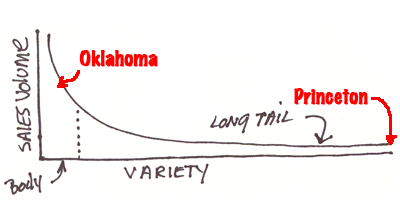
The company I work for owns (leases?) the multi-media marketing rights for some of the largest collegiate athletic programs in the country. So this story in USA TODAY about smaller colleges and conferences turning to the web to to deliver football and other sports, jumped out at me.

“Northern Arizona offered webcasts of home football games last year. Using the four cameras already set up to provide replays on the stadium scoreboard, the school added audio from their radio broadcasts along with continually updated statistics. Fans will be able to choose which team’s audio feed to which to listen. Games will be archived and can be downloaded to portable devices like Apple Computer’s iPod.

This fall, ESPN’s new online channel, ESPN 360, will show 30 football games, 10 of them, involving teams such as Virginia Tech, Purdue, Miami and Minnesota exclusively on that website. The site, available to about 6 million homes, will also have such features as chat rooms, statistics and online polls.

The schools don’t see the Web replacing television. Major conferences make millions of dollars from their football and basketball television contracts, but many also plan to webcast other sports, such as volleyball or swimming.


The Big Ten Conference announced plans this summer create its own cable channel for minor sports. The Big Ten Channel also will be available through the Internet, iPods, cellphones and other technologies.”


Note to Learfield Senior Management: Read The Long Tail to understand why and how this is happening and what it might mean for those of us at the “head.”