Newsletters

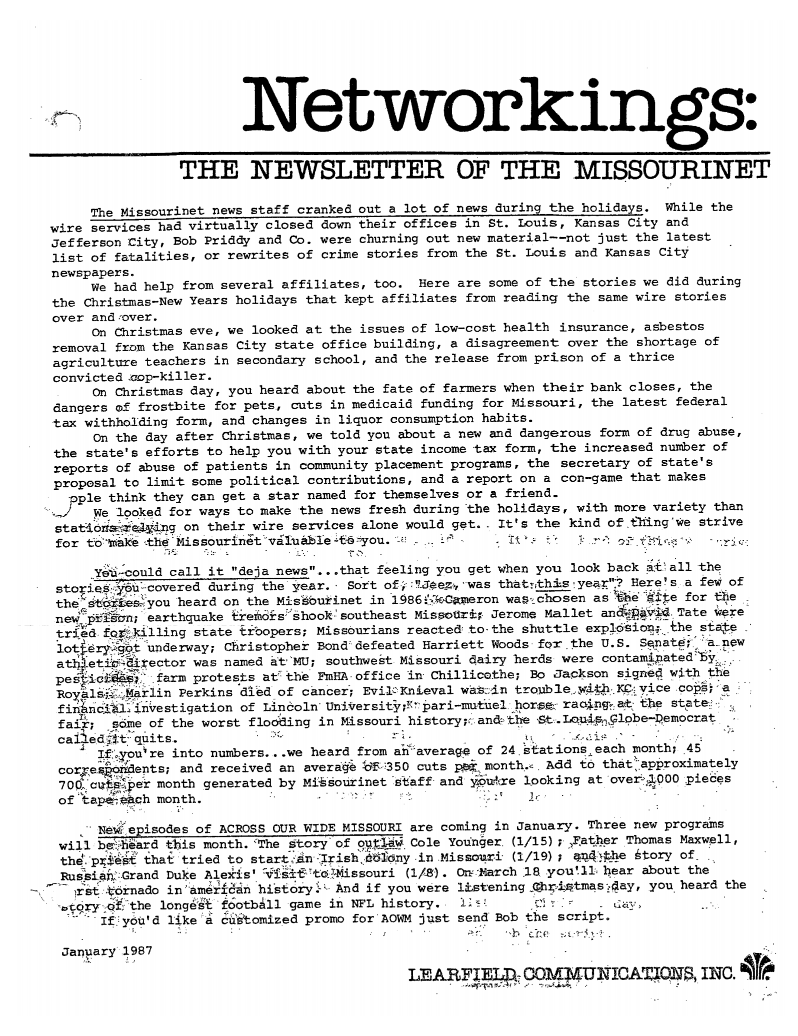
I try not to long for “the way things used to be,” but it’s difficult. Newsletters, for example. In the late 80’s we sent a monthly newsletter to affiliated radio stations. One page, front and back. Typed, photocopied and mailed (took 4 days to reach some stations). Because the space was limited, one gave thought to what to put in and what to omit.

Facebook and Twitter accounts replaced newsletters long ago. That’s not right. Email replaced printed newsletters. So little thought goes into what we “share” these days, why bother?

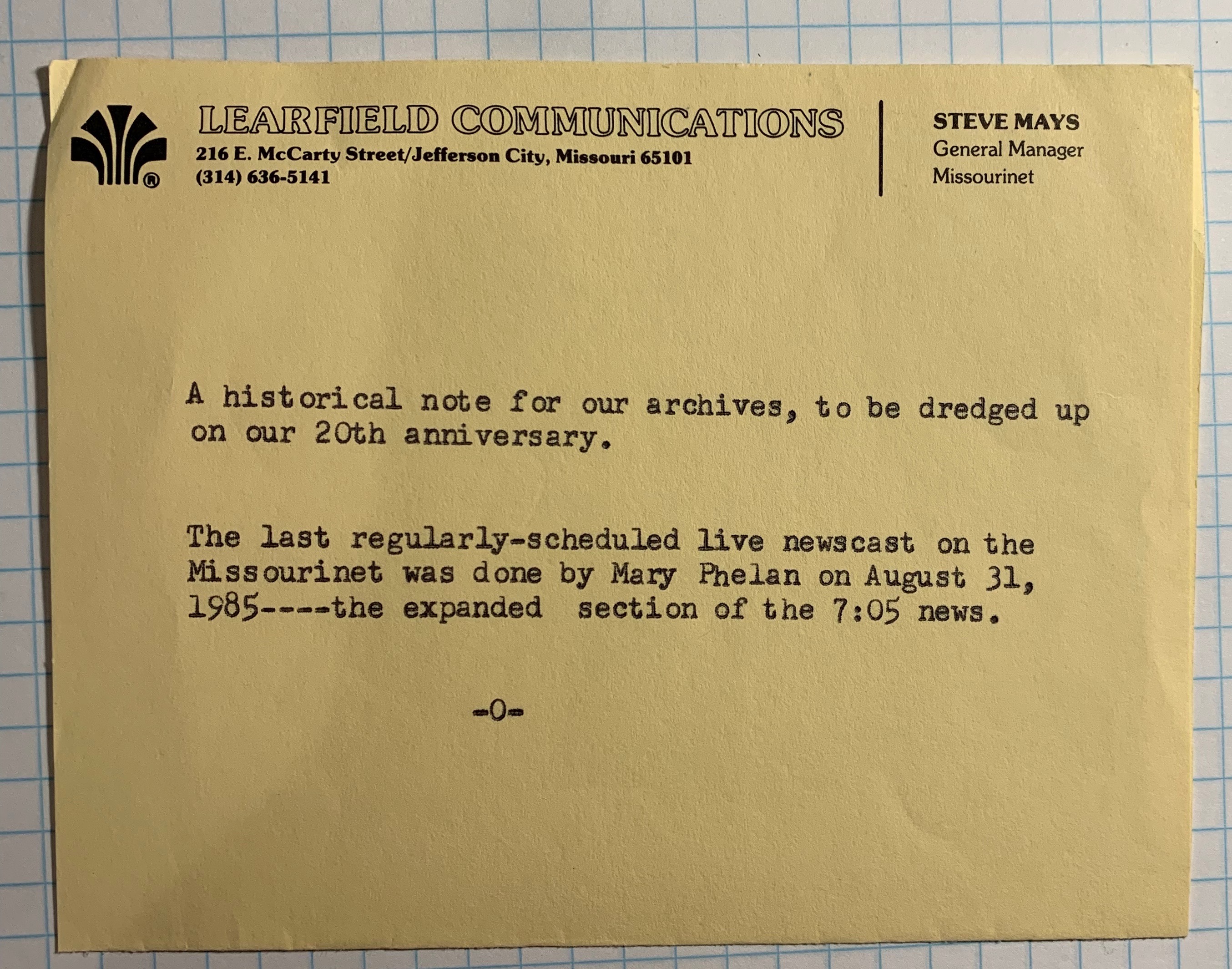
I left a note on your desk

Found this note among my few remaining paper files. Always feels a bit strange to find a piece of typescript even though I used a typewriter for 20 years. I wonder how this bit of history would be preserved today. The note would almost certainly be digital. A text message (IM) or an email. No reason for anyone to print it so if they kept it at all it would be one of thousands (millions?), lost in a cloud. One might argue it will have a longer digital life but something is lost. [Bob Priddy remembers Mary Phelan]

Portable cassette recorders

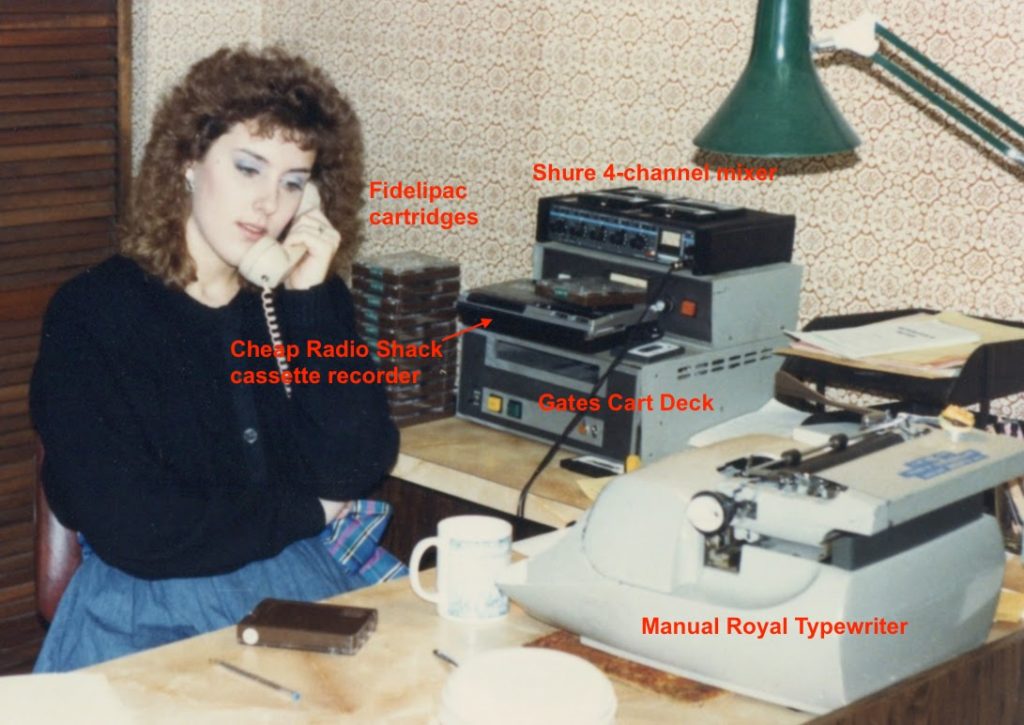
Came across this old photo (circa 1988) today and was — once again — struck by the gear we used. This is Lisa Wolfe, a reporter for The Missourinet.

The Radio Shack recorder is jacked into the Shure mixer which is wired into the big cart deck and the phone. So a reporter recorded audio from the phone (with a push-to-talk button in the hand piece); they then dubbed the audio bits they wanted to carts which they carried into the studio for newscasts. When they went into the field they unplugged the cassette recorder.

There were better recorders available but they were all much more expensive than the Radio Shack model which was damn near disposable. The problem was the buttons. Using the recorders as the did (endlessly starting, stopping, fast-forwarding, rewinding) trashed the buttons in no time.

The early SuperScopes (by Marantz) were good but every time they came out with a new model with more features, the buttons got flimsier and flimsier. And the recorders got more and more expensive. And they were nearly impossible to repair. So… Radio Shack.

Thinking back on those days, it occurs to me the cassette recorder was — in some ways — the laptop computer of that day. In the sense that it was our main tool for creating the content of the day (for us): audio.

Of course you needed a radio station or (in our case) a network of radio stations. But we sort of took that for granted.

Tweeting the execution

My Small History of Learfield and the Internet (1995-2005) is complete. Every drawer I open has some interesting new tidbit. Missourinet News Director Bob Priddy (now retired) share’s this gruesome bit of history:

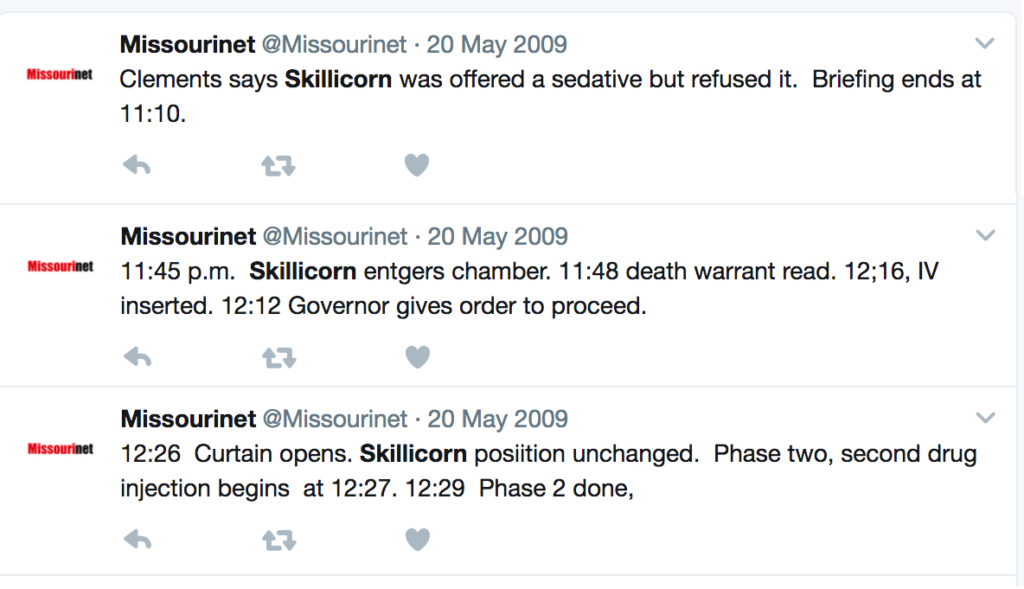
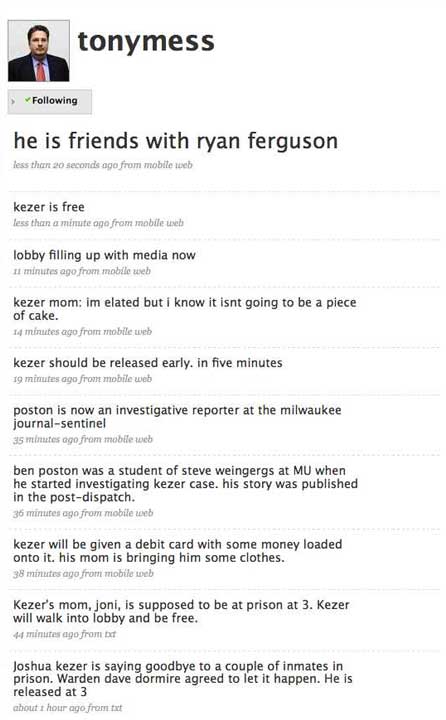
“One of the highlights of our coverage of executions was when I became ( I think) the first reporter in the world who tweeted an execution. Dennis Skillicorn was executed in May, 2009. I could not take anything into the witness room except my notebook and a pen, and the book I had been reading in the waiting room, but I kept a careful chronology and as soon as we came out, I posted tweets on a minute-by-minute basis describing the events.

I stopped using Twitter in November of 2016 because it had become toxic with politics.

Missouri Death Row Audio

In the late ’90s I created a website called MissouriDeathRow.com. A Missourinet reporter had served as a witness (while covering) of every execution going back to 1989. There was no death row website because a) the web was still pretty new at the time and b) the Missouri Department of Corrections went to some lengths to avoid the term “death row,” even though prisoners sentenced to — and awaiting — execution were housed together.

At each execution, a packet of information was handed out to reporters and a stack of those were gathering dust in the Missourinet newsroom. News Director Bob Priddy and I began putting that information online and it quickly became the de facto site for information about capital punishment in Missouri. I maintained the site until I retired in 2012.

The site included a page with some of the history of capital punishment, including audio recorded by Missourinet reporters. As of this writing, much of that audio is no longer available on the site. The site was moved a few times, different servers, different platforms… files get misplaced or lost. My buddy Phil Atkinson did his best to find some of those and I’ve archived them here.

Missouri hasn’t executed anyone in a couple of years but they had quite run at one point. The audio includes post-execution news conferences, interviews with victims’ families, opponents and proponents, and the condemned.

Bob Priddy honored

bob-steve-clyde-A
Bob Priddy is the best journalist I ever met and one of the best people I’ve known. He was the guest of honor last night at an event in Columbia, MO. Bob is retiring in a month or so, after 40 years as the news director of The Missourinet.

The event was cooked up Senator Claire McCaskill and Clyde Lear, the guy that started the company Bob worked for and it was, as they say, a special night. There was a great tribute video that I hope makes it to YouTube so I can share it here.

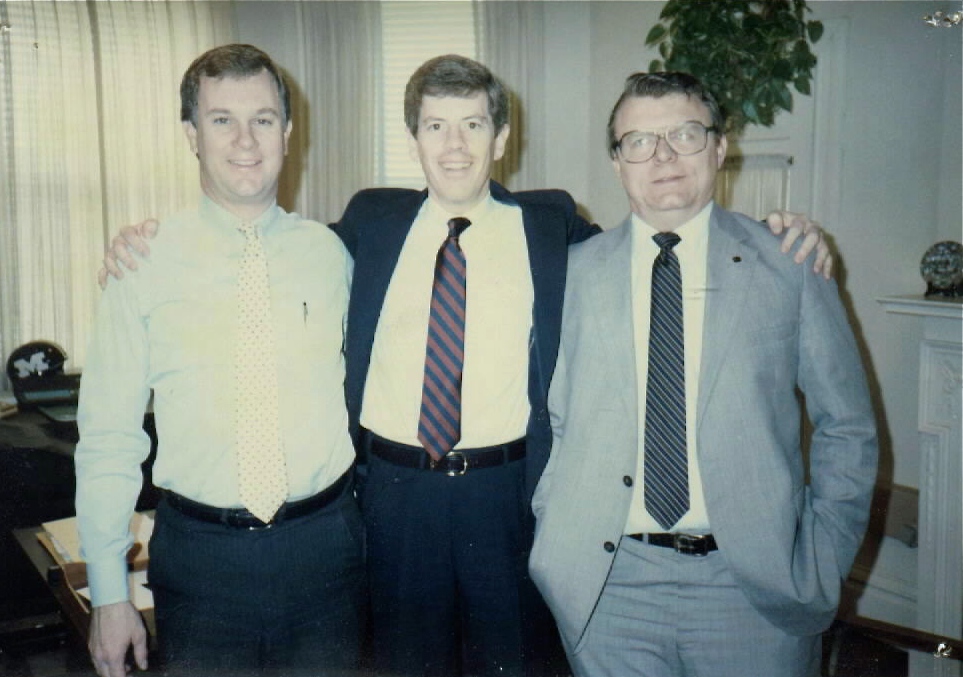
I started working with Bob and Clyde in 1984 and was very proud to do so, as you can see from this photo. I had just come from a small town radio station and getting to work with Bob Priddy at “the network” was my idea of making it.

Clyde_Bob

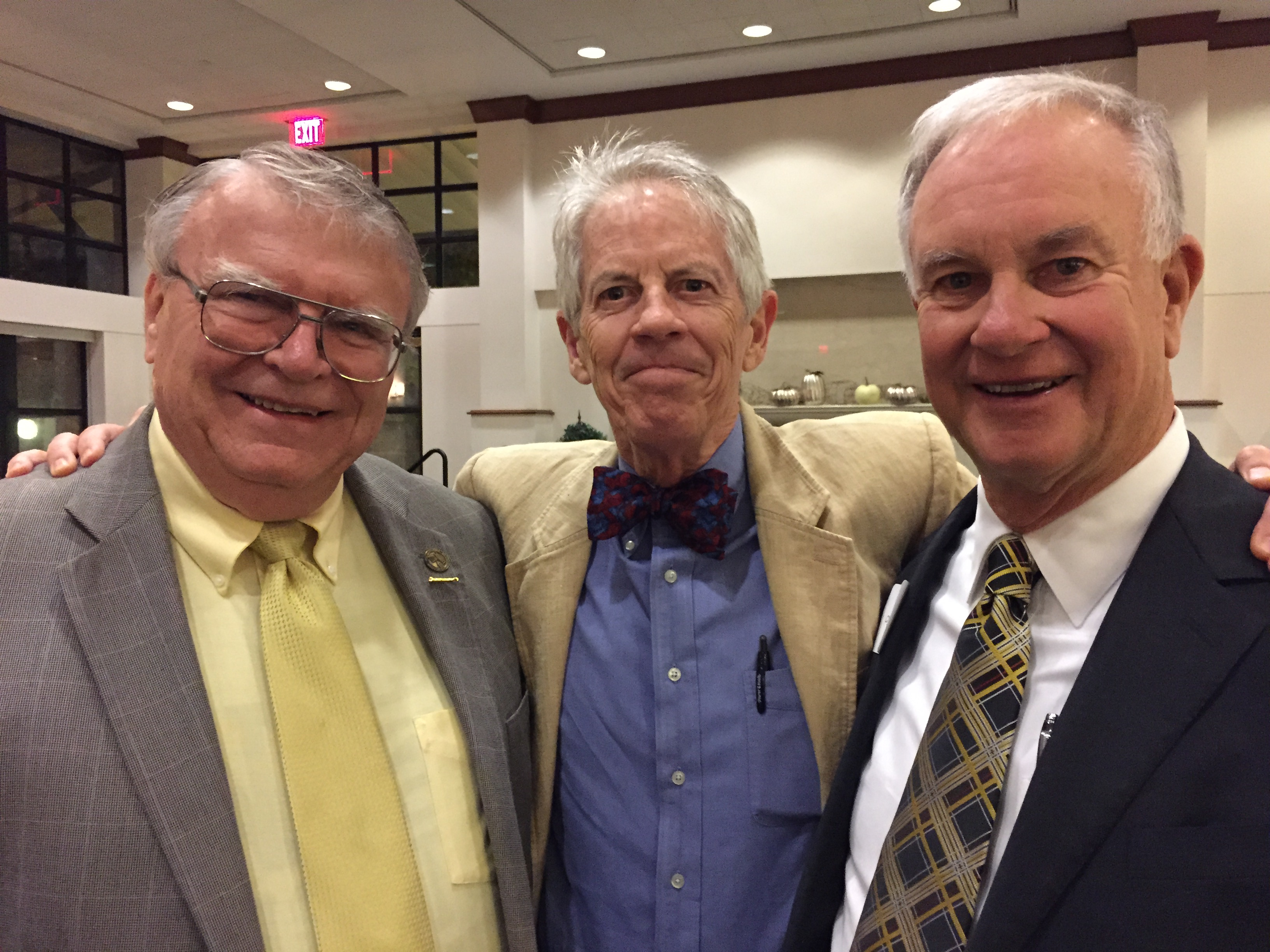
I (sort of) tried to recreate that photo last night but in the excitement of the evening, I got the order wrong. No matter. Still proud to call these two men my friends.

Bob Priddy: How it began

In December (2014) Bob Priddy will retire from his job as news director of The Missourinet. The network’s first and only news director. In this interview Bob talks about how the network began; interesting people and big stories; politics and history. I was privileged to work with Bob for almost 30 years and he’s one of the most talented and interesting people I’ve met. The interview runs just under half an hour. Hardly enough time to reflect on his amazing career.

Twitter coverage of execution

Missourinet (a Learfield network) News Director Bob Priddy covered last night’s execution of Dennis Skillicorn. Reporters and witnesses can’t take cell phones past a certain point, but Bob was planning to use Twitter to file updates before and after the execution (he was a witness).

The wifi he expected wasn’t available so he took notes and posted to @missourinet when he got back on line (at the motel, I assume).

As I expected, Twitter was a very effective tool in the hands of good and experienced reporters. Here’s a screen shot from early this morning.


Had reporters been allowed to keep their Blackberrys and iPhones, this is probably as close to live coverage of an execution as we’re likely to get.

And in the hands of someone as responsible as Bob Priddy, I think this might be a good idea. As I understand it, the rationale behind having witnesses is to insure the people of Missouri “see” this ultimate punishment. Twitter might be the least sensational way to accomplish this on a mass scale.

I’ll make a prediciton here: If not in Missouri, some state will allow or provide this coverage.

National Socialist Movement (Nazis)

3020503672_bf14fdde9f

A  rag-tag group calling themselves the National Socialist Movement were in town last weekend. Missourinet reporter Steve Walsh covered the brief march and rally on the steps of the State Capitol. This is my favorite photo from those he snapped.

Are the two young girls at the lectern singing? Perhaps America the Beautiful? Or some German beer hall song? Could they be making a speech? ("What the Neo-Nazi movement means to my junior high class")

How fucked up will the little boy (seated) be as he gets older. Mom thinks she’s doing him a favor, teaching him to hate.

Some are holding their hands over their hearts, others giving the old Heil Hitler stiff arm. But, shit, there was no time to rehearse and it was cold and… fuck it, we’ll just look tough in our SWAT gear.