1946 Jeep CJ2A

I spent a couple of hours at the Jeep Reunion that took place in Fulton, MO on Friday and Saturday (I’ll share a few photos in a separate post). The highlight for me was the Latimer Family Jeep, a 1946 CJ2A.

The Jeep has been handed down to C. J. Latimer who was at the reunion with his father, step-father and grandmother. It was purchased by C. J.’s great grandfather in 1946 for use on the family farm near Marshall, MO.

A local businessman opened a Willys distributorship just after the war and the Latimer Jeep was the first one sold in Saline County. C. J.’s great grandfather purchased the Jeep for $150 and it arrived in a crate, ready for assembly!

The Latimer Jeep has an extension to the tub that was sold as a dealer accessory for agricultural use. According to family history, Great grandpa Latimer had to sign an affidavit that the Jeep would be used for agriculture. And when it was time to put up hay, the Jeep could be put in low gear and great grandpa Latimer could walk along beside the Jeep loading bales of hay.

C.J’s great-grandfather added a glove compartment but the Jeep is –for the most part– unchanged since it was purchased almost 80 years ago. The only hands that used and worked on the Jeep were C. J’s grandfather and great grandfather.

C. J. plans to get the Jeep drivable but plans no other changes.
Jeep Reunion

The annual Jeep Reunion in Fulton, MO was modest as such events go (a plus in my book) and I didn’t go nuts with photos. To my newbie eye there was a sameness to many of the Jeeps, but a few caught my eye.

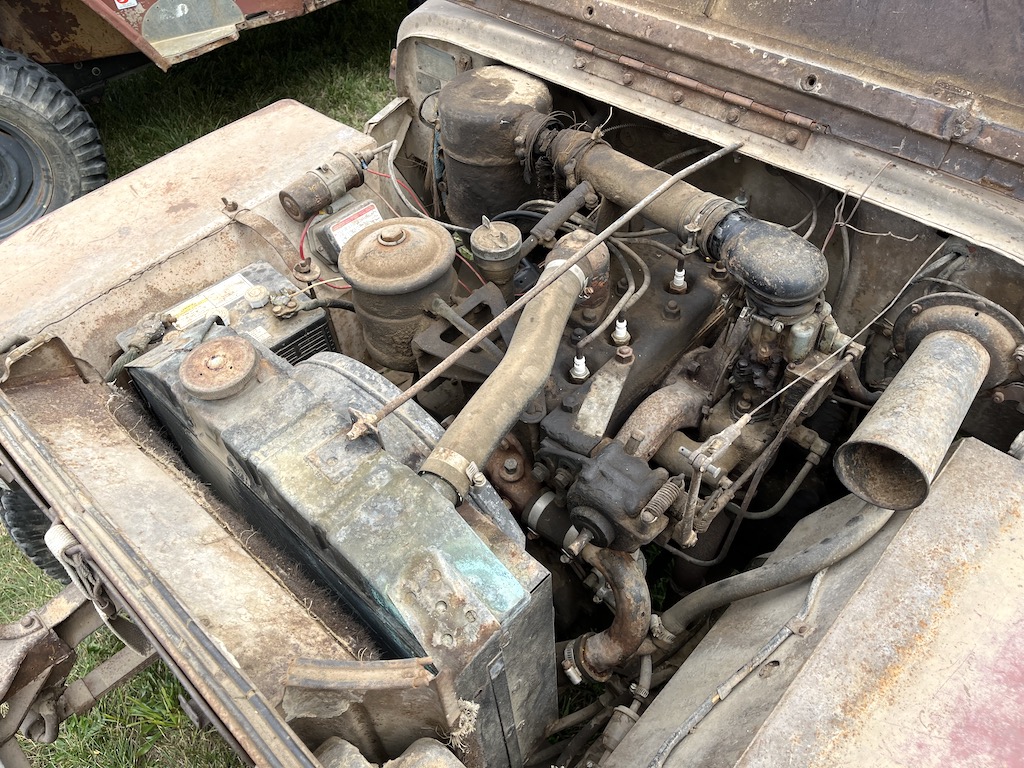
Engine of a 1946 CJ2A. Owners insist very little has been done to the Jeep over the years.
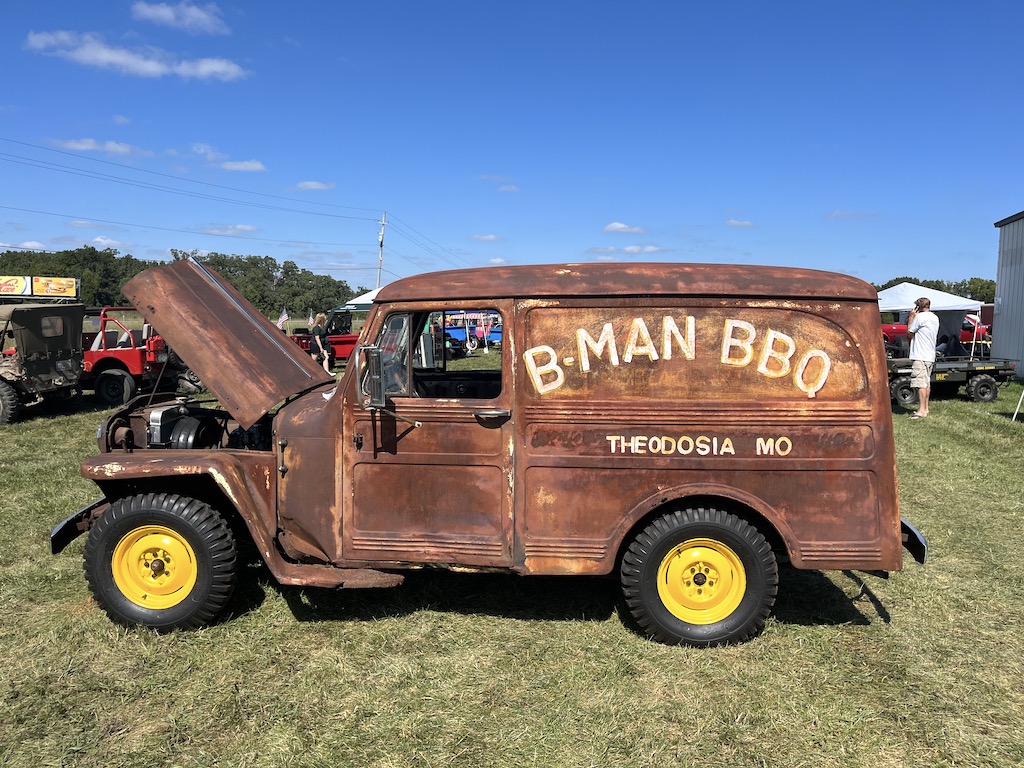
1948 Delivery Sedan

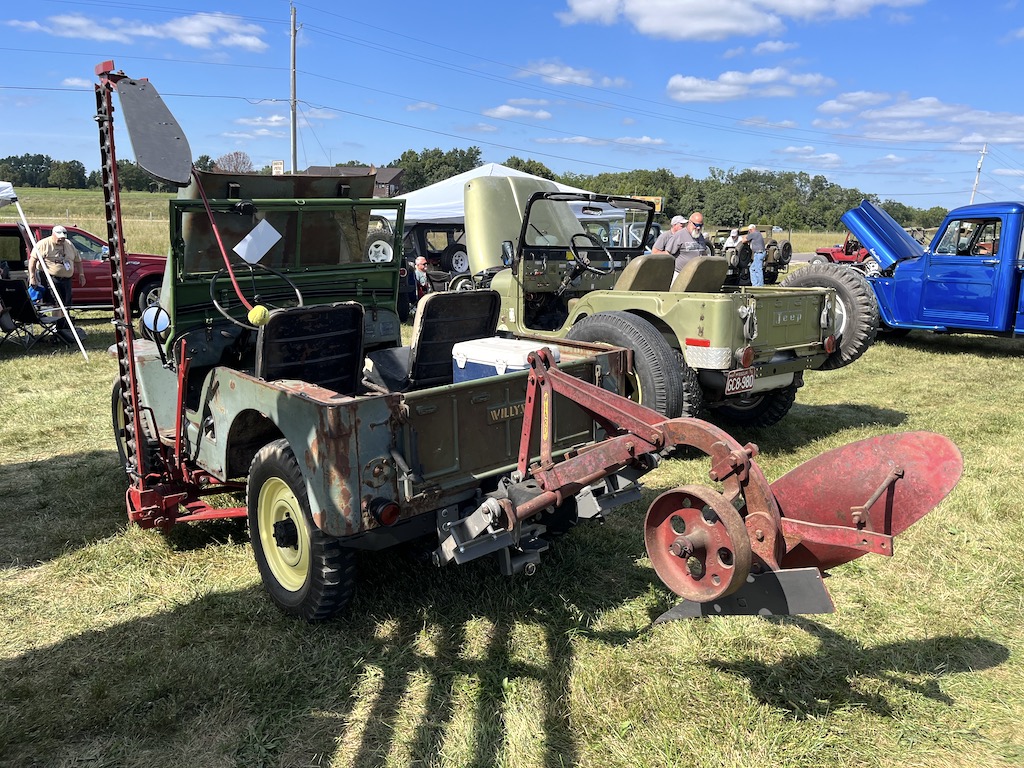
Another 1946 CJ2A with a couple of farm implements that made the Jeep popular with farmers.

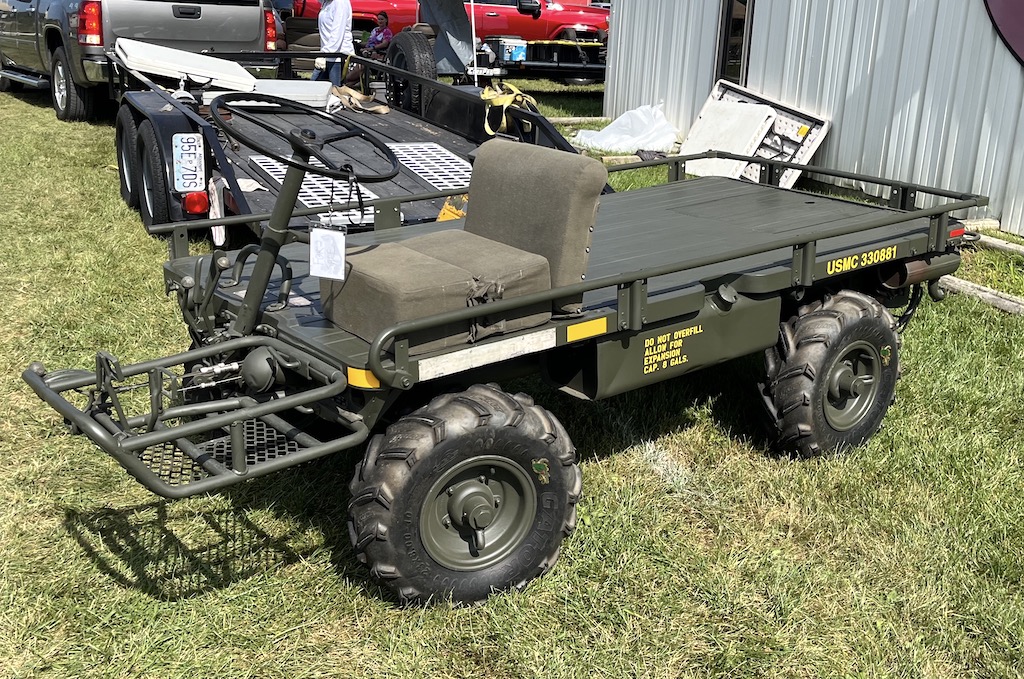
I believe this is an M274 ½-ton 4×4 utility platform truck. These were introduced in the mid-50s but I’m not sure of the year on this one. Also known as the MULE.

Fancy pants Jeep

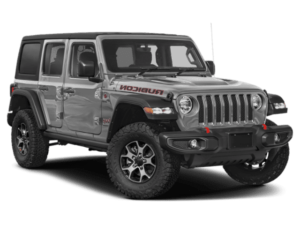
Didn’t meet the owner of this fancy new Jeep but took a moment to check out his ride. Deluxe interior with some kind of two-way radio affixed above the driver’s seat. CB radios are not still a thing, are they? Sorry, but just doesn’t say “Jeep” to me.

The Family Jeep

Steve Hoefer, an online acquaintance, shares his family’s Jeep story:

Ours is a 1946 Willy’s CJ-2A. Originally I believe it was Normandy Blue with yellow rims. I don’t think Dad bought it new, he’d have been a bit young in ’46, but he bought it for farming.

They stopped driving it before I was born, though apparently all of my siblings bounced out of it at some point or other. I’d always known it as a busted thing parked in an outbuilding, home to generations of raccoons. Around 1990 my dad decided to drag it out so he and a buddy could fix it up. He wasn’t interested in making it look new, I don’t even know how we’d have addressed the rust. It took quite a few parts and rebuilding the engine. When it works it sounds just like on MASH and handles like an unruly toddler. I’ve never had it above 30 mph because I don’t think I’d keep it on the road or me in the seat. Both dad and his buddy have passed now and none of the rest of us know engines enough to keep it in good repair. We do have the full service manual. If someone was motivated enough they could get it back into shape without too much trouble.

At one point my nephews made a potato cannon and we mounted it on top and pretended we were in Rat Patrol. (We put the windshield frame on, but never felt safe putting the glass in. Also we never found the front bumper so I bolted a piece of 4×4 to the front.)

What is the essence of a Jeep?

Perhaps the better question is, do vehicles have an essence.

“the intrinsic nature or indispensable quality of something, especially something abstract, that determines its character.”

I put this question to a handful of people I know who might have given some thought to such a question.

I’ve been watching lots of videos about the history of the Jeep as well restoration projects. Seems there’s as much mystique and passion surrounding the Jeep as Land Rover.

The historical videos started with the initial development during WWII; then the transition to Jeeps made for the agricultural market; and on to the more mainstream civilian models.

The Jeeps I see on the road (and there seems to be a LOT) bear little resemblance to those early Jeeps. Looks like the name and the grill (maybe) is all that’s left. Which got me wondering… when did these models cease to be a “true Jeep?” If Mitsubishi purchased the brand and putting the Jeep name on one of their models, nobody would consider it a Jeep.

We saw this mindset at work with the Land Rover “Santana.” The forums were full of guys who insisted that is not a “real” Land Rover. I suspect no two Jeep owners could agree on this question. And I don’t particularly care, except from a philosophical standpoint.

If I get any takers on this question, I’ll share them in comments below.