
Teens love iMessage

Every iPhone user I know relies on iMessage heavily. It’s the app I use more than any other on my phone. Is iMessage a form of social media? I never considered it to be but the stats below make wonder if it might be.

“US youth between the ages of 10 and 19 average 25 iMessages each day. That’s compared to 14 messages over Facebook Messenger, and 8 snaps on Snapchat. The estimates propose that while Apple is often left out of the chat app ecosystem, it could be the most used platform and one of the best for brands and developers to reach US consumers.” (Business Insider)

The iPhone continues to be the most popular smartphone among teens, according to data gathered by investment firm Piper Jaffray in its most recent semiannual U.S. teen survey. 76 percent of teens surveyed own an iPhone, up from 69 percent in the spring of 2016, and the highest ownership level seen in the teen survey. A record 81 percent of teens surveyed said they expect their next phone to be an iPhone, up from 75 percent a year ago. (MacRumors)

Apple is making iMessage more functional with features like Peer-to-peer (P2P) payments via iMessage with Apple Pay. And they want it to be the go-to interface for business-consumer interaction. An upcoming update to iMessage includes iOS Business Chat, a “powerful new way for businesses to connect with customers directly from within Messages,” according to Apple.
Voice-to-text note using Siri via AirPods

I created a note on my iPhone using Siri and voice-to-text. (In a noisy coffee shop). Music is great on the AirPods but my primary reason for the purchase was to see if/how AirPods could change the way I interacted with the iPhone. Using Siri (far from perfect) to read messages and email; create and send messages and email; schedule reminders; etc. Without removing the phone from my pocket. [Video runs 20 sec]

iPhone SE: Something smaller in my pants

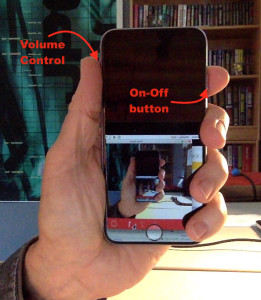
iphone6SI purchased the iPhone 6 in September of 2014 and traded it in for the 6S a year later. Now, just seven months later, I’m trading up/down/over for the new iPhone SE. The review below touches on most of my reasons. I always liked the smaller versions of the iPhone but they kept putting must-have (for me) features in the larger phones. With the SE, I can get those features in a smaller phone better suited to my Trump-like hands. But the change that sealed the deal for me was putting the on-off switch back on the top of the phone… WHERE IT BELONGS! A day doesn’t go buy that I don’t accidentally turn my phone off while adjusting the volume (see image below).
I thought the days of smaller (perfect) phones were forever gone. Thank you, Apple. Here’s some more money. This review mirrors my thinking on this.

One careless moment

I’m quick to judge (and harshly) those who get scammed by email. I never download attachments or click links in emails from people I don’t know. I often check email headers or URLs to see if they’ve been spoofed. As for giving out my credit card info over the phone… never! And then I did.

I got a phone call one morning this past week from a woman who works in the billing department of the health care provider I use. Said they’d received a payment slip from me (USPS) but I had failed to enter the credit card number. She knew the amount. I said I was busy at the moment but would call back. I did, by hitting that number in the RECENTS list on my phone. Asked for her by name and gave her the card number.

Dumb. Turned out she was legit but dumb none the less.

When discussing this with my less-dumb friends we theorized how a scammer could have known the exact amount of the payment in question. Since I mailed it, someone could have intercepted that piece of mail and gotten the amount. Or, in theory, they could have social engineered the info from the health care provider. My obvious mistake was not verifying the correct phone number and placing the call instead of clicking the RECENTS link on my phone.

Surely, I cried, there must be a way to use my high tech smart phone to protect from such carelessness in the future. Turns out there are less than a dozen people who I would want/need to immediately take a call from. I’ve added those to my FAVORITES list in the iPhone and everyone else automatically goes to voice mail. Where they’re informed the best way to reach me is IM or email. And if they don’t already have my address or number, they’re SOL.

I’m still a little stunned I could have been so careless.

Surveillance Capitalism

“What if, when I write down a thought on my phone to remember it later, what I am actually doing is extending my mind, and thereby extending my self using the phone. […] we extend our biological capabilities using technology. We are sharded beings; with parts of our selves spread across and augmented by our everyday things.”

“My iPhone is not like a safe any more than my brain is like a safe. It is a part of my self. In which case, if you want to get into my iPhone, what you really want to do is to violate my self.”

“Personal data isn’t the new oil, personal data is people. […] The business model of mainstream technology today is to monetise everything about you that makes you who are apart from your body.”

The nature of the self in the digital age » – Surveillance Capitalism – Part 2 »

Shirt Pocket Video


The video above runs about 50 seconds and was recorded with my iPhone in my shirt pocket. I got the idea from this from the 2013 Spike Jonze move, Her (Joaquin Phoenix and Scarlett Johansson).

There are times when I would like to record video … discreetly. Some folks — even in very public places — get all goofy about being recorded. (See Google Glass).

While the iPhone looks quite natural in my shirt pocket, the vertical orientation results in the clueless video the rest of the world thinks is okay. But my new iPhone 6S records 4K which allowed me to crop and wind up with the CORRECT aspect ratio.

Walking results in pretty bad video but once standing still, it’s pretty good. Same for the audio.

Little Rice: Smartphones, Xiaomi, and the Chinese Dream

Amazon: “Smartphones have to be made someplace, and that place is China. In just five years, a company names Xiaomi (which means “little rice” in Mandarin) has grown into the most valuable startup ever, becoming the third largest manufacturer of smartphones, behind only Samsung and Apple. China is now both the world’s largest producer and consumer of a little device that brings the entire globe to its user’s fingertips. How has this changed the Chinese people? How did Xiaomi conquer the worlds’ biggest market” Can the rise of Xiaomi help realize the Chinese Dream, China’s bid to link personal success with national greatness? Clay Shirky, one of the most influential and original thinkers on the internet’s effects on society, spends a year in Shanghai chronicling China’s attempt to become a tech originator–and what it means for the future course of globalization.”

A few excerpts:

The mobile phone is a member of a small class of human inventions, a tool so essential it has become all but invisible, and life without it unimaginable.

There are only three universally personal items that someone will carry with them no matter where they live. The first two are money and keys; the third is the mobile phone, making it the first new invention added to that short list in three thousand years.

The number of mobile phone users crossed 4.5 billion last year, and because of dual accounts, there are now more mobile subscriptions in the world than there are people.

A smartphone is as different from a standard-issue Nokia 1100 as a computer is from a typewriter.

Mobile phones are a funny product, midway between commodity and luxury. They are a commodity in that everyone needs one. They are a luxury in that a phone makes a significant personal statement.

Status is a bigger feature of the iPhone (in China) than in the U.S. Electronics stores display phones running Android with the screen facing out, as usual, but iPhones are often displayed case out, to show off the Apple logo.

Nokia went from being the world’s most important mobile phone company to an also-ran in three years, collapsing into Microsoft’s waiting arms after another three, a generation of dominance undone in half a decade

If you make something that appeals to 5 percent of the Chinese population, you have a potential market the size of France.

Radio dial just too small

podcastsBeen thinking some more about broadcasters lobbying for mobile carriers to turn on the FM receiver chip in phones. Never gonna work. Radio dial just too small. A little back-story:
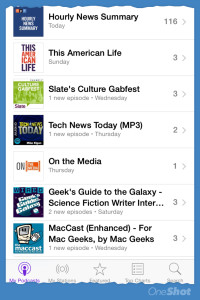
Since getting my first iPhone several years ago, I’ve always listened to music with earbuds when in the car. The 4Runner didn’t have a good way to interface and I just never bothered when I got the MINI. Apple Music has me listening more these days so I purchased an aux cable to play iPhone music through the MINI speakers.

Lo and behold! The MINI has really good speakers. Way better experience than the earbuds. (Yes, everybody told me that) Anyway, back to the radio dial…

With the unlimited data plan (ATT) on my phone, I can listen to (almost) all the music there is. And the playlists. And the customized “stations”… as well as the half-dozen podcasts I follow.

“Hey, Siri. Podcast. Tech News Today.” Voila!

No radio station can match this. ALL the radio stations can’t match this.

Chase Apple Pay ad with Bleachers


“The ad — in which Apple was heavily involved according to AdAge — follows members of an indie band as they prepare for a show by making purchases with their Chase Freedom card through Apple Pay. One gets a haircut, for instance, while another has his guitar tuned.”

My first thought on watching this ad was, “Pretty cool for a bank.” Upon closer look I saw that Apple was “heavily involved” so… Wonder if someone at Chase went to Apple and said help us make this cool, or if Apple reached out to Chase and said why don’t you let us make this cool for you.

Been using Apple Pay here at The Coffee Zone for a week now and it reminds me a bit of using my key fob to unlock the MINI. When I approach my car I just automatically click the unlock button. When I approach cash registers, will I reach for my phone without thinking?

“Hey, Siri” hands-free

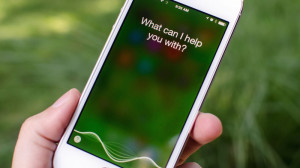
hey-siriApple’s Siri gets lot of shit but not from me. I use it more all the time (and I like “Okay, Google” as well). But Siri became even more useful when I learned I could summon him/her just by saying, “Hey, Siri” as opposed to double tapping the home button. This only works when the phone is plugged in but that makes sense if you think about it.

When I’m reading in bed in the evening the phone is charging on the bed-side table and I might say “Hey, Siri… set alarm for 7:30 tomorrow” or “Hey, Siri… new reminder. Pick up dry cleaning tomorrow afternoon.”

This feature is even more useful in the car (I just started using a cradle). “Hey, Siri… Instant Message my location to Barb” or “Hey, Siri… how far am I from Nashville?”

While it’s not difficult to reach over and double-tap the home button, I find the “Hey, Siri” feature remarkably useful.