
Dave Winer’s advice to Keith Olbermann

This post doesn’t depend on knowing who Dave Winer or Keith Olbermann is (are?). It’s about media and brand. My favorite part of Mr. Winer’s advice:

“…the future of communication is not about the bottleneck that MSNBC and their competitors control. I don’t think you really need them. Unless of course you need to make $5 million a year, in which case you probably do need them. But if what you’re interested in is power to influence public opinion, and becoming more relevant over time, not more niched over time — if being influential is what you’re about, they really did you a favor.

So here’s what I recommend. Borrow a page from Conan O’Brien’s playbook, and use the social network to communicate with your fans.

Get a video camera and put it in your living room or den at home. Hit Record. Sit down in front of the camera and rant for 15 minutes. You can do that, I’m sure. Then without any production at all, upload it to YouTube and send the link around on Twitter. The first time you do it, it will be the most watched video of the day. Far more people will see it than used to see you on MSNBC, or O’Reilly or Beck or any of them. Depending on how fresh and interesting it is, and how real it is, and how compelling you really are (I know that’s a lot of “depends”) there won’t be much of a dropoff on Day 2 and 3 and so on. Now you’ve got your own network. And no one can shut you down. And you’ll have a lot more people watching you.”

Leo Laporte has done such an amazing job of this. Same for Arianna Huffington, and I’m sure there are others that don’t come to mind. Begs the question: Who owns the Keith Olbermann brand? MSNBC/Comcast? Or Keith Olbermann? Who owns your brand? Have you established a brand? What is it and where can I find it?
Dave Winer’s proposal for a new kind of blog comment system

“I know some people think that blogs are conversations, but I don’t. I think they’re publications. And I think the role of comments is to add value to the posts. If you want to rebut a post, then you can create your own blog and post your rebuttal there.”

This makes a lot of sense to me. If there is ever an easy-to-implement version of Mr. Winer’s system, I’m there.

“Journalism is like skiing in the 50s or 60s”

An interesting analogy by Dave Winer:

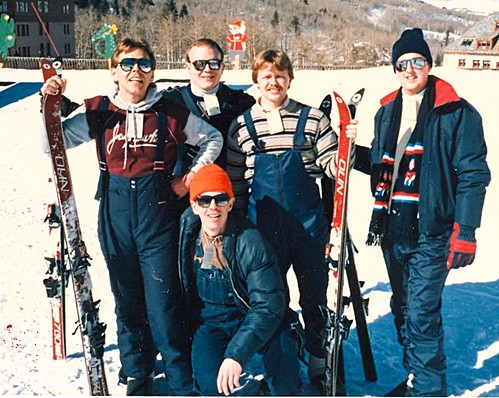
“Previously it had been a sport that very few people enjoyed, and they were all very good. But now the doors are opening to amateurs. The pros have to share the slopes with people who don’t take the sport as seriously as they do. They’re still going to be able to ski, but the rest of us are not just going to admire them for how skilled they are, we’re going to do it too. They can earn a living as ski patrol and ski instructors. Or lift operators or more mundane jobs like people who work in hotels and drive the shuttle bus. There are still jobs in skiing after the arrival of the amateurs. But the exclusivity is gone.”

I think he might have nailed it. Oh, for the days before the lift lines were long and the slopes clogged with morons who didn’t know the right way to come down the hill.

“Reporting is what makes news news”

This post by Jeff Jarvis raises a number of interesting questions –and what he calls myths– about the role of journalists in the ever-changing media world. Here are three nuggets (not contiguous) from the longer post:

“In an offhand reference about the economics of news, Dave Winer wrote, “When you think of news as a business, except in very unusual circumstances, the sources never got paid. So the news was always free, it was the reporting of it that cost…. The new world pays the source, indirectly, and obviates the middleman.” This raises two questions: both whether news needs newsmen and whether journalists and news organizations deserve to be paid.”

“The (printing) press has become journalism’s curse, not only because it now brings a crushing cost burden but also because it led to all these myths: that we journalists own the news, that we’re necessary to it, that we decide what’s reported and what’s important, that we can package the world for you every day in a box with a bow on it, that what we do is perfect (with rare, we think, exceptions), that the world should come to us to be informed, that we deserve to be paid for this service, that the world needs us.”

“And that’s what Winer is trying to do when he reminds us that the important people in news are the sources and witnesses, who can now publish and broadcast what they know. The question journalists must ask, again, is how they add value to that. Of course, journalists can add much: reporting, curating, vetting, correcting, illustrating, giving context, writing narrative. And, of course, I’m all in favor of having journalists; I’m teaching them. But what’s hard to face is that the news can go on without them. They’re the ones who need to figure out how to make themselves needed.”