While I occasionally consult with ChatGPT while reading, it has never occurred to me to just keep it open. I think I’d find that distracting. This would be particularly useful for my non-fiction reading
Dancing and Singing at the Towne Grill
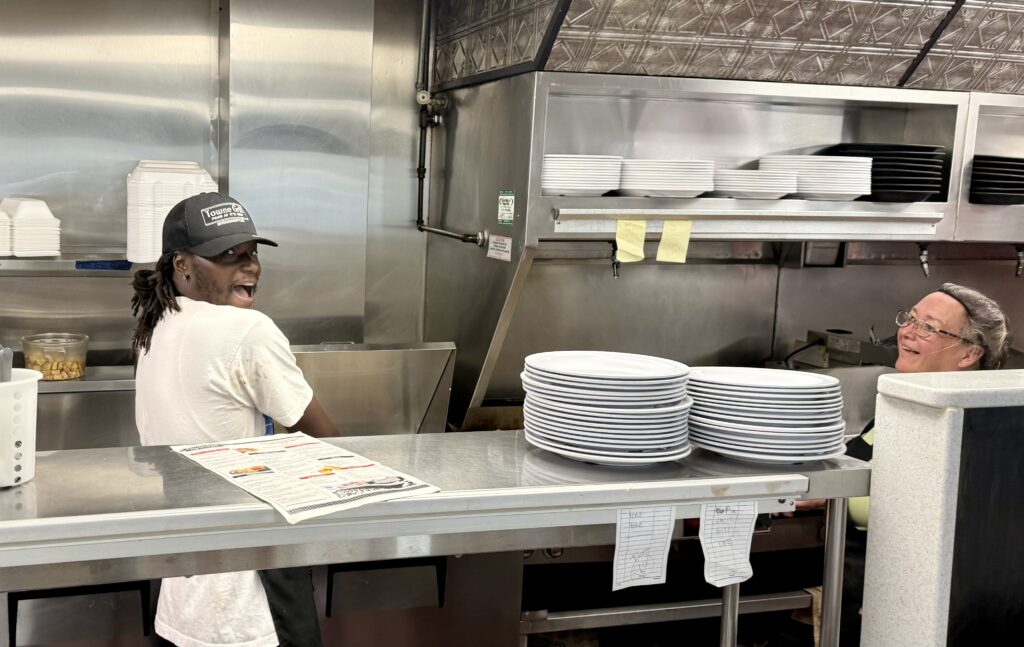 When I arrived at the Towne Grill at 1:30 p.m. they were cleaning up in preparation for closing at two o’clock. But the made me a grilled cheese sandwich (Best in Town) and since I was the only customer, they kept on closing up while somebody’s phone (?) was streaming music at volume.
Paul Simon’s You Can Call Me Al came up and I heard someone back by the grill singing along. Then the two servers who were sweeping up started singing along, putting a little boogie into the brooms. Next I heard the guy in the back washing dishes. And John (the owner) was right there with them.
It was like something from a Spike Lee musical (did he do musicals?). Everybody having a great time. I thought about grabbing some video but didn’t want to break the spell. You just had to be there. And I was.
Turns out there’s a pretty good story behind the official video.
The video became quite famous and features a comedic performance by Paul Simon and Chevy Chase. Here are some key details about the music video:
Initially, Paul Simon didn’t like the original music video for the song, which was simply a performance he gave during the monologue when he hosted Saturday Night Live[2]. A replacement video was then created, which became the widely known and popular version.
The replacement video was directed by Gary Weis and was partly conceived by Saturday Night Live creator Lorne Michaels[. This video features:
– Chevy Chase lip-syncing to Paul Simon’s vocals
– Paul Simon lip-syncing to the backing vocals
– Simon miming various instruments as they appear in the songThe video plays on the significant height difference between the 6’4″ (193 cm) Chevy Chase and the 5’3″ (160 cm) Paul Simon, creating a comical visual juxtaposition[2].
The music video for “You Can Call Me Al” became one of Paul Simon’s most recognizable and popular videos. It helped boost the song’s popularity, contributing to its commercial success. The song, initially released in July 1986, experienced a resurgence in sales and airplay after the album Graceland won Album of the Year at the 29th Annual Grammy Awards in February 1987[2].
NEXUS: Religion
Yuval Noah Harari begins his “history of information networks” talking about books as a type of technology, the Bible being the most successful example. And the Catholic Church as one of the most powerful networks.
After his death, Jesus became the subject of one of the most remarkable branding campaigns in history. […] The story of Jesus managed to have a much bigger impact on history than the person of Jesus.
While most Christians were not physically present at the Last Supper, they have heard the story so many times, and they have seen so many images of the event, that they “remember” it more vividly than they remember most of the family dinners in which they actually participated.
Religions always claim to be an objective and eternal truth rather than a fictional story invented by humans.
The Bible as a single holy book didn’t exist in biblical times. King David and the prophet Isaiah never saw a copy of the Bible. […] no two ancient Bibles were identical.
Catholic theology accepted that Jesus told us to love our enemies, but explained that burning heretics was an act of love, because it deterred additional people from adopting heretical views, thereby saving them from the flames of hell.
The first rule of changing church teachings is that you never admit to changing church teachings.
Religions throughout history claimed a nonhuman source for their holy books; soon that might be a reality. Attractive and powerful religions might emerge whose scriptures are composed by AI. Pg 209
The Bible had a profound effect on billions of people, even though it was a mute document. Now try to imagine the effect of a holy book that not only can talk and listen but can get to know your deepest fears and hopes and constantly mold them.
1965 Mustang
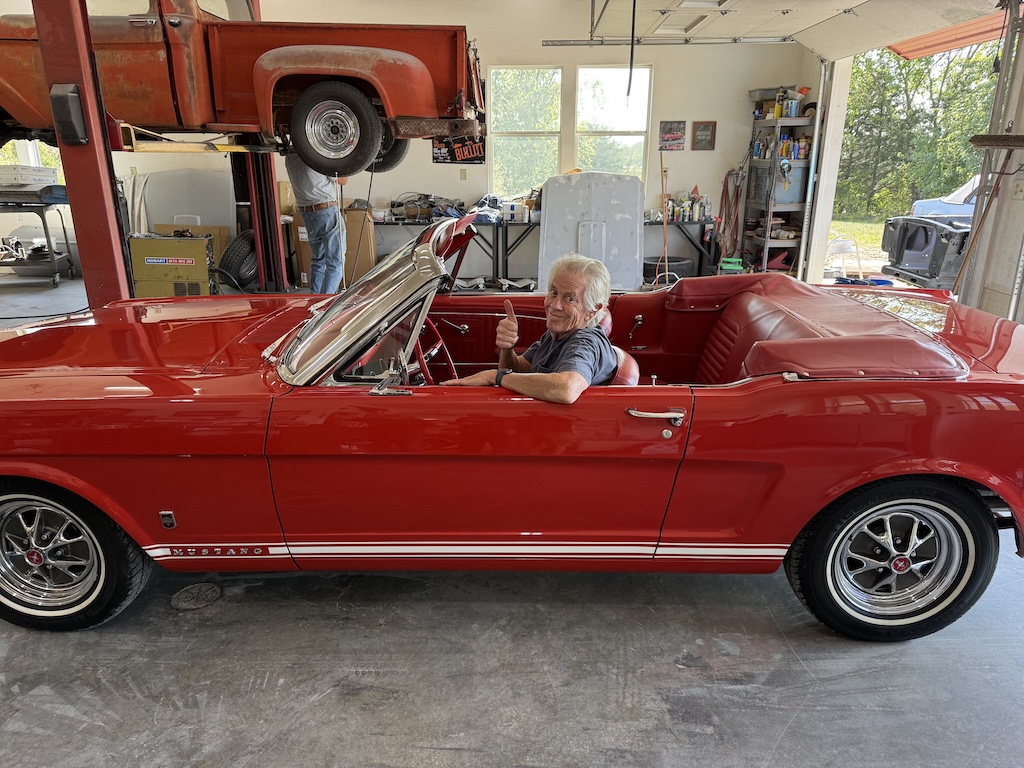
This beauty is the latest acquisition by my friend Paul. I think he said this only has 20,000 miles on the odometer (or was it 2,000?) and is in mint –what’s better than “mint”– condition.
I was a junior in high school with these first appeared and we’d never seen anything like them. Best music… best cars… lucky me.
Golden Retriever Joy